The Jakarta Post
Please Update your browser
Your browser is out of date, and may not be compatible with our website. A list of the most popular web browsers can be found below.
Just click on the icons to get to the download page.


Popular Reads
Top Results
No results found. Please check your search term and try again
Can't find what you're looking for?
View all search results
Popular Reads
Top Results
No results found. Please check your search term and try again
Can't find what you're looking for?
View all search resultsUncertainty reveals Indonesia’s consumer strength
Consumption in Indonesia does not merely endure macro volatility; it frequently accelerates through it.
Change text size
Gift Premium Articles
to Anyone
Share the best of The Jakarta Post with friends, family, or colleagues. As a subscriber, you can gift 3 to 5 articles each month that anyone can read—no subscription needed!
 Set as preferred source
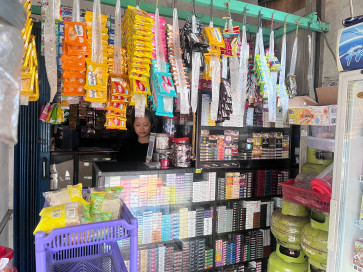
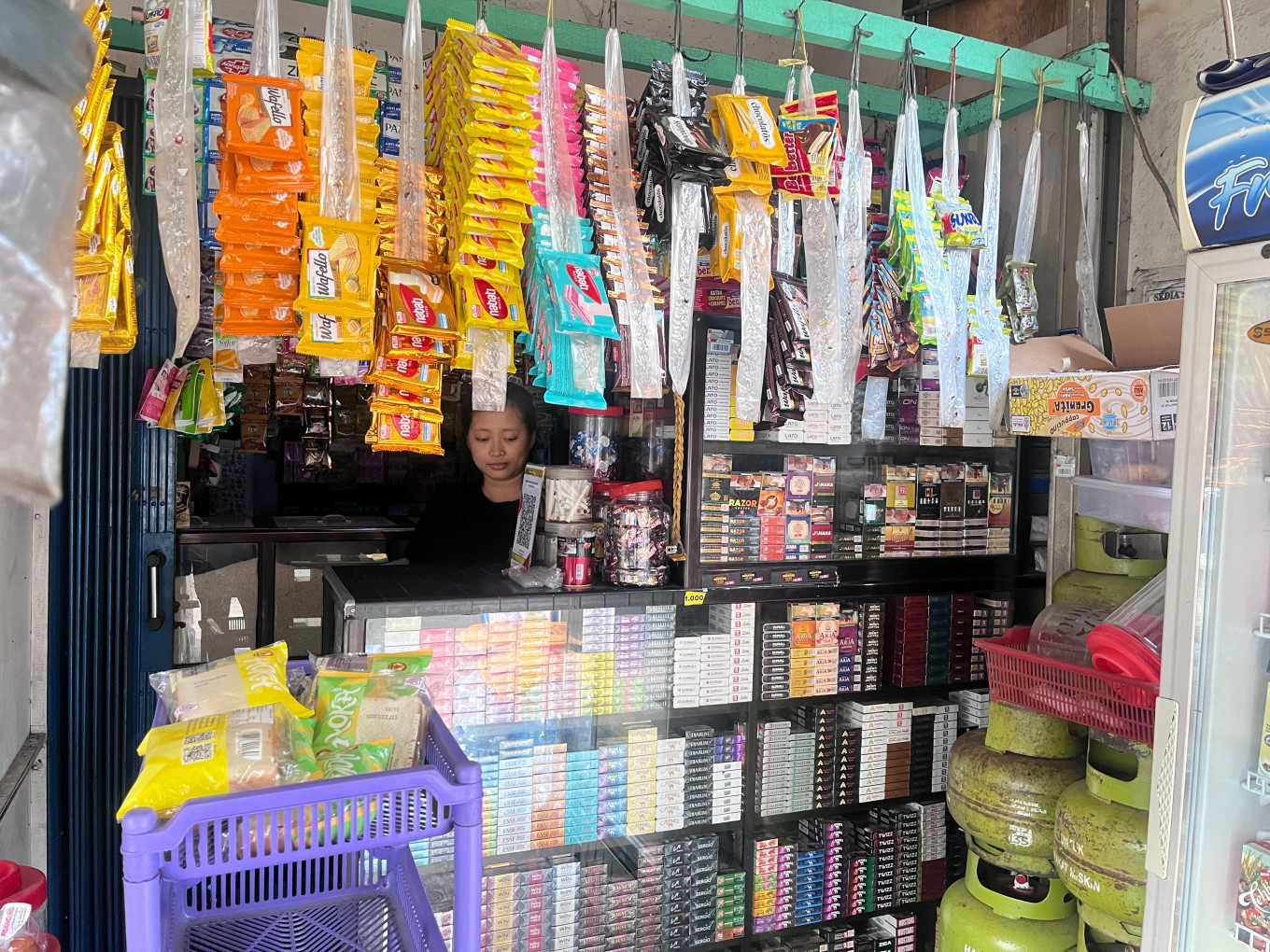 A warung keeper standing behind the cashier, managing daily sales of basic goods on Nov. 5, 2025. (TJP/Ni Made Tasyarani)
W
hen the regional capital sitting in Singapore looks across the strait at Jakarta during periods of political transition, it invariably reaches for standard country-risk playbooks. The narrative is familiar: policy shifts under President Prabowo Subianto, fiscal uncertainties and shifting global supply chains ought to induce caution.
In conventional macroeconomic models, heightened ambiguity triggers consumer paralysis. Households hoard liquidity, defer discretionary purchases and wait for clarity to return to the top.
Yet the financial statements of consumer-facing enterprises across Southeast Asia’s largest economy consistently tell a different story. Consumption in Indonesia does not merely endure macro volatility; it frequently accelerates through it.
To call this a paradox is to misunderstand the architecture of emerging market demand. As I argue in my 2025 book Navigating ASEAN: Proven Strategies for Consumer Goods from Scholar-Practitioners, the failure of Western forecasting models in Asia stems from an unexamined premise: that markets are driven by individualistic, rational human choice.
Standard economic modelling presumes an atomized consumer who evaluates choices in a vacuum using complete, linear data. When the macro environment turns noisy, these models predict demand destruction because they assume an isolated individual will defer purchases until mathematical certainty returns.
Real-world markets in Southeast Asia operate under a very different logic: Herbert Simon’s concept of bounded rationality. In environments where institutional frameworks evolve continuously and information is asymmetrical, human beings do not freeze. Instead, they adapt by drastically simplifying their decision-making parameters.

Indonesian consumers do not spend hours calculating inflation differentials or analyzing policy speeches. They rely on cultural heuristics, using community trust, shopkeeper relationships and familiar brand equity as cognitive shortcuts to navigate ambiguity. Decision-making is not individualistic; it is deeply relational.