The Jakarta Post
Please Update your browser
Your browser is out of date, and may not be compatible with our website. A list of the most popular web browsers can be found below.
Just click on the icons to get to the download page.


Popular Reads
Top Results
No results found. Please check your search term and try again
Can't find what you're looking for?
View all search results
Popular Reads
Top Results
No results found. Please check your search term and try again
Can't find what you're looking for?
View all search resultsAnalysis: Fraud exposes vulnerabilities in Sumatra's fuel distribution
Change text size
Gift Premium Articles
to Anyone
Share the best of The Jakarta Post with friends, family, or colleagues. As a subscriber, you can gift 3 to 5 articles each month that anyone can read—no subscription needed!
 Set as preferred source
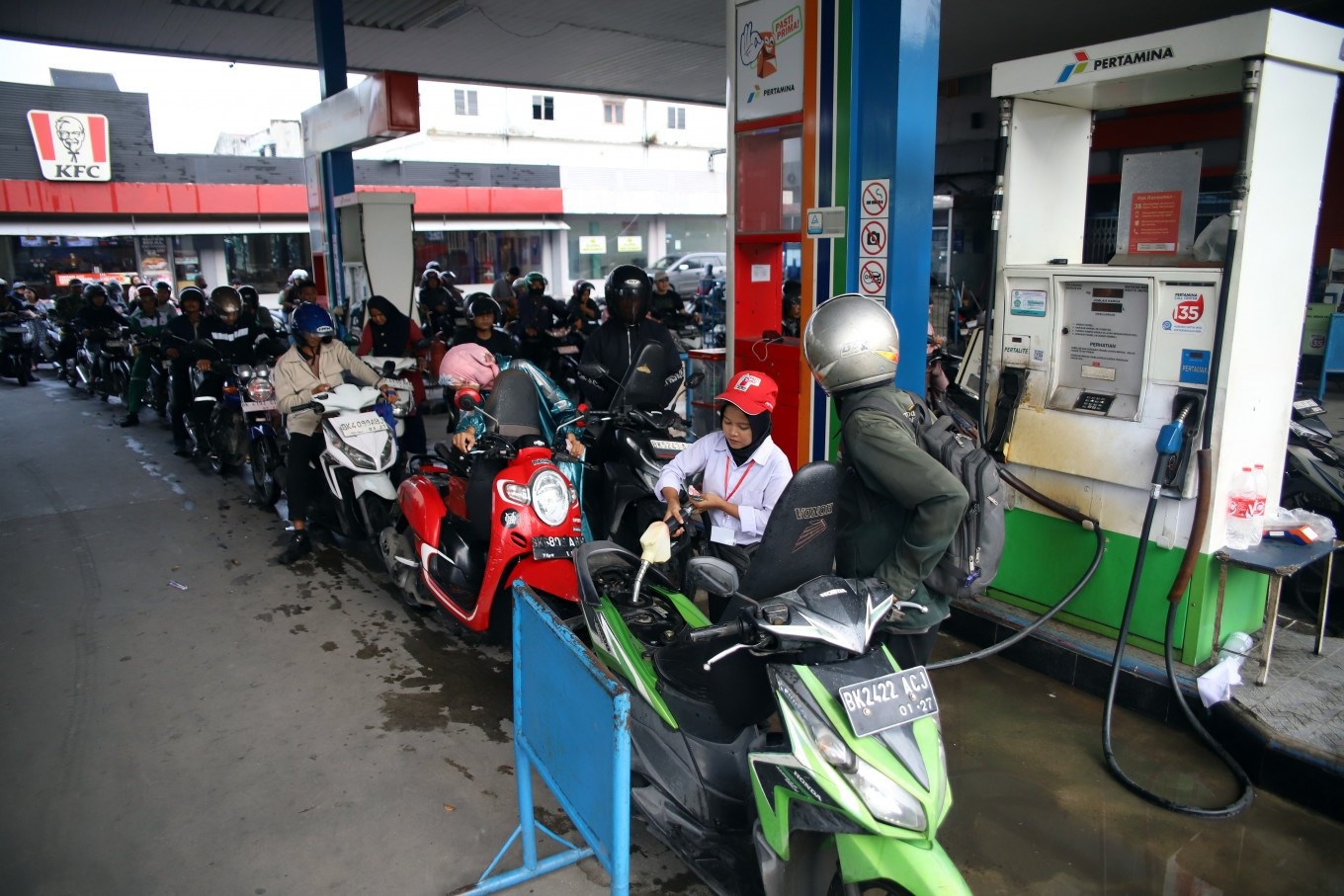 Motorists wait to buy Pertalite gasoline at a gas station in Medan, North Sumatra, on July 16, 2026. PT Pertamina Patra Niaga is seeking to normalize long queues by extending operating hours to 24 hours and deploying 30 additional fuel tanker trucks to distribute fuel to gas stations across North Sumatra. (Antara/Yudi Manar)
T
he arrest of 142 suspects by South Sumatra Police has brought renewed attention to what authorities describe as one of the largest fuel embezzlement cases in the country’s recent history. Between January and July 2026, police uncovered 96 cases involving the diversion and illegal trade of subsidized fuel, with an estimated 1.4 million liters of fuel allegedly siphoned from the official distribution system.
According to investigators, the suspects were involved in a range of activities, including unauthorized transportation, hoarding, illegal resales and illicit refinery activities.
The scale of the operation has reinforced authorities' assessment that the fuel shortages in South Sumatra were driven less by insufficient supply than by large-scale leakages in the downstream distribution chain. This assessment is consistent with statements from Pertamina's regional management, which has maintained that refinery production and fuel allocations remain adequate, indicating that the disruption occurred after fuel supplies left storage terminals and before they reached retail gas stations.
The investigation comes after more than a year of recurring fuel shortages across Sumatra, where long queues for subsidized diesel and Pertalite have become a persistent feature of daily life.
While temporary shortages have occurred in other regions, the disruptions in Sumatra have been unusually frequent, geographically widespread and resistant to repeated interventions. This has led to growing recognition that the problem extends beyond isolated logistical incidents and reflects deeper weaknesses across the island's downstream fuel distribution system.
Several factors have contributed to these recurring shortages.

At the beginning of 2026, subsidized fuel quotas were reduced. In one notable example, the South Sumatra provincial administration proposed approximately 2.8 million kiloliters (kL) of subsidized diesel for the year but received only around 630,000 kL, less than one-quarter of the requested allocation.