The Jakarta Post
Please Update your browser
Your browser is out of date, and may not be compatible with our website. A list of the most popular web browsers can be found below.
Just click on the icons to get to the download page.


Popular Reads
Top Results
No results found. Please check your search term and try again
Can't find what you're looking for?
View all search results
Popular Reads
Top Results
No results found. Please check your search term and try again
Can't find what you're looking for?
View all search resultsClean water for all: Building inclusive water services
Droughts expose who gets left behind when basic public services aren't built for everyone.
Change text size
Gift Premium Articles
to Anyone
Share the best of The Jakarta Post with friends, family, or colleagues. As a subscriber, you can gift 3 to 5 articles each month that anyone can read—no subscription needed!
 Set as preferred source
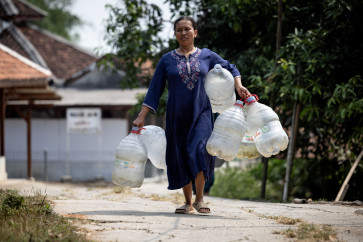
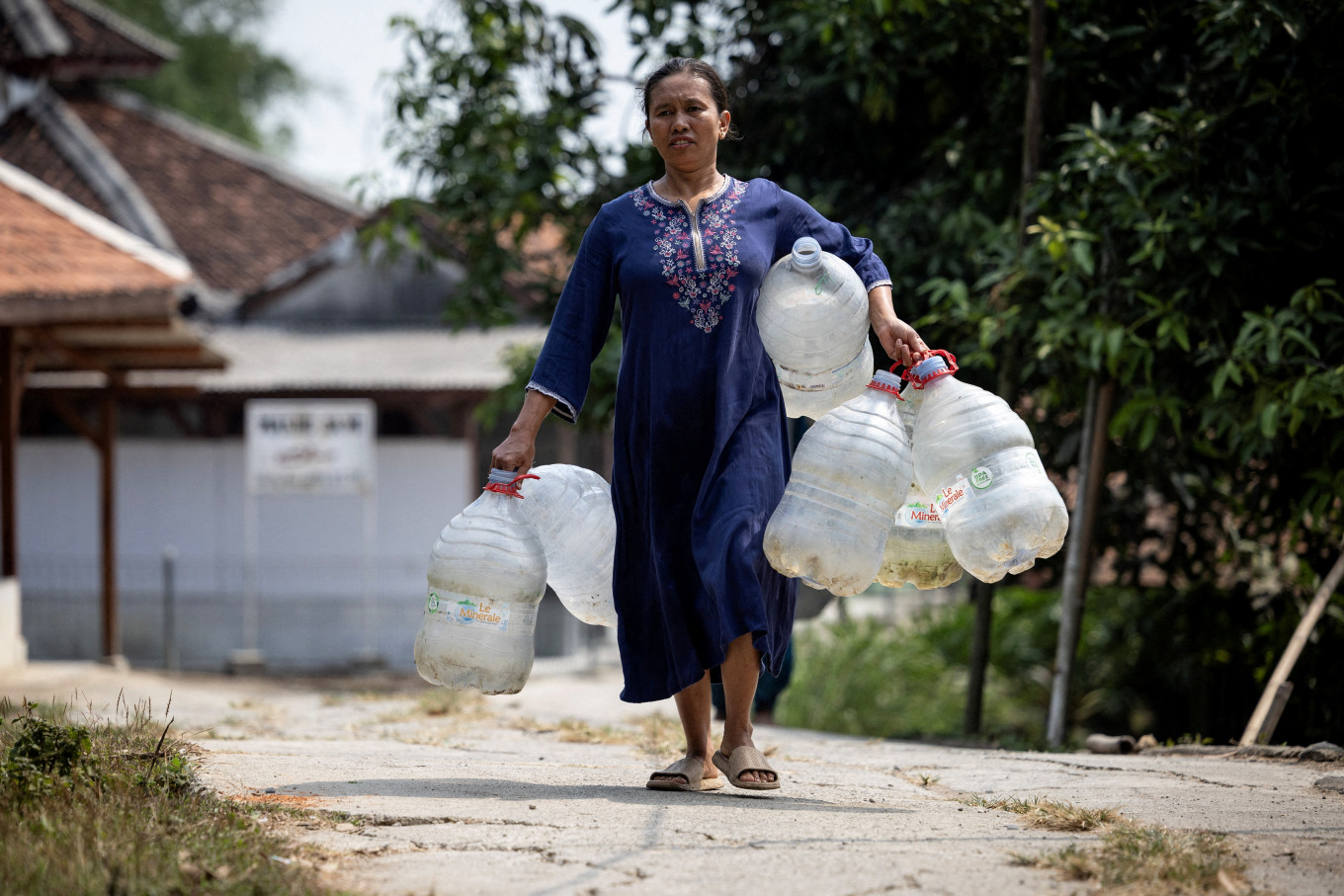 A woman carries water containers to collect free clean water distributed by the regional disaster agency in a drought-hit area during the dry season, amid forecasts that El Niño may contribute to drier-than-normal conditions, in Rido Galuh village, Bekasi regency, West Java on July 16, 2026. (Reuters/Willy Kurniawan)
I
ndonesia is entering another dry season, and forecasts suggest it will be longer and harsher than usual. The Meteorology, Climatology and Geophysics Agency (BMKG) has warned of a severe El Niño, raising the risk of widespread drought, particularly across Java, and putting intense pressure on local water supplies.
Yet the threat of El Niño is more than just a weather issue. Droughts expose who gets left behind when basic public services are not built for everyone. Women, people with disabilities, low-income families and remote communities are always the first to feel the pinch. Building truly inclusive clean water systems is not just nice to have; it is essential.
For example, for most students, using the school bathroom is no big deal.
For Devina, a junior high school student in East Nusa Tenggara (NTT) who uses a wheelchair, it was a breakthrough for her independence. Before her school built accessible facilities, she had to rely on teachers or classmates to help her, often holding it in until she got home to avoid asking. The entrance had steep steps, the doorways were too narrow and the layout was practically impossible to navigate in a wheelchair.
"Now I can go to the bathroom by myself," said Devina, whose village recently received government water assistance.
As a young woman, her need for reliable water and privacy was heightened during her period, yet the old infrastructure completely ignored her. Having a wheelchair meant very little when the physical environment locked her out.

The shift at Devina’s school did not start with laying bricks; it began when project managers simply asked her what she needed.