The Jakarta Post
Please Update your browser
Your browser is out of date, and may not be compatible with our website. A list of the most popular web browsers can be found below.
Just click on the icons to get to the download page.


Popular Reads
Top Results
No results found. Please check your search term and try again
Can't find what you're looking for?
View all search results
Popular Reads
Top Results
No results found. Please check your search term and try again
Can't find what you're looking for?
View all search resultsThe costs of ‘execution first, planning later’
It is true that a hefty share of public spending went into FGDs, seminars and workshops that produced little. But his own government now suffers the opposite failure of executing before it plans, then improvising the plan as the execution collapses. Yet the damage is already done, heavily.
Change text size
Gift Premium Articles
to Anyone
Share the best of The Jakarta Post with friends, family, or colleagues. As a subscriber, you can gift 3 to 5 articles each month that anyone can read—no subscription needed!
 Set as preferred source
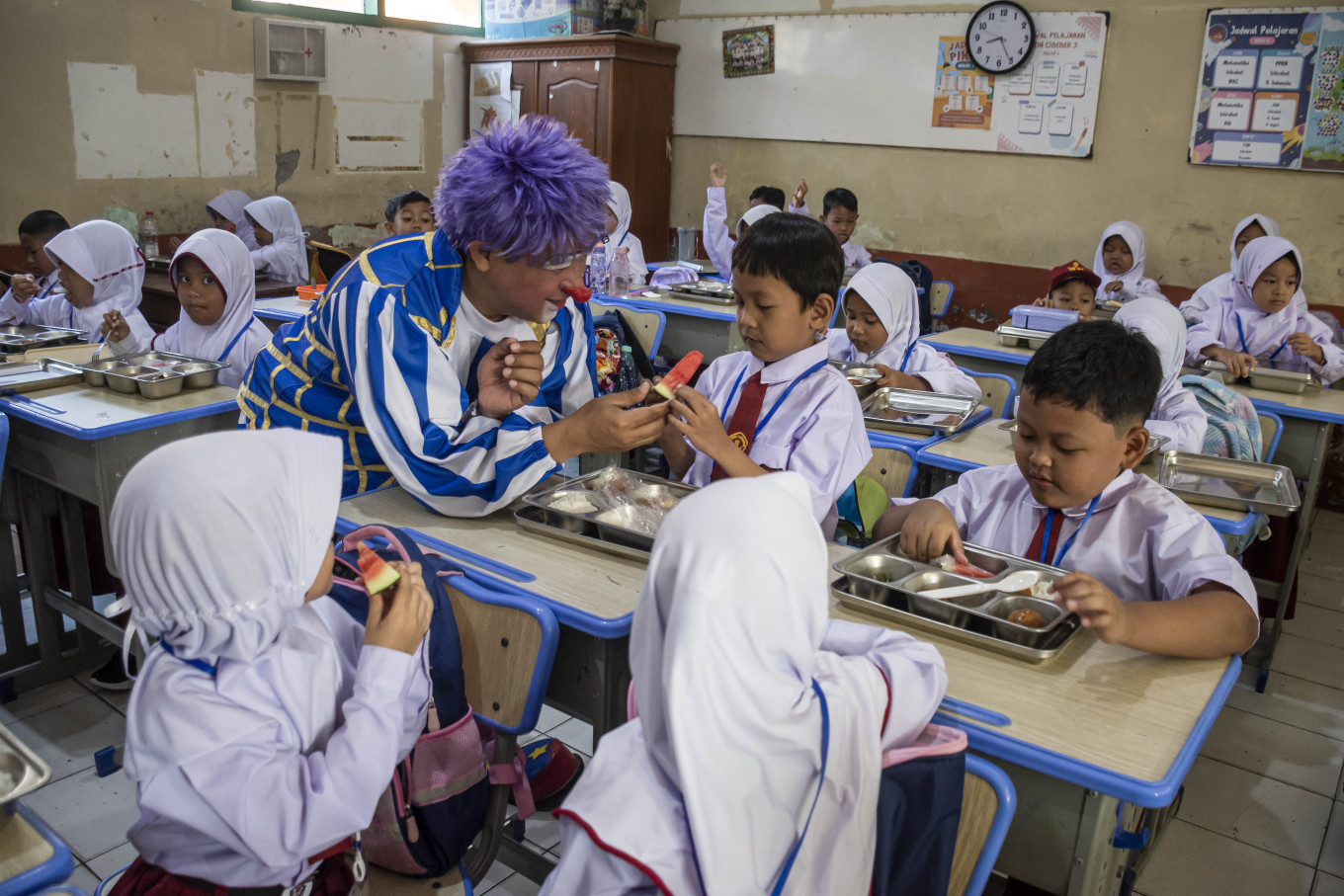 Members of the Cimahi Clown Community distribute free meals to new pupils during the school orientation program at the SD Cibeber state elementary school complex in Cimahi, West Java, on July 14, 2026. (Antara/Abdan Syakura)
W
hen Prabowo Subianto, then a presidential candidate in 2024, mocked the government for holding "too many focus group discussions [FGDs], and too little work on the ground," he was diagnosing a real disease: bureaucracies that plan endlessly and act rarely.
Two years into his presidency, the diagnosis has flipped. It is true that a hefty share of public spending went into FGDs, seminars and workshops that produced little. But his own government now suffers the opposite failure of executing before it plans, then improvising the plan as the execution collapses. Yet the damage is already done, heavily.
The clearest evidence sits in two of Prabowo's flagship programs. In the past two months alone, the free nutritious meal program and Red and White Cooperatives caught the spotlight for alleged corruption cases and changes to their implementation schemes, all traceable to planning that was never finished before rollout. For two programs that consume close to 10 percent of the 2026 state budget, about Rp 370 trillion (US$20.6 billion), the margin for error should be near zero, and the cost of mistakes is unimaginable.
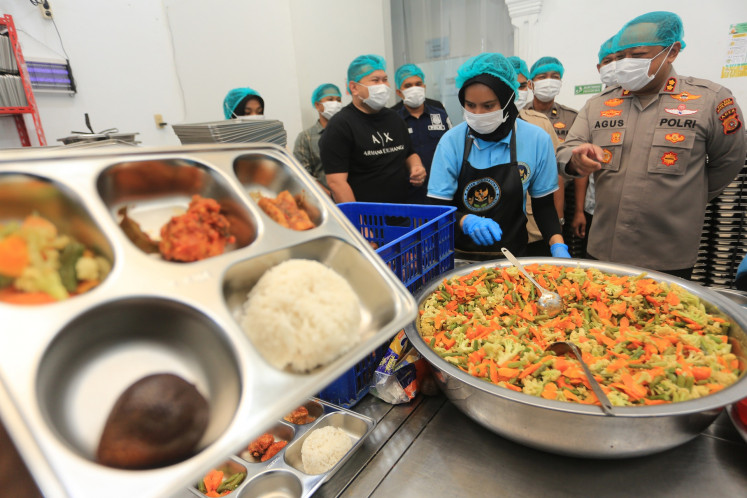
The pattern that is evident on the ground has followed the rule of “regulation chasing rollout”. It was not until seven months after the free meals program national rollout that the National Nutrition Agency (BGN) finally issued the long-awaited technical guidance for the program. Over that time period, at least 11,000 children suffered food poisoning, a toll that the President refers to as “only 0.0017 percent of the total recipients”.
Corruption cases that involved the BGN leadership, projected to reach Rp 1 trillion per month, bubbled BGN’s arrears to operators up to Rp 1.6 trillion, and many kitchens are stalled and have incurred financial losses.
And the toll did not stop where the President's talking point implied it would. Case counts kept climbing well past that first wave: more than 9,000 children had fallen ill by October 2025, and watchdogs recorded another 1,242 fresh poisoning cases in January 2026 alone, a full year after the national rollout.

Two of these cases have since ended in death. An eight-year-old in North Bengkulu died in March after eating a burger distributed in an MBG package, and a two-year old in Cianjur died in April following a poisoning cluster that sickened more than 100 children in his village in a single week, a toll that the BGN has publicly disputed. Whichever way the lab results eventually land, the underlying fact does not change, the program is still expanding faster than its own safety systems can absorb.