The Jakarta Post
Please Update your browser
Your browser is out of date, and may not be compatible with our website. A list of the most popular web browsers can be found below.
Just click on the icons to get to the download page.


Popular Reads
Top Results
No results found. Please check your search term and try again
Can't find what you're looking for?
View all search results
Popular Reads
Top Results
No results found. Please check your search term and try again
Can't find what you're looking for?
View all search resultsKeep education funds in education
Separating the free meals program from the education budget is an important first step. However, the bigger test now is whether the government will genuinely commit to using the constitutionally mandated 20 percent education allocation to address the country’s perennial education challenges.
Change text size
Gift Premium Articles
to Anyone
Share the best of The Jakarta Post with friends, family, or colleagues. As a subscriber, you can gift 3 to 5 articles each month that anyone can read—no subscription needed!
 Set as preferred source
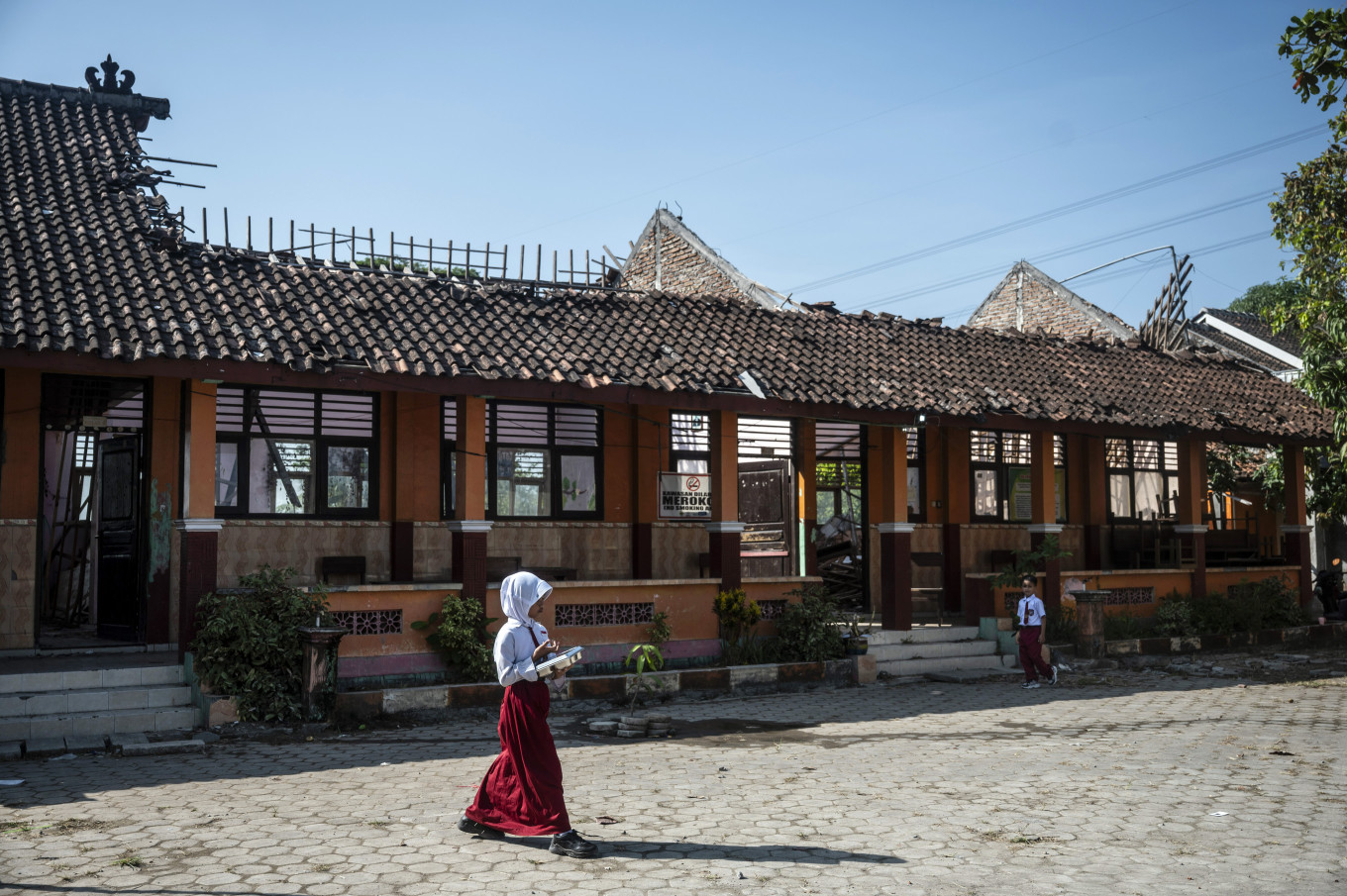 Pupils carry free nutritious meal packages past a classroom with a collapsed roof at SD Tanggirejo state elementary school in Tegowanu, Grobogan, Central Java, on July 21, 2026. According to the school, the classroom roof first collapsed in January and sustained further damage in April, forcing classes to rotate between the remaining usable classrooms, partitioned learning spaces and a mosque converted into a temporary classroom to ensure students' safety. (Antara/Aprillio Akbar)
T
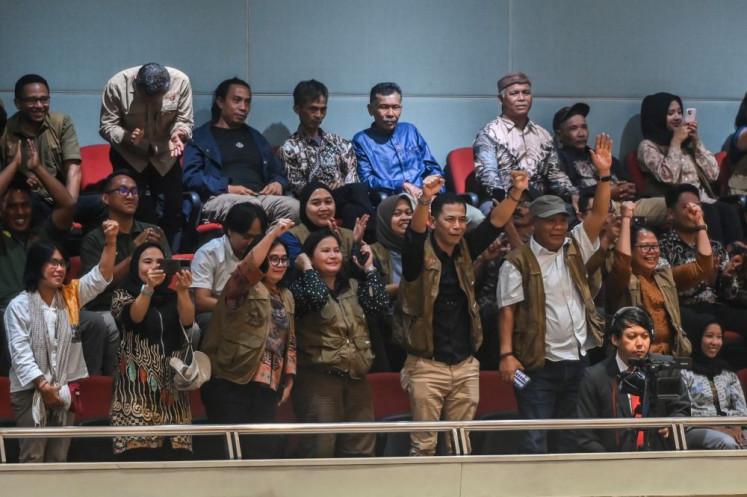
he Constitutional Court’s decision to exclude President Prabowo Subianto’s flagship free nutritious meal program from the state budget’s education allocation should be applauded.
The government earmarked Rp 769 trillion (US$43.1 billion) for education in the 2026 fiscal year, with President Prabowo describing it as the biggest education allocation in the country’s history.
On paper, that sounds like an extraordinary commitment. But some Rp 223.5 trillion of the allocation, almost 30 percent, was earmarked for the rollout of the free meals program.
The government has argued that including the free meals program in the education budget is justified because better nutrition can reduce stunting and improve children’s ability to learn.
There is certainly truth to that argument. But if such reasoning is applied without limits, almost any social program could eventually be classified as education spending.
The education community has argued that diverting such a large share of the education budget to free meals risks undermining other priorities. In many cases, their concerns are difficult to dismiss.

Millions of contract teachers across the country, some earning only a fraction of the minimum wage, have expressed frustration over the perceived disparity between their pay and the wages offered to workers in the free meals kitchens, which can be six or even seven times higher than what some teachers earn. For teachers who struggle to make ends meet while carrying the responsibility of educating the country’s children, such a disparity can understandably be seen as a question of government priorities.