The Jakarta Post
Please Update your browser
Your browser is out of date, and may not be compatible with our website. A list of the most popular web browsers can be found below.
Just click on the icons to get to the download page.


Popular Reads
Top Results
No results found. Please check your search term and try again
Can't find what you're looking for?
View all search results
Popular Reads
Top Results
No results found. Please check your search term and try again
Can't find what you're looking for?
View all search resultsThe extractive trap has a green exit
For five centuries, raw materials have flowed out of Africa and Brazil at low cost to be used as inputs elsewhere, often returning to their source countries embedded in expensive finished goods.
Change text size
Gift Premium Articles
to Anyone
Share the best of The Jakarta Post with friends, family, or colleagues. As a subscriber, you can gift 3 to 5 articles each month that anyone can read—no subscription needed!
 Set as preferred source
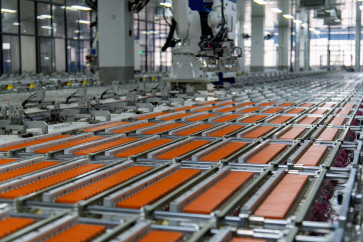
 An automated lithium-ion battery production line operates on Nov. 11, 2025, at a workshop of Zhejiang Shineway Technology Co Ltd in Yongkang, Zhejiang province, China. (Reuters/China Daily)
F
or five centuries, raw materials have flowed out of Africa and Brazil at low cost to be used as inputs elsewhere, often returning to their source countries embedded in expensive finished goods. The energy transition offers a critical opportunity to escape this extractive dynamic. The key for these economies is to leverage their vast resources, as well as mutual cooperation, to build thriving green industries of their own.
The current global energy crisis has made the energy transition all the more urgent. Supply disruptions and rising costs have put pressure on governments, households and businesses in many countries, weakening productivity, straining food supplies and exacerbating economic inequality.
The effects of the crisis are particularly acute in many African countries, which already struggle with persistent poverty, limited energy access and inadequate infrastructure. Africa’s energy-producing countries are not immune, not least because they often export crude oil while importing costlier refined products like diesel and gasoline.
But the problem runs far deeper than the current crisis. As a recent Oil Change International report shows, decades of extraction have produced income concentration, economic dependency, external vulnerabilities and the weakening of other productive sectors.
Achieving broad-based development requires a new approach, one which leverages South-South cooperation to advance green development and sustainable industrialization. Brazil and African countries such as Kenya, Namibia, South Africa and Tunisia are particularly well-suited to spearhead such a strategy, acting not only as diplomatic partners, but as coproducers of a green industrial transformation.
Since returning to the presidency in 2023, Brazil’s Luiz Inácio Lula da Silva has emphasized the importance of South-South cooperation, not least to advance the climate and development agenda. Moreover, he has resumed official visits to African countries, such as Mozambique and South Africa, whose leaders have reciprocated with visits to Brazil. Such diplomatic initiatives have been matched by concrete cooperation in agriculture, health, education, defense, energy and other areas. But it is in the green industry that this partnership can take on real strategic significance.

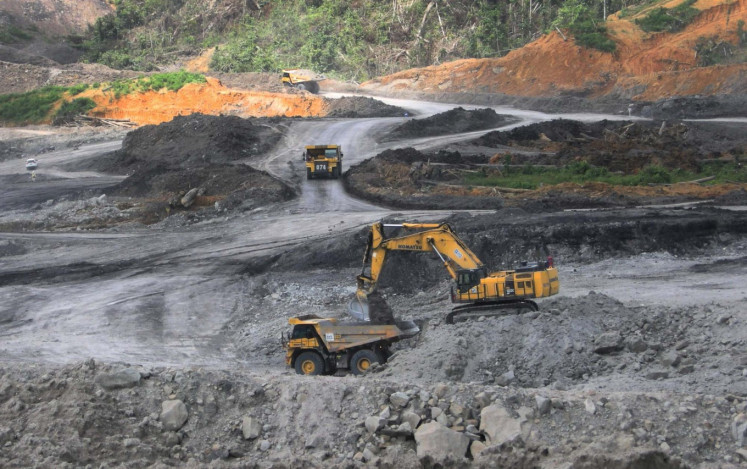
Brazil and Africa have important comparative advantages in two sectors that are central to the global energy transition. The first is critical minerals. African countries have significant reserves of cobalt, graphite, lithium and manganese - critical inputs in batteries, electric vehicles and renewable-energy technologies. Brazil also has reserves of graphite and lithium, as well as nickel and rare-earth elements.