The Jakarta Post
Please Update your browser
Your browser is out of date, and may not be compatible with our website. A list of the most popular web browsers can be found below.
Just click on the icons to get to the download page.


Popular Reads
Top Results
No results found. Please check your search term and try again
Can't find what you're looking for?
View all search results
Popular Reads
Top Results
No results found. Please check your search term and try again
Can't find what you're looking for?
View all search resultsWhy Beijing must play a long game in South China Sea
Why must China constantly attempt to prove its stature? What drives it to project superior force at every turn to assert its claims?
Change text size
Gift Premium Articles
to Anyone
Share the best of The Jakarta Post with friends, family, or colleagues. As a subscriber, you can gift 3 to 5 articles each month that anyone can read—no subscription needed!
 Set as preferred source
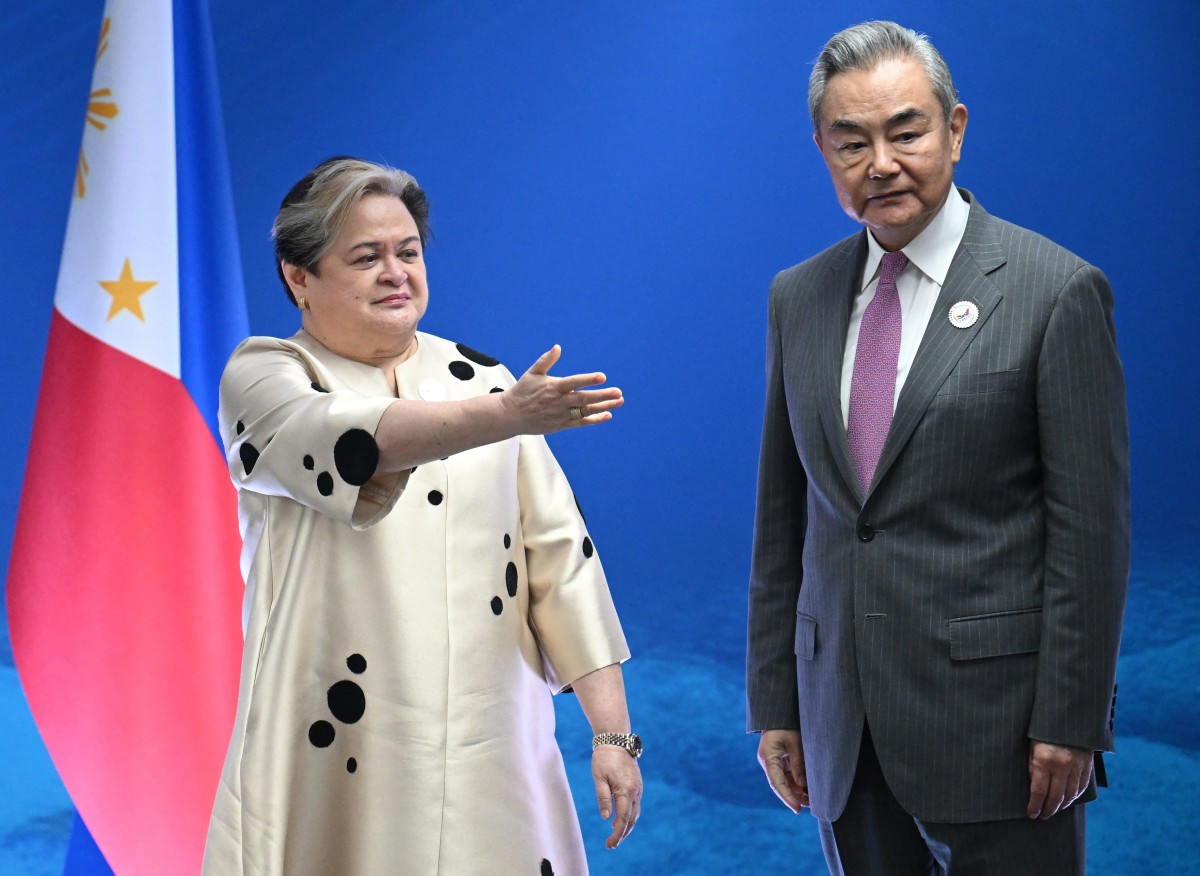 Philippine Foreign Secretary Theresa Lazaro (left) shows the way to China's Foreign Minister Wang Yi during their bilateral meeting on the sidelines of ASEAN Foreign Ministers' Meeting in Pasay, Metro Manila, on July 22, 2026. (AFP/Pool/Ted Aljibe)
O
nce again, China has missed a key opportunity. On July 20, on the eve of a major ASEAN foreign ministers’ meeting with regional partners, Chinese Coast Guard personnel engaged in a physical altercation with Philippine Navy personnel at Second Thomas Shoal, also known as Ayungin Shoal.
A Chinese officer allegedly attacked a Filipino counterpart with a baton. Both nations accused each other of provocative acts, elevating the dispute to the highest diplomatic levels; President Ferdinand Marcos Jr. of the Philippines even personally rebuked the Chinese ambassador in Manila.
The situation is grave enough that Chinese Foreign Minister Wang Yi, in Manila for the ASEAN talks, stated during a meeting with Philippine Foreign Affairs Secretary Theresa Lazaro that bilateral relations stand at a critical crossroads.
The core issue is straightforward yet intractable: Both nations assert sovereignty over the same rocks and features in the South China Sea, and neither is willing to retreat.
However, as the region's largest and most powerful player, Beijing ought to demonstrate restraint rather than aggressively pursuing short-term gains over symbolic outposts. China needs to play the "long game." Instead of flexing its muscles with frequent, reactive displays of aggression, Beijing would be better served by managing its friction with Manila on temporary "live-and-let-live" terms.
Why must China constantly attempt to prove its stature? What drives it to project superior force at every turn to assert its claims?

In territorial disputes, what one side considers a legitimate defensive measure is easily labeled a provocation by another. Defining "provocation" is inherently subjective and strategic. It is long-term political strategy that dictates daily tactics, and invoking provocation at every turn is a core part of the playbook.