The Jakarta Post
Please Update your browser
Your browser is out of date, and may not be compatible with our website. A list of the most popular web browsers can be found below.
Just click on the icons to get to the download page.


Popular Reads
Top Results
No results found. Please check your search term and try again
Can't find what you're looking for?
View all search results
Popular Reads
Top Results
No results found. Please check your search term and try again
Can't find what you're looking for?
View all search resultsThe constitutional promise of indigenous peoples' bill
In practice, recognition that should represent the state’s respect for communities that have existed for generations can instead become an administrative mechanism determining whether a community is worthy of recognition.
Change text size
Gift Premium Articles
to Anyone
Share the best of The Jakarta Post with friends, family, or colleagues. As a subscriber, you can gift 3 to 5 articles each month that anyone can read—no subscription needed!
 Set as preferred source
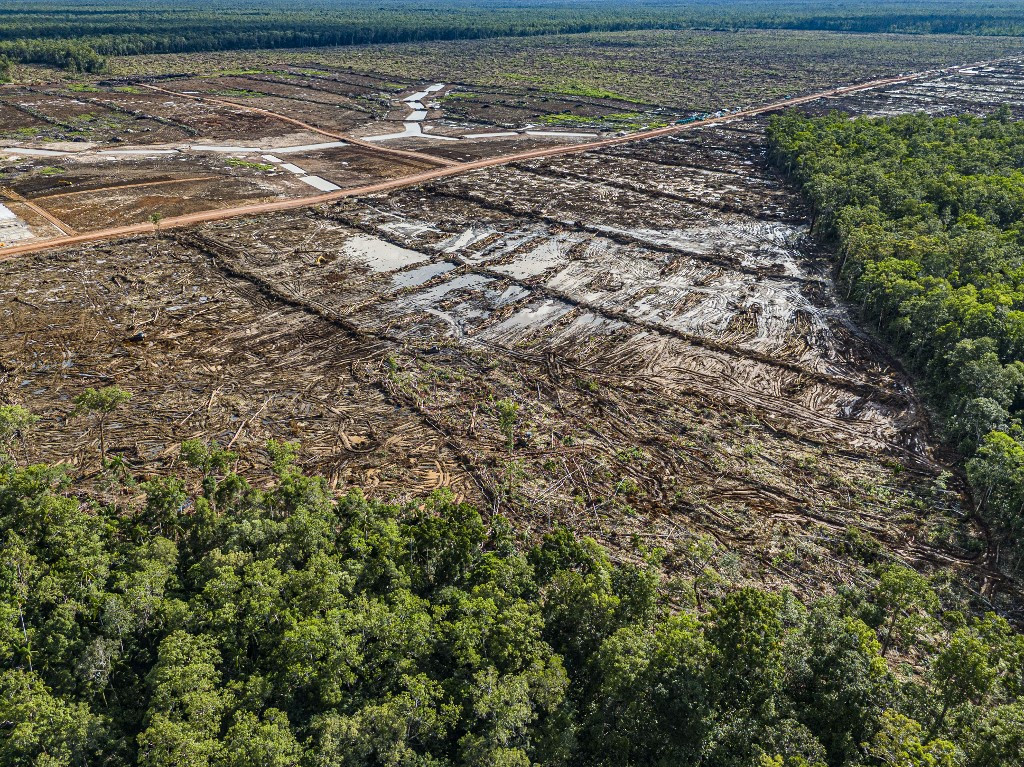 A deforested area to be converted into a sugar cane plantation by PT Murni Nusantara Abadi, directly threatening the adjacent customary forest protected by the Kwipalo Clan, scars the landscape on March 17, 2025, in Mandiri Jagebob, Merauke regency, South Papua. (AFP/Handout/Mighty Earth/Yusuf Wahil)
E
very Aug. 9, the world commemorates the International Day of the World’s Indigenous Peoples. This observance is to remind states that development must not erase the identity, territories, cultures or ways of life of indigenous peoples.
This year, the commemoration is particularly relevant in Indonesia as the draft bill of the Law on Indigenous Peoples has once again been included in the 2026 Priority National Legislation Program. The question is whether, this time, the bill will genuinely be deliberated in order to end the legal uncertainty that has persisted for more than a decade.
Globally, the United Nations estimates that there are more than 476 million indigenous peoples in 90 countries, accounting for approximately 6.2 percent of the world’s population and representing more than 5,000 distinct groups. Indigenous peoples are important guardians of biodiversity, traditional knowledge and ecosystems that sustain human life.
The Kunming-Montreal Global Biodiversity Framework explicitly requires respect for the rights of indigenous peoples in spatial planning, conservation, restoration and decision-making.
The UN Declaration on the Rights of Indigenous Peoples (UNDRIP) affirms that indigenous peoples have rights to the lands, territories and resources that they have traditionally owned, occupied, possessed or otherwise used. They also have the right to participate in decision-making on matters that may affect their rights.
Indonesia is no less significant in this context, as thousands of indigenous communities serve as guardians of the archipelago’s ecosystems and biodiversity. According to the Indigenous Peoples’ Alliance of the Archipelago (AMAN), Indonesia is home to an estimated 60 million indigenous people. They live across customary territories with institutional systems, customary laws, languages, knowledge and spiritual relationships with land and nature that developed long before the establishment of the modern Indonesian state.

The problem is that this social and cultural existence has not yet been fully matched by legal recognition and human rights protection. AMAN recorded 135 cases of customary territory dispossession in 2025, affecting approximately 3.8 million hectares of living space across 109 communities. These cases were associated with mining, forestry, monoculture plantations, energy projects, infrastructure and other development projects.