The Jakarta Post
Please Update your browser
Your browser is out of date, and may not be compatible with our website. A list of the most popular web browsers can be found below.
Just click on the icons to get to the download page.


Popular Reads
Top Results
No results found. Please check your search term and try again
Can't find what you're looking for?
View all search results
Popular Reads
Top Results
No results found. Please check your search term and try again
Can't find what you're looking for?
View all search resultsEarthquake, language and collective compassion
When the ground violently shifts, the words we choose can either steady a community’s collective courage or trigger a devastating humanitarian aftershock of panic.
Change text size
Gift Premium Articles
to Anyone
Share the best of The Jakarta Post with friends, family, or colleagues. As a subscriber, you can gift 3 to 5 articles each month that anyone can read—no subscription needed!
 Set as preferred source
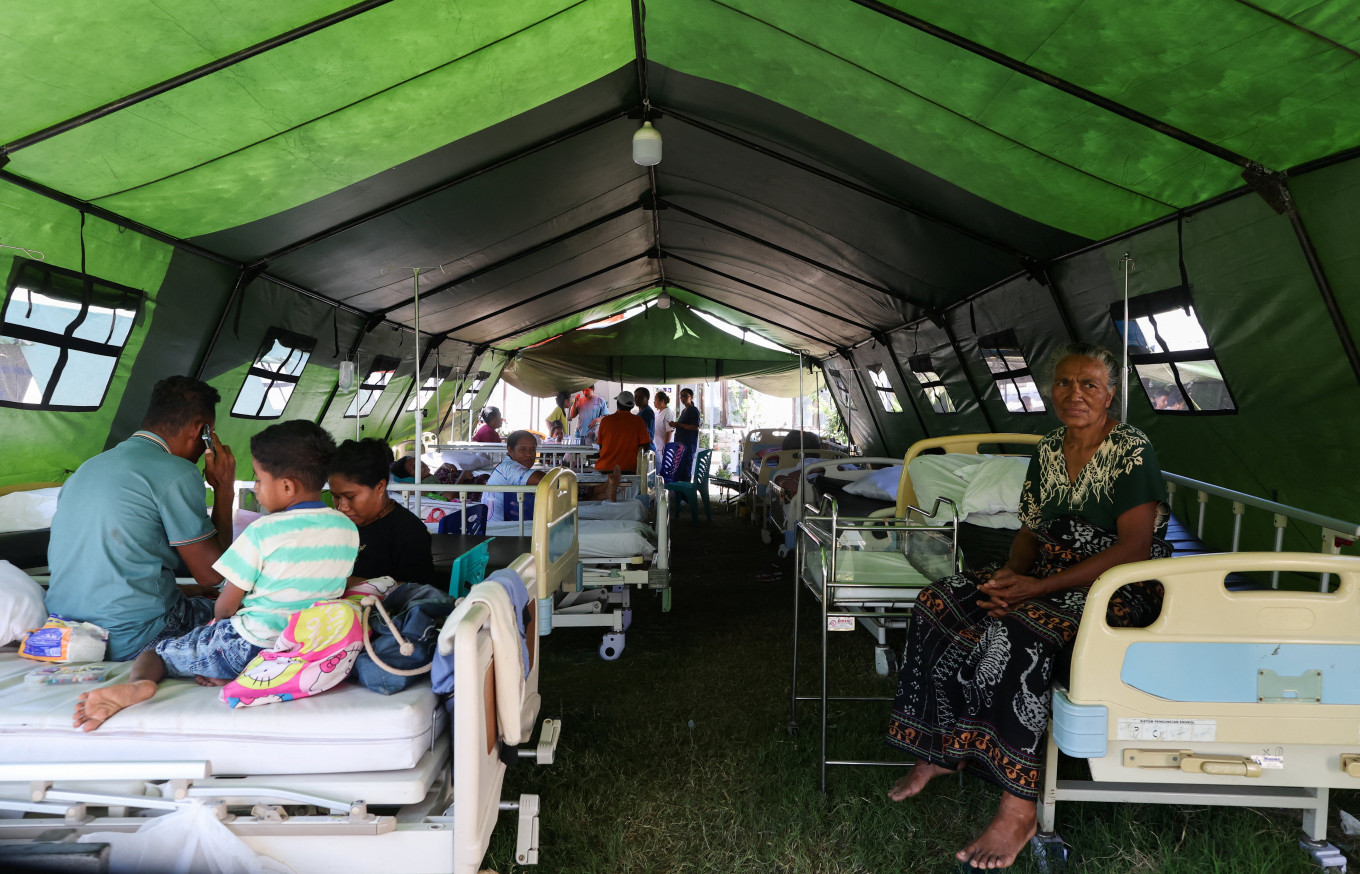 People are seen on Monday in a makeshift hospital tent outside a damaged hospital, in the aftermath of an earthquake in Nagekeo, East Nusa Tenggara (NTT). (Reuters/Edgar Su)
While an earthquake is fundamentally a geological event, for those living through it, it quickly becomes a deeply relational one.
Across Flores Island, East Nusa Tenggara (NTT), the earth’s tremors are met with distinct local refrains. In Lio, people cry out "kami latu" (we exist). In Manggarai, the call is "ata do o" (we are many humans), while in Sikka, voices rise with "ami noran" (we are still here).
Far from mere commentary on the shaking ground, these cries are an affirmation of presence - a shared declaration that the earth beneath them is neither empty nor abandoned.
Anthropologically, these vocalizations offer an instinctive way to tame terror. When a world assumed to be solid suddenly buckles, and when floors, foundations, and homes lose their stability, language provides a symbolic anchor. Shouting renders the unspeakable speakable.
When the Aug. 15 earthquake struck Flores, claiming dozens of lives and displacing many others, it revived painful memories of past disasters, such as the devastating 1992 earthquake and tsunami that left 2,500 people perished, while flooding communities with modern technical jargon.
Yet long before terms like magnitude, epicenter, fault line or back-arc thrust entered the lexicon, islanders had already forged a vocabulary rooted in lived experience. The catastrophe was already felt and interpreted through culture long before it was explained by science.

How language frames a crisis shapes what we know, and that knowledge directly guides how we act - especially in disaster mitigation and survivor care. Local memory and seismological science need not stand in conflict. While indigenous knowledge helps communities make sense of their fear, seismology clarifies the objective danger; together, they can ground disaster relief in a more humane approach.