The Jakarta Post
Please Update your browser
Your browser is out of date, and may not be compatible with our website. A list of the most popular web browsers can be found below.
Just click on the icons to get to the download page.


Popular Reads
Top Results
No results found. Please check your search term and try again
Can't find what you're looking for?
View all search results
Popular Reads
Top Results
No results found. Please check your search term and try again
Can't find what you're looking for?
View all search resultsAnalysis: Drought, rising prices expose vulnerabilities in rice supply
Change text size
Gift Premium Articles
to Anyone
Share the best of The Jakarta Post with friends, family, or colleagues. As a subscriber, you can gift 3 to 5 articles each month that anyone can read—no subscription needed!
 Set as preferred source
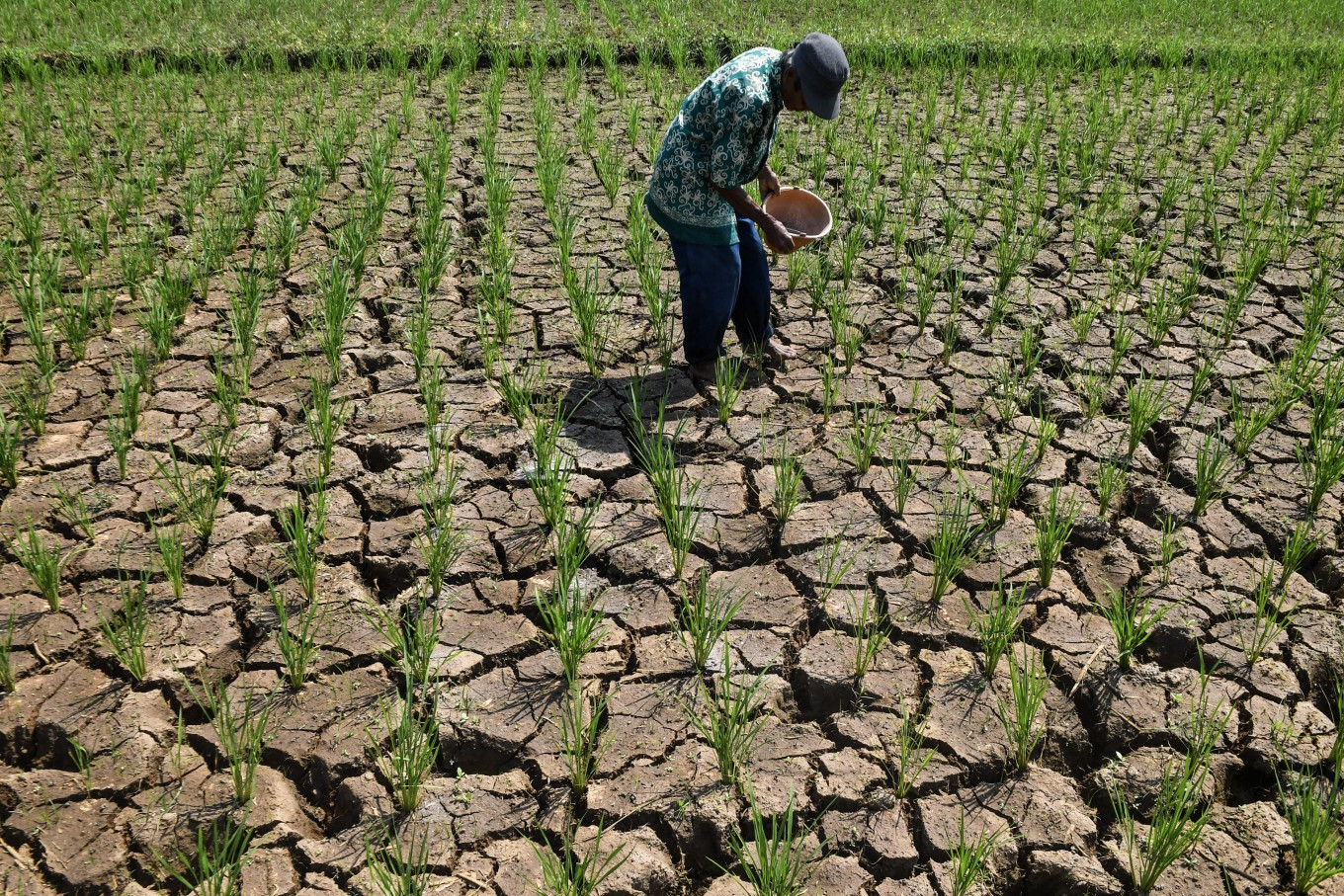 A farmer applies urea to paddy on June 10, 2026, at a drought-affected rice farm in Handapherang village, Ciamis regency, West Java, where around 12 hectares of rice fields have been left parched and cracked as the dry season intensifies. ( Antara/Adeng Bustomi)
R
ice prices have trended upward for the past seven months despite the Prabowo Subianto administration’s claim that Indonesia has achieved rice self-sufficiency. The price increase has occurred even as rice stocks held by the State Logistics Agency (Bulog) remain high. The trend could intensify as an El Niño-induced dry season brings worsening drought conditions, potentially disrupting harvests and putting further upward pressure on rice prices.
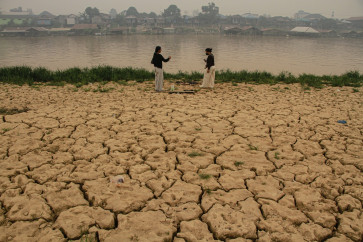
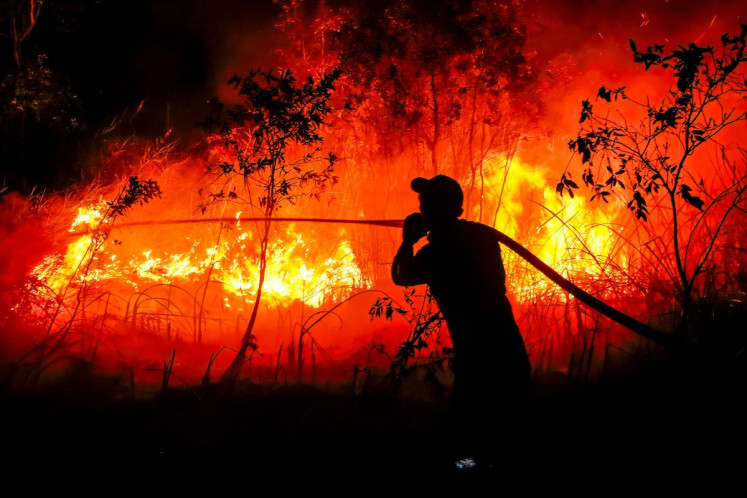
The dry season, intensified by the El Niño phenomenon, has triggered drought conditions across several regions of Indonesia. In West Java, drought had affected 214,381 people as of July 29, as prolonged dry conditions disrupted access to clean water. Dry conditions have also heightened the risk of forest and land fires. By July 29, West Kalimantan had recorded 28,680 hectares of burned land and approximately 200 hotspots across 12 regencies. In response, the government has carried out weather modification operations, which generated an estimated 40.52 million cubic meters of rainfall across Aceh and Palembang as of July 30.
Beyond the immediate risk of fires, water shortages pose a more direct threat to agricultural production. Strong El Niño conditions could suppress food production by increasing the risk of crop failure, particularly in eastern Indonesia. Second-season rice output is projected to decline by 2.6 percent nationwide. Water shortages could lower productivity, reduce planting areas, and raise farmers’ production costs in key rice-producing regions across Java, Sumatra, and Kalimantan. A decline in supply could, in turn, push up food prices and inflation, weaken the purchasing power of vulnerable households, and increase the need for subsidies, social assistance, or imports.
These risks highlight the continued dependence of Indonesia’s rice supply on weather conditions, even as the country seeks to strengthen food self-sufficiency. Rice production fell from 31.1 million tonnes in 2023 to 30.62 million tonnes in 2024, according to Statistics Indonesia (BPS), as El Niño and drought disrupted production. Imports subsequently surged to 4.52 million tonnes. Production recovered by 13.29 percent to 34.69 million tonnes in 2025, while imports fell sharply to 450,734 tonnes. However, the sector’s inherent exposure to weather conditions remains a structural risk. As rice demand continues to rise, future production disruptions could once again increase Indonesia’s reliance on imports.
The recent increase in rice reserves has also failed to prevent prices from rising. Government rice reserves (CBP) increased from 3.25 million tonnes earlier in 2026 to around 5.3 million tonnes, yet wholesale rice prices climbed from Rp 14,218 per kilogram at the beginning of the year to Rp 14,783 in July 2026. Rice contributed 2.88 percent to Indonesia’s annual inflation that month. Meanwhile, rice production for January–September is estimated to increase only marginally, by 0.01 percent year-on-year (yoy), to 28.71 million tonnes. Output during July–September could decline by 0.88 percent from the previous year due to drought, pests, flooding, and shifts in harvest timing across key production centers.
The outlook for rice production also varies significantly across institutions, underscoring the uncertainty surrounding Indonesia’s supply prospects. The Food and Agriculture Organization (FAO) projects rice production to increase from 34 million tonnes in 2024–2025 to 38.5 million tonnes in 2025–2026 and 38.6 million tonnes in 2026–2027. By contrast, the US Department of Agriculture (USDA) forecasts production at only 33.8 million tonnes in 2025–2026 and down to 33.4 million tonnes in 2026–2027. Similar to USDA numbers, the Agriculture Ministry targets 34.77 million tonnes and 34.83 million tonnes in 2026 and 2027, respectively. Meanwhile, BPS estimates rice production at 21.95 million tonnes for January–July 2026, down 0.35 percent from the same period in 2025.

One factor that could help close this gap is the government’s “New Rice Field Development” program. The government aims to add 225,000 hectares of new rice fields in both 2025 and 2026, bringing the total targeted expansion to 450,000 hectares. Assuming productivity of 5.32 tonnes of unhusked rice (GKG) per hectare and two planting seasons, the additional fields could generate an estimated 3.06 million tonnes of rice. Combined with 2025 production, total output through the end of 2026 or the first quarter of 2027 could reach 37.75 million tonnes, bringing production closer to the FAO’s projection.