The Jakarta Post
Please Update your browser
Your browser is out of date, and may not be compatible with our website. A list of the most popular web browsers can be found below.
Just click on the icons to get to the download page.


Popular Reads
Top Results
No results found. Please check your search term and try again
Can't find what you're looking for?
View all search results
Popular Reads
Top Results
No results found. Please check your search term and try again
Can't find what you're looking for?
View all search resultsWhat Indonesia can teach the world about human flourishing
As artificial intelligence accelerates, Indonesia’s top ranking in global flourishing challenges our definition of progress, proving that true wellbeing is measured by community and connection, not just technological might.
Change text size
Gift Premium Articles
to Anyone
Share the best of The Jakarta Post with friends, family, or colleagues. As a subscriber, you can gift 3 to 5 articles each month that anyone can read—no subscription needed!
 Set as preferred source
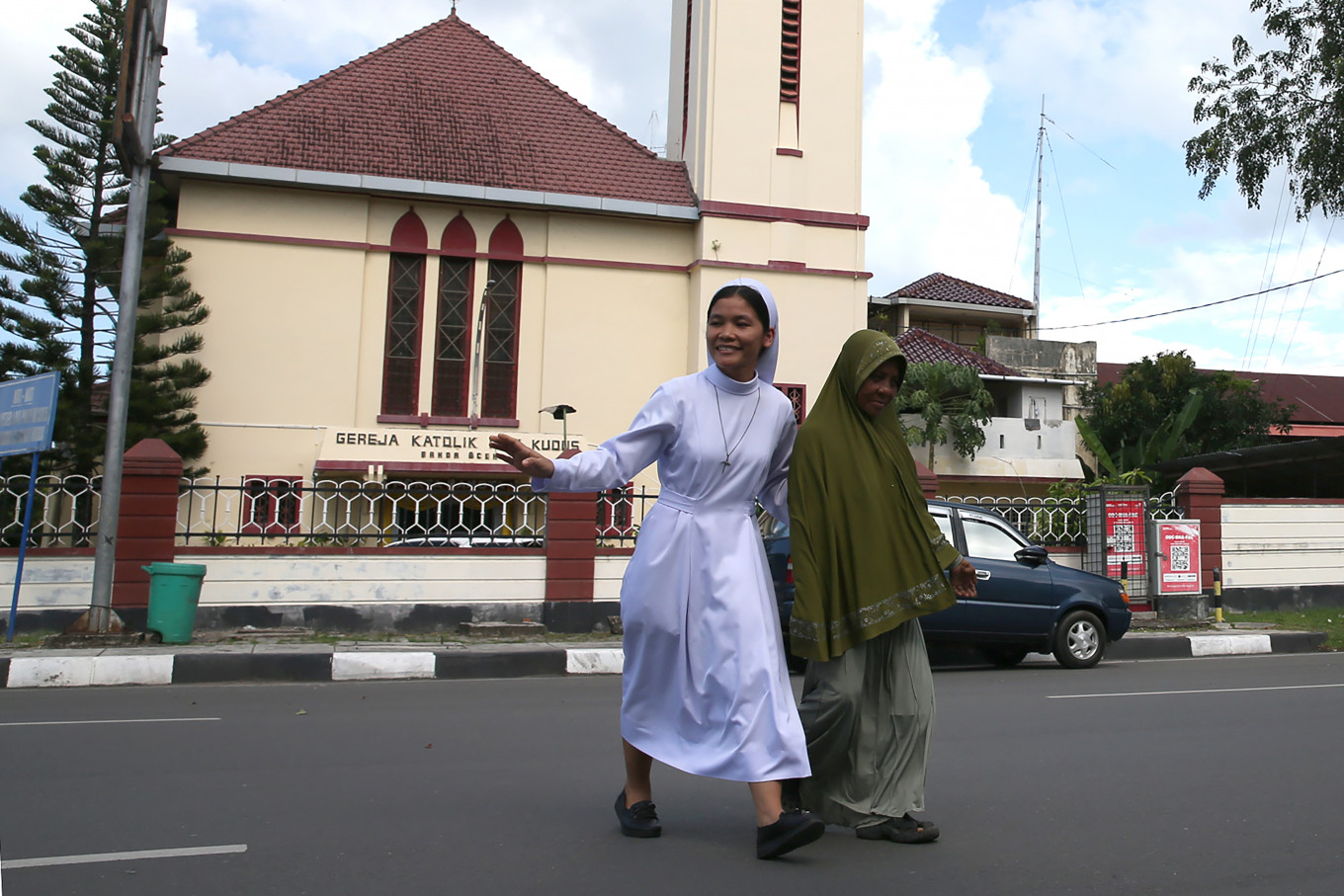 A Sacred Heart Catholic Church nun (left) helps a Muslim woman cross the street on Nov. 16, 2025, in Banda Aceh. UNESCO declared International Tolerance Day on Nov. 16, 1955, which has since been used to promote care and togetherness among people from different ethnicities and religions. (Antara/Irwansyah Putra)
W
hat makes a good life? It is a question that has occupied humanity for millennia, but as artificial intelligence reshapes how we work, learn and relate to one another, it has taken on fresh urgency, and Indonesia sits right at the heart of the conversation.
When the Global Flourishing Study released its initial findings, surveying over 200,000 people across 22 countries on health, purpose, character, relationships and financial stability, Indonesia recorded the highest overall score.
While no single study captures the full reality of a nation as vast and diverse as Indonesia, the result invites serious reflection. It directly challenges the modern assumption that material prosperity naturally translates into human wellbeing. Economic security matters, of course, but true flourishing demands something deeper: a sense of purpose, rich relationships, active community life and the conviction that one's life is genuinely worthwhile.
Indonesia’s experience offers vital insights for a global audience. Across Indonesia and much of Southeast Asia, family, community and faith remain grounding sources of belonging in both public and private life.
In the West, those foundations are fraying. Despite unprecedented tools for connection, loneliness is rising; Australia now ranks in the lower half of the flourishing index, with life satisfaction hitting historic lows. More wealth, clearly, does not guarantee a better life.
This reality becomes even more critical alongside the rise of artificial intelligence. AI holds immense promise, transforming medicine, agriculture, education and industry across our region, expanding access to knowledge, and unlocking answers to stubborn problems. Yet the central challenge is not just what AI can do, but what kind of society we want it to serve. Technology is a human creation, and its ultimate test will be whether it helps people and communities truly thrive.

This poses an urgent question for universities. If information is instantly accessible, higher education can no longer just be about content delivery. It must provide what AI cannot: shared space, trusted relationships, genuine intellectual engagement, the patient cultivation of judgment and the communal experience of learning. Education should not just make us smarter; it should help us live well alongside others.