The Jakarta Post
Please Update your browser
Your browser is out of date, and may not be compatible with our website. A list of the most popular web browsers can be found below.
Just click on the icons to get to the download page.


Popular Reads
Top Results
No results found. Please check your search term and try again
Can't find what you're looking for?
View all search results
Popular Reads
Top Results
No results found. Please check your search term and try again
Can't find what you're looking for?
View all search resultsGen Z‑led uprisings across Asia: Strengths and limitations of youth protest
Youth-led protest movements across Asia have exposed underlying anger at corruption and blocked opportunity. But so far, only Nepal has managed to convert that anger into a transfer of governing power.
Change text size
Gift Premium Articles
to Anyone
Share the best of The Jakarta Post with friends, family, or colleagues. As a subscriber, you can gift 3 to 5 articles each month that anyone can read—no subscription needed!
 Set as preferred source
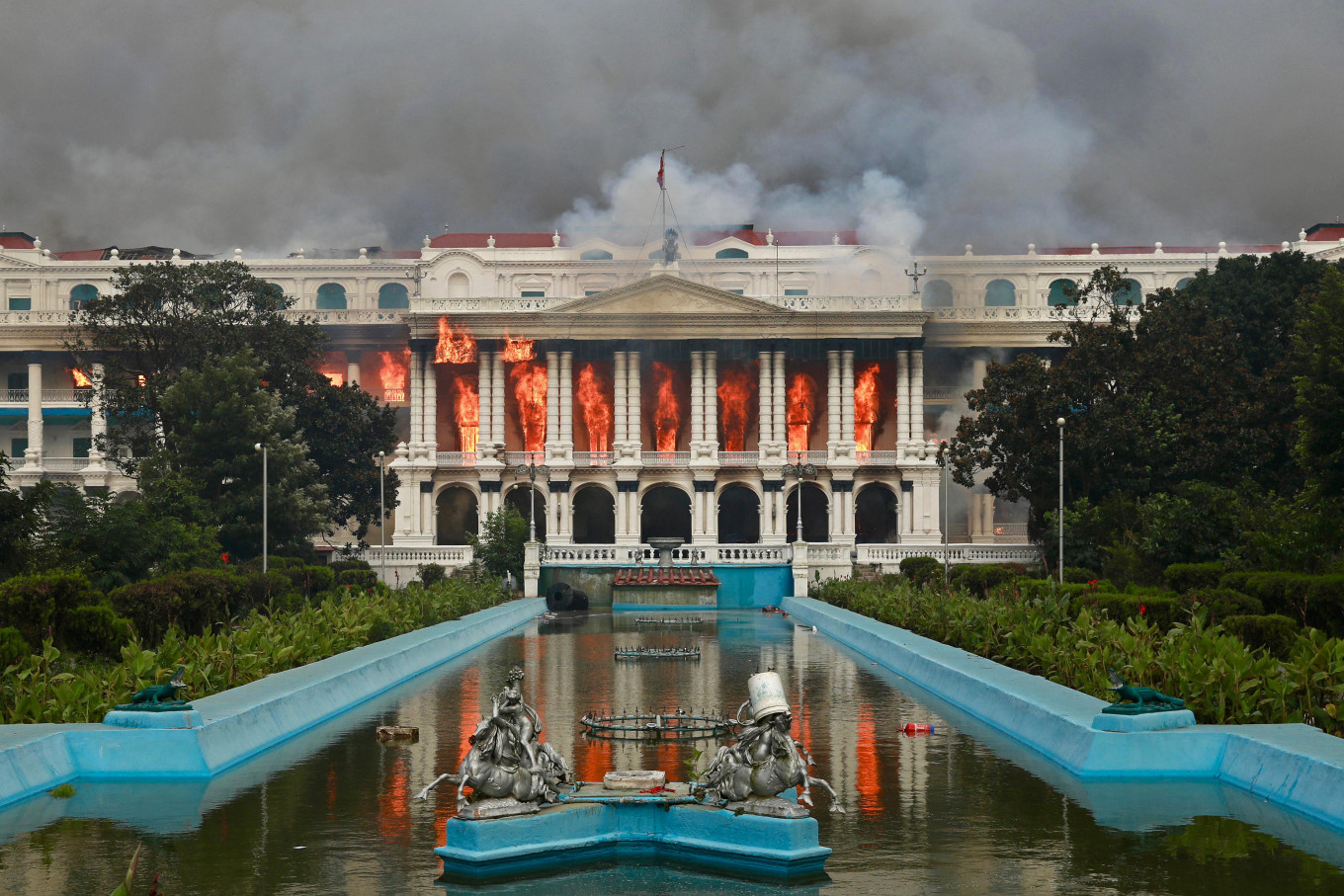 Fire rages through Singha Durbar in Kathmandu during a Gen Z protest on Sept. 9, 2025, a day after a police crackdown on demonstrations over a ban on 26 social media platforms and alleged government corruption. (AFP/Prabin Ranabhat)
R
ecent Gen Z-led uprisings have reshaped political narratives across Asia, raising a pointed question: Can street-level youth outrage be transformed into governing power and lasting institutional change? Or does it burn out once the protests end?
Digitally networked young protesters in Nepal, Bangladesh, Sri Lanka, Iran, Myanmar, the Philippines and, more recently, India have jolted citizens into confronting political cultures where corruption and nepotism were long accepted as unavoidable features of public life.
Yet the outcomes have diverged. In most cases, the protests reshaped public debate, forced concessions or toppled a leader without displacing the political establishment itself. Nepal is the exception.
Developments there since the Gen Z uprising of spring 2025 have gone further than anywhere else in the region: an entire political class was replaced in a single election, not just a government.
Nepal’s revolt was distinctly generational. Youth influencers turned into organizers and used viral hashtags to convert scattered frustrations into coordinated mass protest almost overnight. But beneath the digital coordination lay a deeper, older grievance: structural frustration over corruption, unemployment and elite impunity that had been building for years.
The socioeconomic backdrop was stark. Youth unemployment sat near 20 per cent. Nepal scored 34 out of 100 on Transparency International’s 2025 Corruption Perceptions Index, ranking 109 of 182 countries. And remittances, money sent home by Nepalis working abroad, accounted for nearly 27 per cent of GDP in 2023, a striking indicator of how many young Nepalis had already concluded their future lay elsewhere.

In fiscal year 2024-25, over 800,000 people secured labor permits for foreign work. For decades, development in Nepal has often functioned as an experiment for international donors and outside interests. Amid the turmoil of the uprising, many feared political upheaval would simply open a new round of external experimentation, especially if domestic voices were sidelined or fragmented.
Instead, the state moved fast and within 48 hours, the prime minister was forced to resign, the lower house of the parliament was dissolved and an interim cabinet formed under former chief justice Sushila Karki, the first woman to lead Nepal’s government. One of her administration’s first acts was to schedule parliamentary elections within six months.
Many were skeptical that the elections would happen at all, or, if they were held, that they would be peaceful. Others assumed the same old parties and leaders would be elected. After all, they controlled many institutions, organizations and sections of the media, and had the power to shape the political narrative.
The elections, however, took place on March 5 and the final results smashed those expectations. Nepali voters overwhelmingly turned toward new faces and propelled the previously marginal Rastriya Swatantra Party (RSP) into power based on the Gen Z movement’s aspirations.
The RSP won 182 of 275 parliamentary seats, two seats short of a two-thirds majority, including 125 of 165 directly elected constituencies. It was one of the most significant transfers of power in Nepal’s democratic history, driven almost entirely by the voice of the young generation.
Unlike Bangladesh or Sri Lanka, where elections or elite negotiation shaped the transition, in Nepal the streets reconfigured formal political authority. Unrest spread from the capital Kathmandu across the country, leaving more than 70 dead and thousands injured.
The 2026 election delivered on that momentum with a mandate unlike anything else in the region: a three-year-old party won 182 seats and formed a government under the country’s youngest prime minister, Balendra Shah. This signaled a decisive break from a decade of coalition reshuffling among the same three establishment parties.
Compare that with the region’s other post-uprising transitions: Bangladesh’s election returned the long-established Bangladesh Nationalist Party to power in 2026, and Sri Lanka’s 2024 election brought in a leftist coalition government that, while new, was still built from familiar political blocs.
India presents another important contrast. A youth-led movement there, which emerged from anger over leaked competitive examination papers, corruption and graduate unemployment, mobilized thousands of student protesters in Delhi in 2026.
The self-styled “cockroach” movement led to the minister of education’s resignation and pushed the government to promise stronger measures against exam leaks, free online coaching and reforms to the educational system.
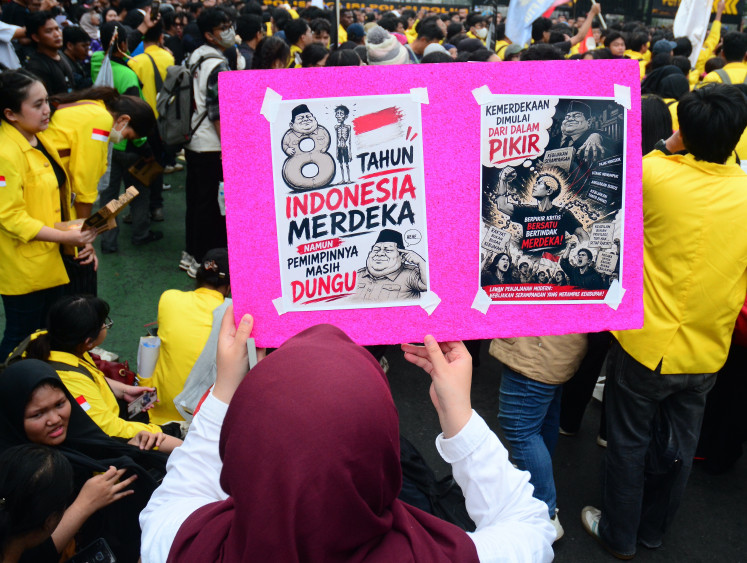
Like their Nepali counterparts, Indian activists transformed a specific grievance into a broader indictment of corruption and exclusion. But the political outcome was different: India’s movement helped change the national debate without overturning the governing establishment itself. The same holds for Indonesia and the Philippines, where youth-led protests generated substantial public pressure but never converted into a direct transfer of power.
That is what makes Nepal’s case distinct. No other youth movement in the region, or arguably anywhere, has engineered anything comparable.
The big question now is whether Nepal’s new government can meet the expectations riding on it. Prime Minister Shah signaled a leaner approach early by appointing a 14-member cabinet and promising a more efficient state. His government also approved a “100-point reform agenda” built around political integrity, administrative efficiency, institutional discipline, digital governance and anti-corruption measures. But now comes the hard part.
Hundreds of thousands of young Nepalis go abroad annually in search of work. Many, especially in rural areas, are still waiting for their basic needs to be met. The poverty rate remains above 20 per cent, and the country has been consistently marred by rampant corruption and bad governance.
Against that backdrop, it will be a Herculean task for any government to perform, especially one with little experience in governance.
Nepal’s Gen Z has earned credit for forcing accountability onto the agenda and voicing what many had long felt. And the experience across Nepal, India and the wider region shows that youth movements can change political debate and, in exceptional cases, shift who governs. Changing how the state actually works, however, is harder.
---
 Ashika Niraula is a senior research associate and Sagar Raj Sharma is a visiting researcher, both at Global Migration Institute, Toronto Metropolitan University. This article is republished under a Creative Commons license.