The Jakarta Post
Please Update your browser
Your browser is out of date, and may not be compatible with our website. A list of the most popular web browsers can be found below.
Just click on the icons to get to the download page.


Popular Reads
Top Results
No results found. Please check your search term and try again
Can't find what you're looking for?
View all search results
Popular Reads
Top Results
No results found. Please check your search term and try again
Can't find what you're looking for?
View all search resultsWe cannot intern our way to productive employment
Subsidizing six-month internships won't fix graduate unemployment if Indonesia's shrinking industrial base lacks the factories, machinery and capacity to hire them afterward.
Change text size
Gift Premium Articles
to Anyone
Share the best of The Jakarta Post with friends, family, or colleagues. As a subscriber, you can gift 3 to 5 articles each month that anyone can read—no subscription needed!
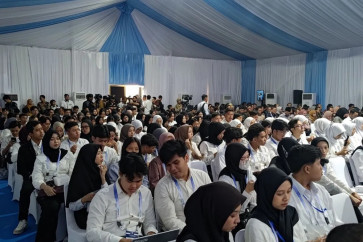
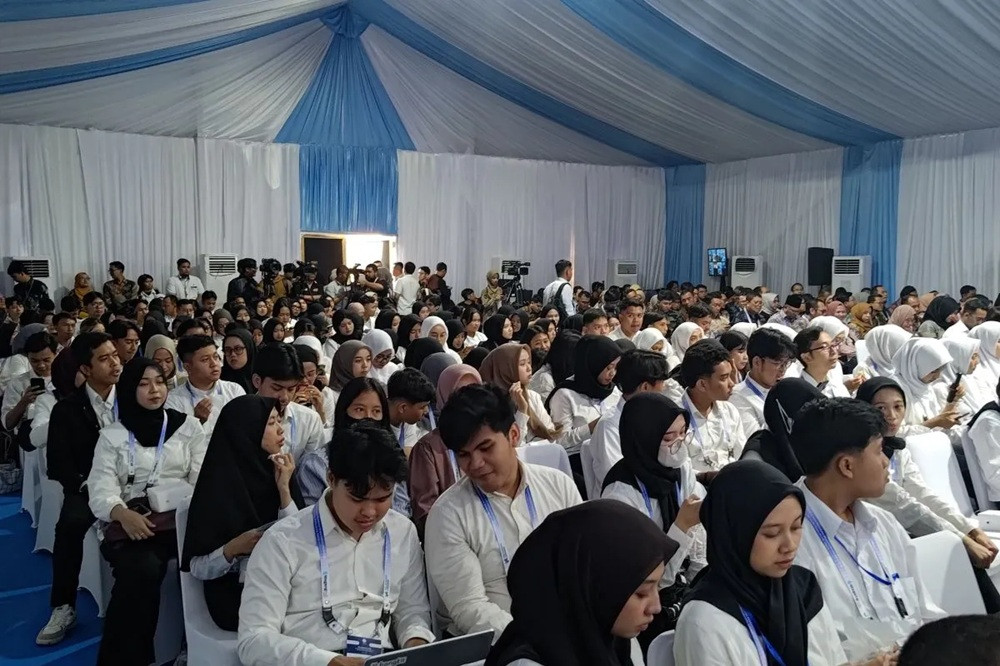 Around 1,800 participants attend the in-person opening of the 2nd Batch of the National Graduate Internship Program on Nov. 26, 2025, at the Manpower Ministry office in Jakarta. (Antara/Aria Ananda))
I
ndonesia cannot solve graduate unemployment by subsidizing six-month corporate placements while the productive base meant to absorb those graduates loses economic weight. World Bank data shows manufacturing’s share of GDP peaked at roughly 22.7 percent in 2000 and slipped to about 19.1 percent by 2025.
In 2019, I participated in a focus-group discussion on the future skill requirements of Indonesian workers. Employers emphasized technical competence, problem-solving, communication, digital literacy and closer alignment between training institutions and industry. The conversation focused almost entirely on preparing workers, paying little attention to whether enough firms would possess the orders, machinery, and payroll capacity to hire them afterward.
The challenge is also cultural. In study cohorts I have examined, between 93 and 99 percent of students preferred stable wage employment over entrepreneurship. Historical patterns from premodern and colonial Indonesia illuminate why this preference endures: institutional employment historically provided reliable income, legal protection and social status, whereas independent enterprise exposed households to severe commercial volatility. Consequently, families still view institutional employment as the safer initial career path.
When stable jobs are scarce, entrepreneurship often emerges by default, though motivations vary widely. Some founders possess the temperament, skills and capital to build scalable ventures that lead to sustained growth. Many others, however, enter informal trade simply because they lack salaried alternatives, operating on thin margins with minimal capital. Those unable to secure even informal income face chronic unemployment or drift between precarious gigs.
Indonesia’s millions of micro and small enterprises should not be misread as evidence of an innate entrepreneurial drive. Many exist solely out of economic necessity after formal avenues closed, remaining subsistence operations rather than businesses capable of accumulating capital and creating jobs.
Recent graduates understandably lack formal work experience, and employers are naturally cautious about hiring untested candidates. A six-month placement offers practical exposure, mentorship and competency certification.

The 2026 program is structured to heavily favor host companies. According to Manpower Ministry (Kemnaker) dissemination materials, the government pays participants an allowance equal to the local minimum wage, covers accident and life insurance, and funds competency certification. The host company supplies only the physical placement, a mentor and a syllabus, leaving the state to shoulder the direct financial burden of onboarding.