The Jakarta Post
Please Update your browser
Your browser is out of date, and may not be compatible with our website. A list of the most popular web browsers can be found below.
Just click on the icons to get to the download page.


Popular Reads
Top Results
No results found. Please check your search term and try again
Can't find what you're looking for?
View all search results
Popular Reads
Top Results
No results found. Please check your search term and try again
Can't find what you're looking for?
View all search resultsWhoosh at a juncture
Shuffling Whoosh’s ballooning debt among state balance sheets won't save the region's first HSR service; only hard renegotiations and structural reform will.
Change text size
Gift Premium Articles
to Anyone
Share the best of The Jakarta Post with friends, family, or colleagues. As a subscriber, you can gift 3 to 5 articles each month that anyone can read—no subscription needed!
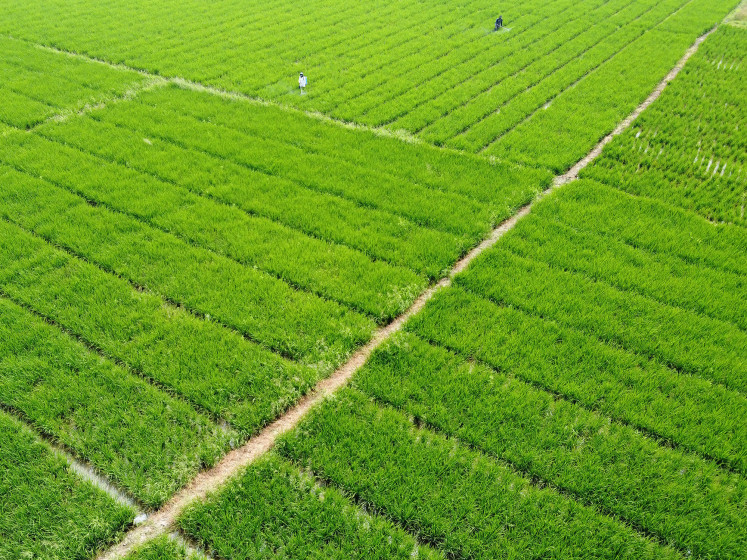
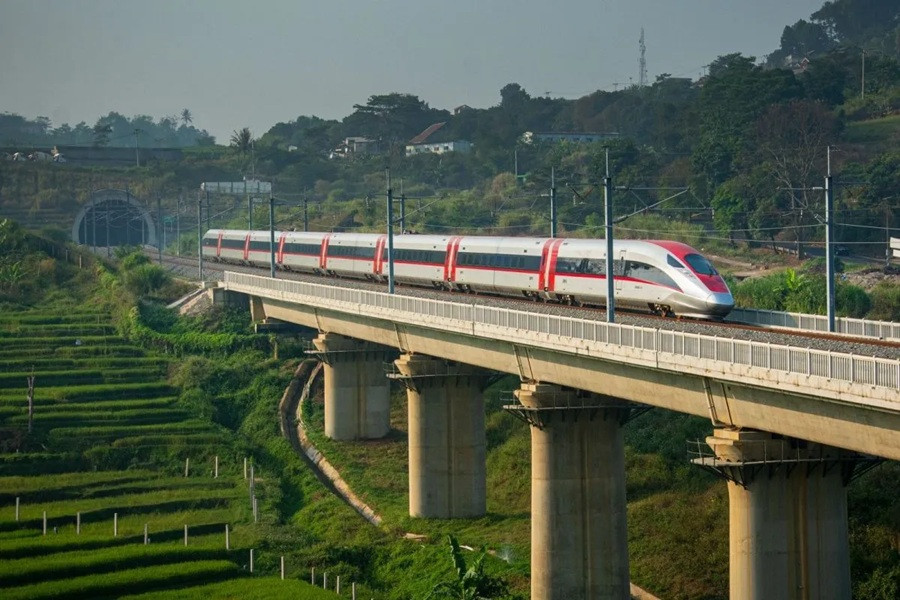 A train of the Jakarta-Bandung High-Speed Rail (HSR) service, which operates under the Whoosh brand, passes an elevated rail over rice fields on Aug. 12, 2026, as it heads toward Padalarang Station in West Bandung regency, West Java. (Antara/KCIC)
W
hen Finance Minister Purbaya Yudhi Sadewa stated that the mounting debt obligations of the Jakarta-Bandung High-Speed Rail (HSR) would be transferred from state-owned enterprises (SOEs) to his ministry as soon as September, it immediately raised eyebrows across policy circles.
Purbaya has insisted that absorbing these obligations will not burden the state budget. Yet that pledge will prove extraordinarily difficult to honor without structural reforms to how the HSR operates and how its substantial liabilities to the China Development Bank (CDB) are managed.
The looming dilemma facing policymakers is no longer just a bookkeeping exercise over which the balance sheet carries the load, but a broader strategic question: What does the government ultimately intend to do with the rail service?
The HSR project, operating under the Whoosh brand, is run by joint venture PT Kereta Cepat Indonesia China (KCIC), 60 percent of which is controlled by a consortium of SOEs under PT Pilar Sinergi BUMN Indonesia (PSBI) and the remainder by Chinese consortium Beijing Yawan HSR Co., Ltd.
The project's final cost ballooned dramatically to US$7.27 billion from an estimated $5.5 billion, with approximately three-quarters financed through CDB loans. That left the venture saddled with roughly Rp 79 trillion ($4.5 billion) in total debt at an initial annual interest rate of 3.4 percent. Servicing that obligation demands an estimated $121 million each year alone, a severe financial drag that has steadily strained the participating state firms.
Construction firm PT Wijaya Karya (WIKA) led the local consortium until its leadership was reassigned in 2021 to the more financially sound PT Kereta Api Indonesia (KAI), the state railway company. However, reshuffling the corporate leadership did not resolve the underlying fiscal distress, only shifted the exposure.

The financial toll has escalated sharply. PSBI recorded a net loss of Rp 5.13 trillion in the first half of 2026 alone, outpacing the total loss of Rp 4.99 trillion it booked in 2025. As majority stakeholder, KAI absorbed roughly Rp 3 trillion of those losses over that period.