The Jakarta Post
Please Update your browser
Your browser is out of date, and may not be compatible with our website. A list of the most popular web browsers can be found below.
Just click on the icons to get to the download page.


Popular Reads
Top Results
No results found. Please check your search term and try again
Can't find what you're looking for?
View all search results
Popular Reads
Top Results
No results found. Please check your search term and try again
Can't find what you're looking for?
View all search resultsIndustrial estates need a new measure of success
Indonesia must stop selling cheap land and labor—and start building high-performing, sustainable industrial ecosystems that modern global investors actually want.
Change text size
Gift Premium Articles
to Anyone
Share the best of The Jakarta Post with friends, family, or colleagues. As a subscriber, you can gift 3 to 5 articles each month that anyone can read—no subscription needed!
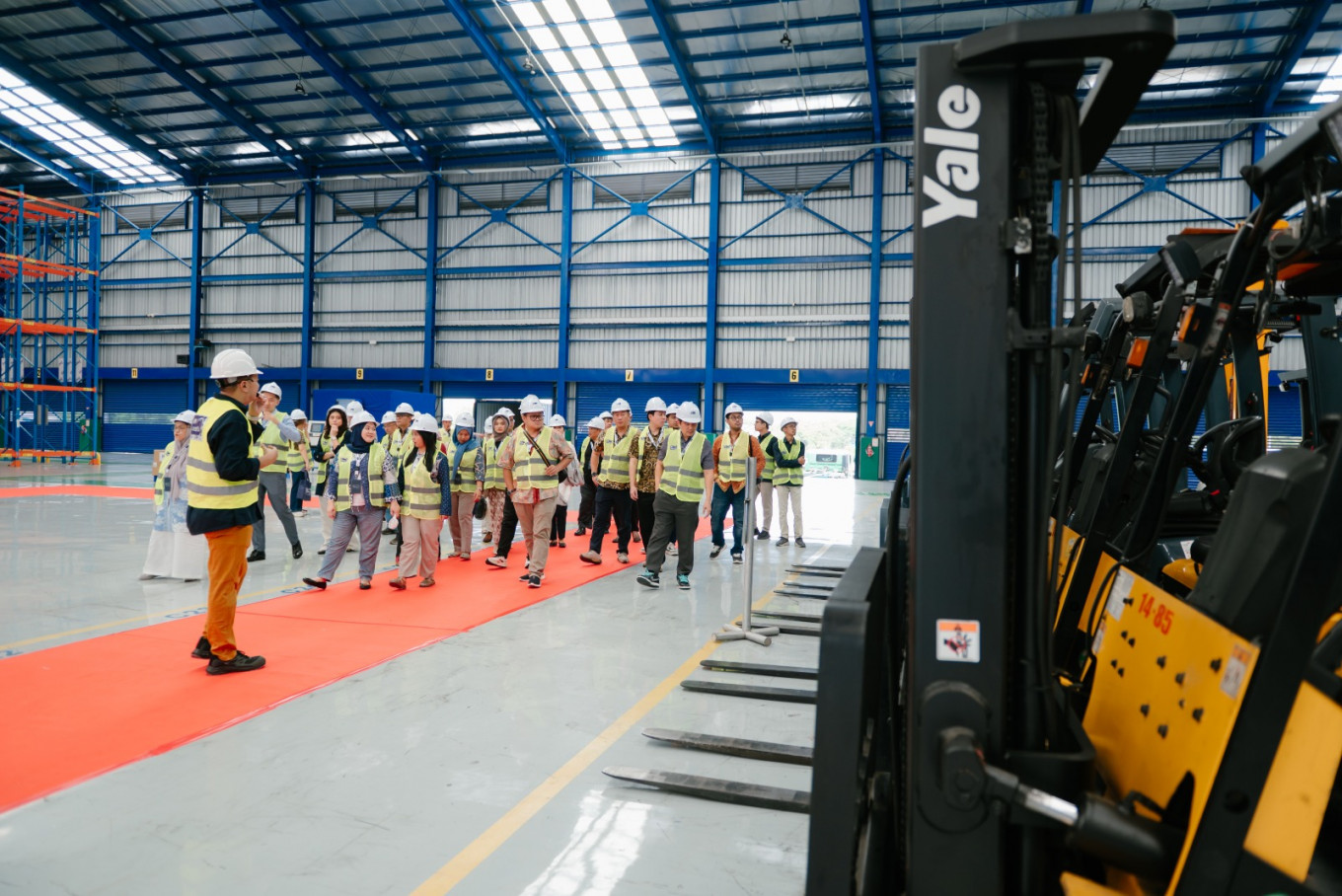 Guests visit the Marunda Flow Center during its launch ceremony at KBN Marunda Industrial Estate in North Jakarta, on May 13, 2025. Supply chain specialist APL Logistics operates the 32,000 square meters distribution facility. (Courtesy of APL Logistics/-)
B
y mid-2026, Indonesia's industrial footprint reached 179 estates across nearly 100,000 hectares, housing roughly 11,970 companies, according to the government data. Backed by over Rp 6.74 quadrillion (US$380 billion) in realized investment and supporting around 2.35 million direct jobs, these hubs serve as vital employment anchors across the country.
Yet sheer scale obscures a critical question: What does success actually look like for an industrial estate today?
For years, measuring success meant tallying up land area, occupancy rates, capital inflows and headcount. While still relevant, those metrics alone no longer cut it.
Modern global investors look for dependable energy, low-carbon operations, water security, skilled labor, strict environmental compliance, reliable supply chains and genuine community support. Gauging progress without these benchmarks leaves Indonesia competing at a distinct disadvantage.
The regulatory groundwork is already underway. Government Regulation No. 20/2024 modernized industrial zoning and Industry Ministerial Regulation No. 26/2025 introduced formal standards and accreditation. The decisive moment, however, will be the upcoming Industrial Estate Bill—our prime opportunity to reshape national expectations for decades to come.
That conversation cannot stop at cutting red tape or streamlining permits. The real test is ensuring these zones remain competitive, accountable and sustainable throughout their operational lifespans.

The practical move forward is evolving current accreditation into a comprehensive Industrial Estate Performance and Sustainability Framework. Rather than a one-off sign-off, reviews should be regular and tied to practical metrics: energy efficiency, water consumption, emissions targets, circular waste systems, worker safety, fair labor practices, clear grievance mechanisms and local economic integration. Far from superficial compliance exercises, these indicators represent the modern baseline for commercial viability.