The Jakarta Post
Please Update your browser
Your browser is out of date, and may not be compatible with our website. A list of the most popular web browsers can be found below.
Just click on the icons to get to the download page.


Popular Reads
Top Results
No results found. Please check your search term and try again
Can't find what you're looking for?
View all search results
Popular Reads
Top Results
No results found. Please check your search term and try again
Can't find what you're looking for?
View all search resultsFrom the Himalayas to Sumatra: Can Indonesia govern an unruly climate?
When freak disasters render historical weather data useless, Indonesia's real climate crisis isn't about predicting the next storm—it’s learning how to govern a future that no longer plays by the rules.
Change text size
Gift Premium Articles
to Anyone
Share the best of The Jakarta Post with friends, family, or colleagues. As a subscriber, you can gift 3 to 5 articles each month that anyone can read—no subscription needed!
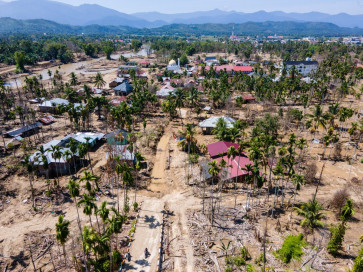
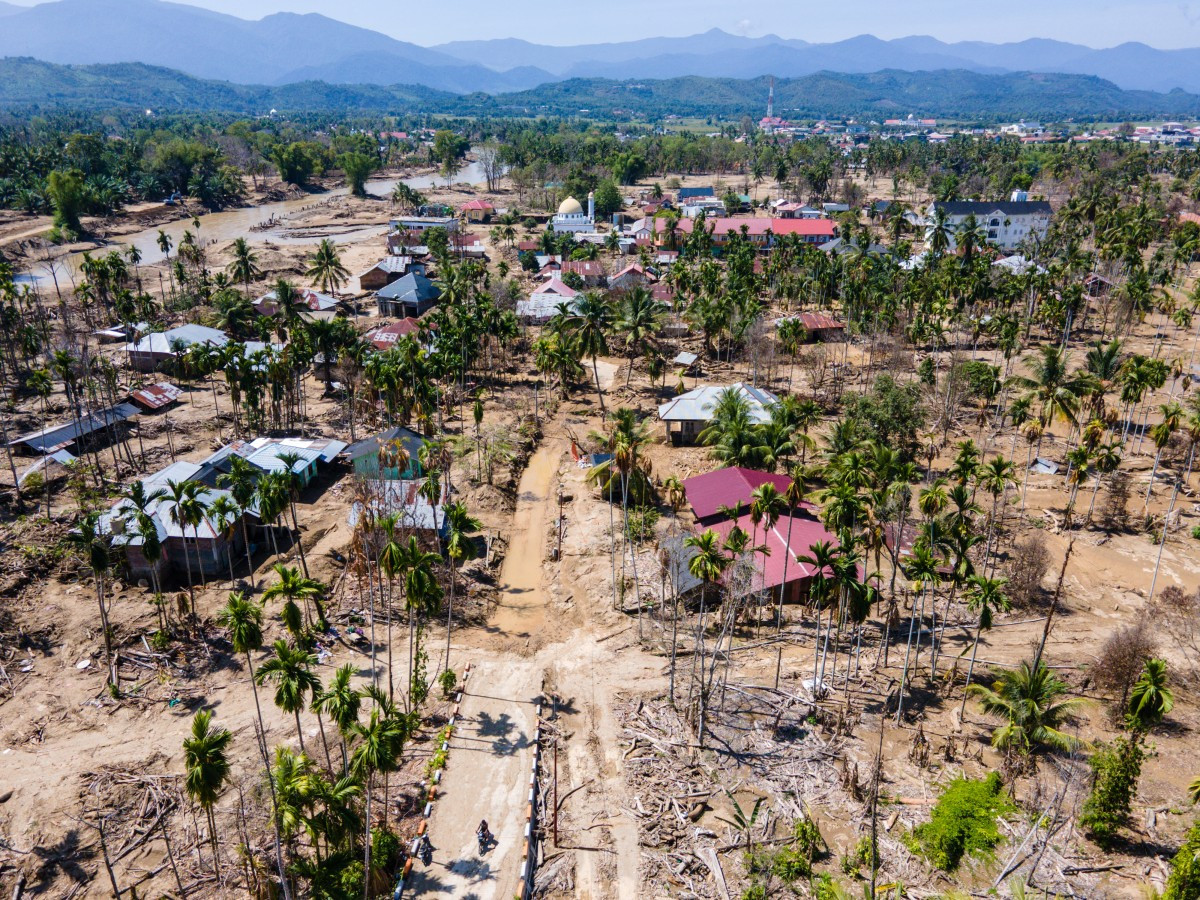 An aerial view shows flood damage to a residential area in Meurah Dua, Pidie Jaya regency, Aceh on Feb. 22, 2026, after devastating cyclone-induced floods and landslides struck northern Sumatra in November 2025. In hardest-hit Aceh, which accounted for most of the more than 1,000 deaths, families have become increasingly frustrated over authorities' sluggish response. (AFP/Chaideer Mahyuddin)
W
hat does a massive glacial landslide in the Nepalese Himalayas have to do with a tropical cyclone churning through the Malacca Strait?
Physically, almost nothing. One struck high among Central Asian peaks; the other developed thousands of kilometers away in the equatorial waters of Southeast Asia. They occurred months apart, driven by entirely different mechanics of earth and sky.
Set them side by side, however, and a sharper question emerges, one meant less for meteorologists than for governments: What happens when the historical assumptions we use to plan for risk stop holding up?
In November 2025, Tropical Cyclone Senyar spun to life over the Malacca Strait. Meteorologically, it was bizarre. Straddling the equator, where the Coriolis effect is virtually absent, the strait is the last place anyone expected cyclogenesis. Yet Senyar formed anyway, dumping punishing rain across northern Sumatra and submerging parts of Aceh. Roads washed out, harvests drowned and local emergency networks buckled.
Less than a year later, in August 2026, another extraordinary disaster struck far to the northwest. A high-altitude glacial slope collapsed inside Nepal’s Langtang National Park, unleashing a catastrophic wall of debris and flash floods that tore nearly 100 kilometers downstream.
There is no need to invent a causal link between these two events. Senyar did not trigger the collapse in Nepal, nor did the Himalayas stir up a cyclone off Sumatra. Nor should every freak storm be casually dismissed as mere climate change shorthand.

The real connection lies in the uncomfortable lesson they deliver to governments accustomed to planning almost entirely through the rear-view mirror.