The Jakarta Post
Please Update your browser
Your browser is out of date, and may not be compatible with our website. A list of the most popular web browsers can be found below.
Just click on the icons to get to the download page.


Popular Reads
Top Results
No results found. Please check your search term and try again
Can't find what you're looking for?
View all search results
Popular Reads
Top Results
No results found. Please check your search term and try again
Can't find what you're looking for?
View all search resultsAnalysis: NU struggles for independence by changing chairs
Change text size
Gift Premium Articles
to Anyone
Share the best of The Jakarta Post with friends, family, or colleagues. As a subscriber, you can gift 3 to 5 articles each month that anyone can read—no subscription needed!
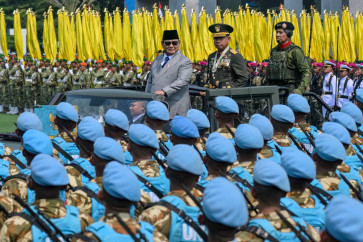
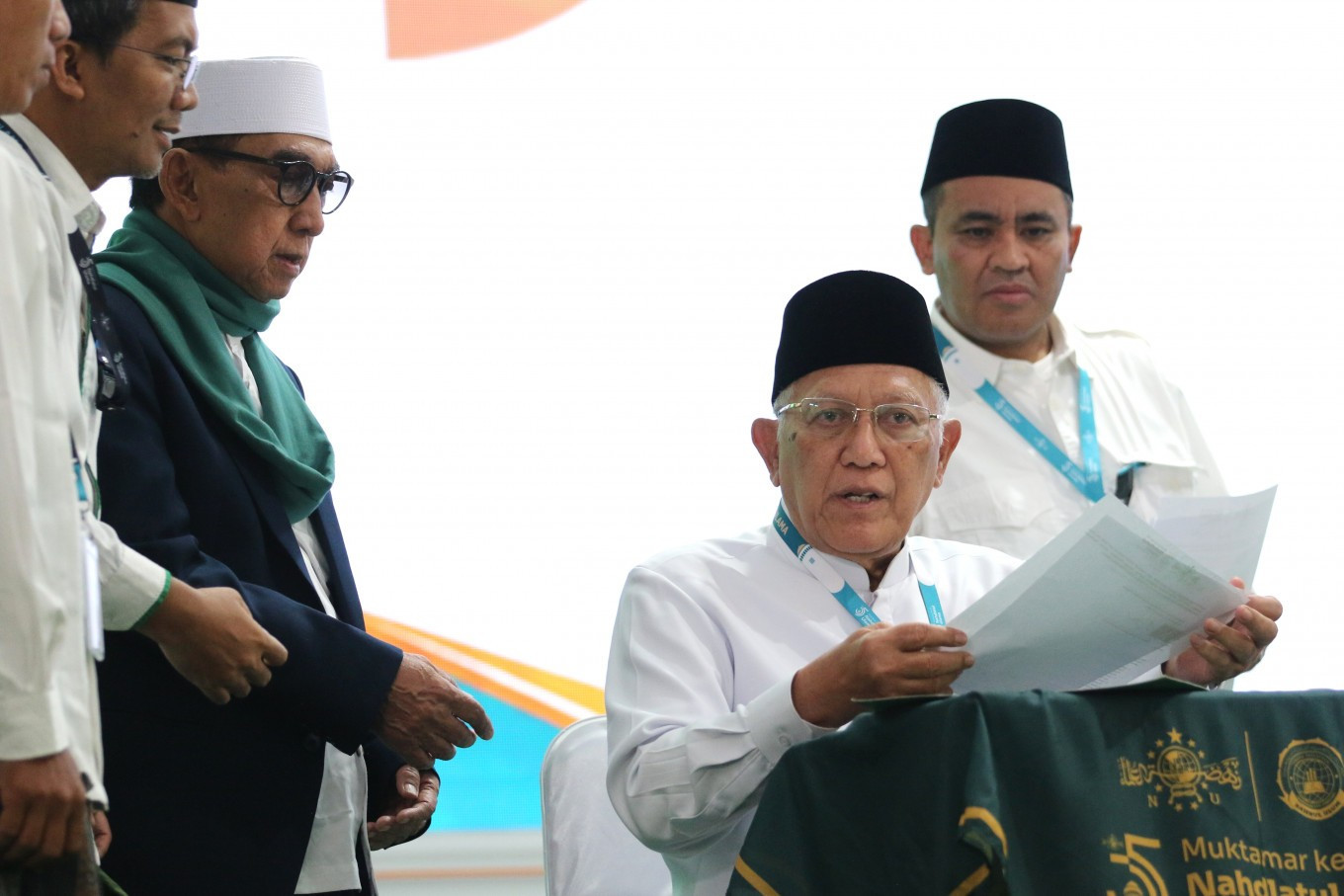 Abdul Hakim Mahfudz, better known as Gus Kikin, (at podium) addresses the audience as the new chairman of Nahdlatul Ulama (NU) on Aug. 31, 2026, the final day of the 35th NU National Congress (Muktamar) at Pondok Pesantren Bahrul Ulum Tambakberas, an Islamic boarding school in Jombang, East Java. (Antara/Syaiful Arif)
T
he search for independence for Nahdlatul Ulama (NU),Indonesia’s largest Islamic social organization, has always been fought at its congress (Muktamar). The 35th Muktamar at Bahrul Ulum Tambakberas, Jombang, East Java, which closed on Aug. 26, was no exception.
By consensus of the nine-member Ahlul Halli wal Aqdi (AHWA), the council entrusted with selecting the NU leadership, KH Abdul Hakim Mahfudz, known as Gus Kikin, was elected chairman of the Executive Board (PBNU) for 2026-2031. He secured 472 votes, well ahead of KH Zulfa Mustofa (262) and incumbent KH Yahya Cholil Staquf (258).
On paper, it is a return to their roots. Gus Kikin is a great-grandson of NU founder Hadratussyekh KH Hasyim Asy'ari, caretaker of Tebuireng pesantren (Islamic boarding school), and former head of NU East Java. His platform was deliberately inward-looking: revitalizing NU's foundational constitution (Qanun Asasi), preserving traditional scholarly lineage and strengthening economic development for NU's tens of millions of members.
That inward turn is the point. Yahya's five-year chairmanship was defined by an outward, progressive project, continuing Abdurrahman Wahid's pluralist vision through the G20 Religion Forum and the Humanitarian Islam movement, which won praise abroad but created distance at home. His tenure was also marked by a top-down style and entanglement with the state: in 2024 he accepted a 26,000-hectare coal concession, which critics saw as a symbol of NU's co-option by the state.
That symbolism became a legal liability. In March, Yahya's brother and former religious affairs minister Yaqut Cholil Qoumas was detained over an alleged haj-quota corruption case, with a PBNU executive also implicated. Infighting over control of mining rents deepened the rift. In November, chair of the supreme board (Rais Aam) Miftachul Akhyar declared the chairmanship vacant, effectively firing Yahya, who refused to step down. NU had two rival centers of authority for two months, until Yahya apologized in January and agreed to a congress to choose his successor.
The Muktamar, then, was as much a cleansing as an election. Gus Kikin's win reflects a familiar NU divide: "conservative" here means traditionalist, sanad-oriented, pesantren-centered, deferential to senior kyai (Islamic scholar), not Islamist. Yahya represented the wing that believed NU should lead global civil discourse; Gus Kikin represents the wing that believes NU must save itself first.

The scale of that preference was confirmed elsewhere on the ballot: KH Miftachul Akhyar, the traditionalist Rais Aam who had declared Yahya's chairmanship vacant, was reelected to a second term as NU's supreme spiritual leader. Two conservatives at the top of both NU's executive and clerical hierarchies signal this was not a narrow factional win but a broad congress mandate for the traditionalist wing.