The Jakarta Post
Please Update your browser
Your browser is out of date, and may not be compatible with our website. A list of the most popular web browsers can be found below.
Just click on the icons to get to the download page.


Popular Reads
Top Results
No results found. Please check your search term and try again
Can't find what you're looking for?
View all search results
Popular Reads
Top Results
No results found. Please check your search term and try again
Can't find what you're looking for?
View all search resultsAssessing the merit of the strategic commodities bill
In order to ensure the viability and merit of the bill, it is imperative for all of us to get clarity on ultimate purpose, intended impacts and legal soundness during the legislative process.
Change text size
Gift Premium Articles
to Anyone
Share the best of The Jakarta Post with friends, family, or colleagues. As a subscriber, you can gift 3 to 5 articles each month that anyone can read—no subscription needed!
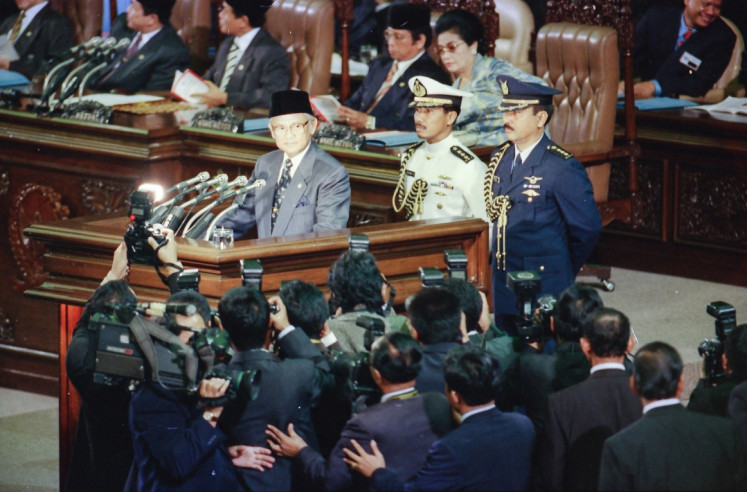
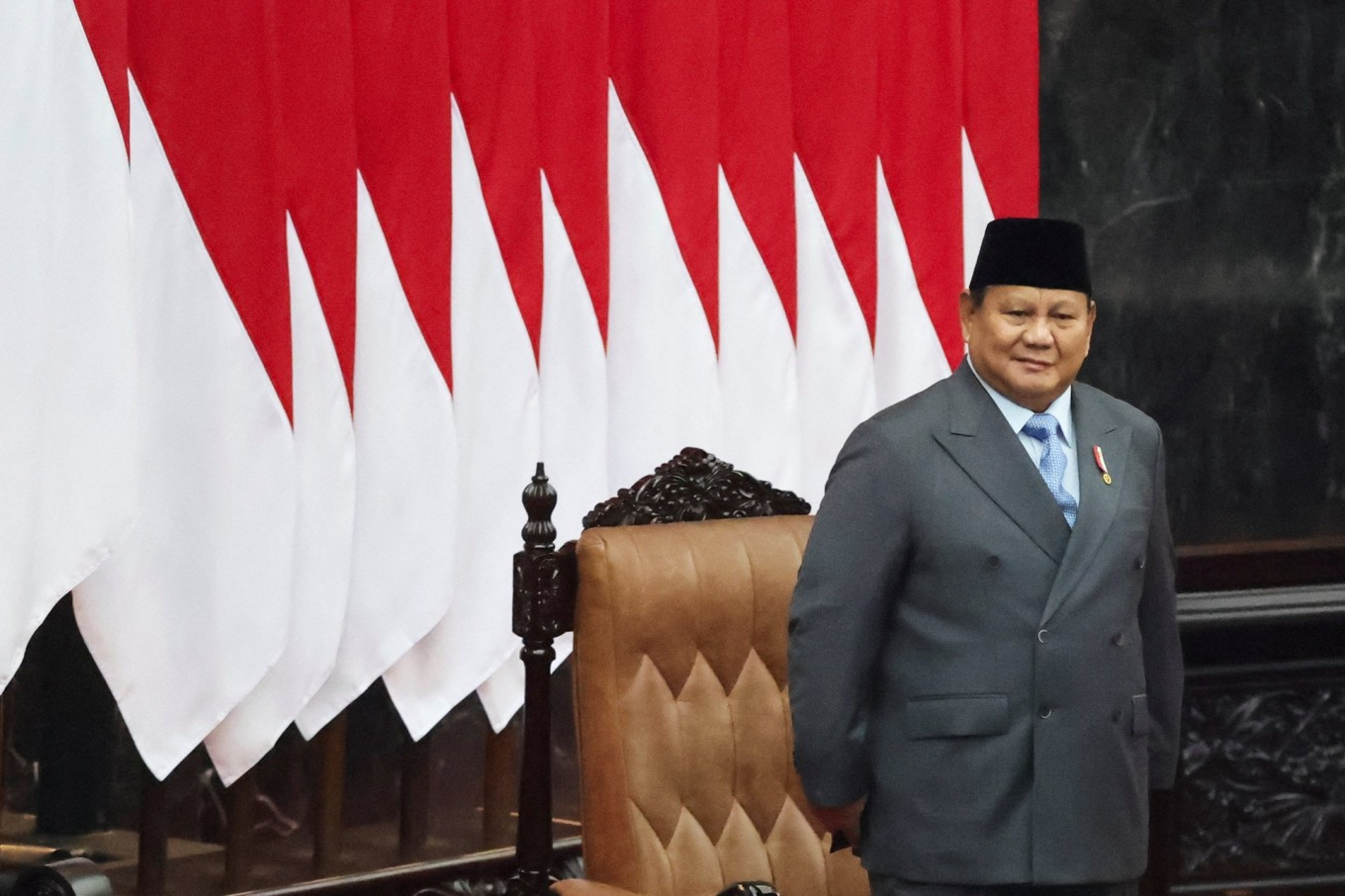 President Prabowo Subianto looks on as he arrives on Aug. 14 at the Senayan Legislative Complex in Central Jakarta for the People's Consultative Assembly (MPR) plenary meeting, in which he delivered the State of the Nation address and the 2027 state budget proposal. (Reuters/Stringer) (Reuters/Stringer)
P
lans to establish the National Strategic Commodities Exchange have now officially entered the discussion phase at the House of Representatives’ Legislative Body. This proposal gained momentum shortly after President Prabowo Subianto delivered the 2027 State Budget proposal at the House last month. At that time, the President touched on a long-standing, recurring issue: Indonesia may hold the status of a leading global producer of palm oil, nickel and coal, but pricing is actually dictated by foreign exchanges.
On paper, the rationale behind this bill is sound. However, in order to ensure the viability and merit of the bill, it is imperative for all of us to get clarity on ultimate purpose, intended impacts and legal soundness during the legislative process.
The government aims to plug foreign exchange leakage caused by under-invoicing or transfer pricing, shift pricing authority to domestic entities and simultaneously boost state revenue. Under this legal framework, two new bodies will be established — the National Strategic Commodities Council (DKSN) and the Strategic Commodities Exchange — along with plans to designate PT Danantara Sumberdaya Indonesia (DSI) as the sole gateway for export activities.
The problem is, when we examine the direction and details of the draft, fundamental doubts arise. Is this regulatory overhaul intended to foster the competitiveness of domestic industries, or is it perhaps just a new ploy to increase state intervention in market trade practices, ultimately leading to rent-seeking?
The implications are no small matter, as they concern the lifeblood of the national economy and the fate of millions of workers and farmers on the ground. Therefore, the House and the government must not rush to meet the target of a lightning-fast passage of the bill in mid-September.
The establishment of an institution on the scale of the DKSN and a single exchange requires a truly in-depth and objective academic and economic analysis taking into account the interests and aspirations of key players. It must also be augmented with a judicious process engaging all concerned stakeholders, particularly the most affected but least involved such as farmers in a transparent manner.

The first critical issue lies in the definition and scope of the commodity criteria themselves. As questioned by a number of lawmakers, the current definition is too broad and risks becoming a “rubber clause.” Without precise boundaries, nearly all agricultural commodities — even staple foods — could be classified as strategic.