The Jakarta Post
Please Update your browser
Your browser is out of date, and may not be compatible with our website. A list of the most popular web browsers can be found below.
Just click on the icons to get to the download page.


Popular Reads
Top Results
No results found. Please check your search term and try again
Can't find what you're looking for?
View all search results
Popular Reads
Top Results
No results found. Please check your search term and try again
Can't find what you're looking for?
View all search resultsThe remedy gap in transboundary haze
Building on the 2002 agreement, ASEAN has since declared the right to a clean and healthy environment and is now working on an action plan that may finally provide access to legal recourse for the region’s citizens harmed by transboundary haze pollution.
Change text size
Gift Premium Articles
to Anyone
Share the best of The Jakarta Post with friends, family, or colleagues. As a subscriber, you can gift 3 to 5 articles each month that anyone can read—no subscription needed!
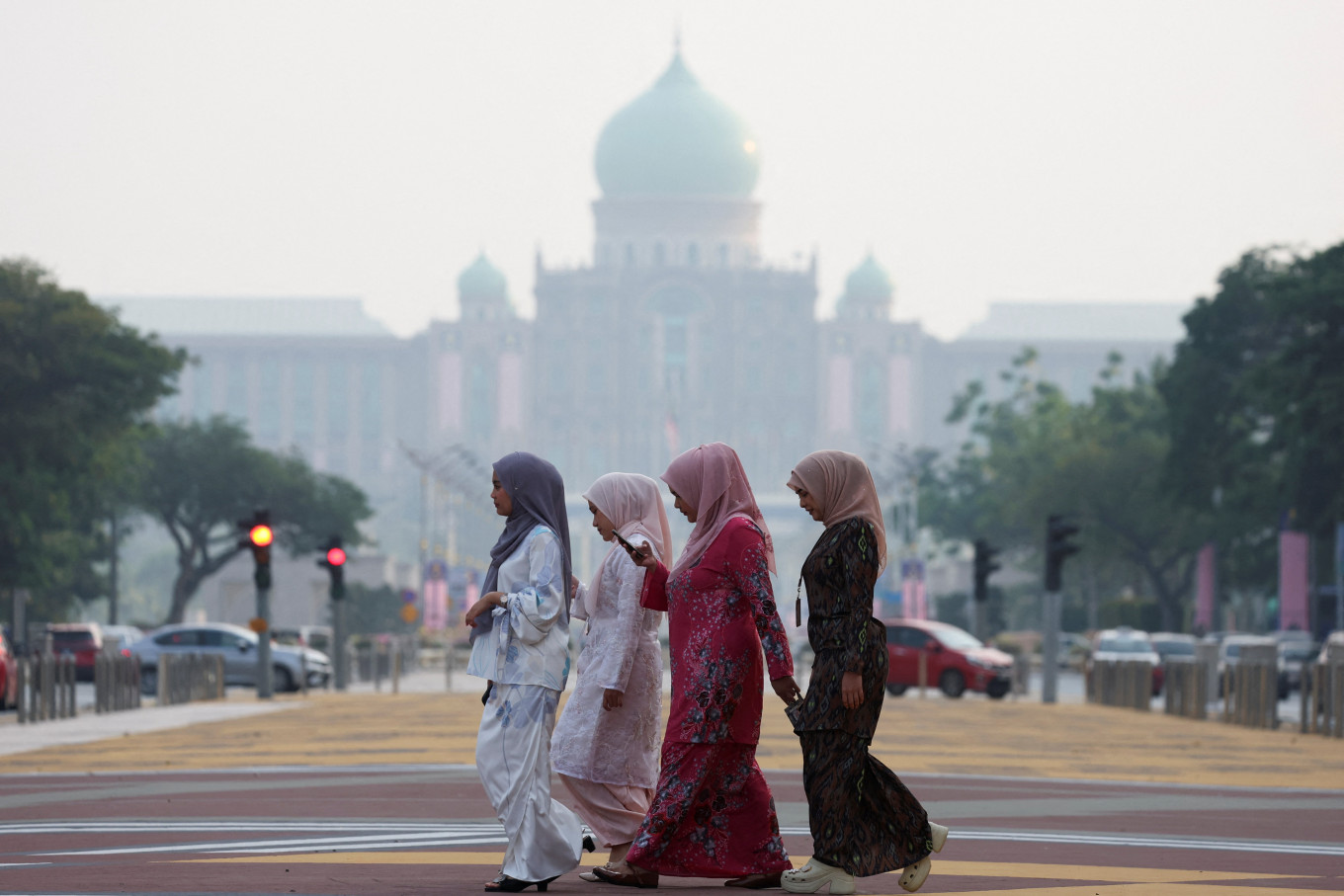 A group of women crosses a street in front of Perdana Putra, the office of the prime minister in Malaysia’s administrative capital Putrajaya, shrouded in haze from regional wildfires on Aug. 13, 2026. (Reuters/Hasnoor Hussain)
F
orest and peatland fires are once again burning across Kalimantan and Sumatra. Forest Watch Indonesia counted 8,918 hot spots nationally through August, more than half of them inside extractive concessions. On Aug. 26, the ASEAN Specialised Meteorological Centre raised its transboundary haze alert to Level 3, its highest tier.
Around 5.5 million people have been directly exposed, according to the government. In Malaysia, asthma cases rose to 1,811 in the last week of August, up from 219 the week before. The government has responded with aircraft, personnel and cloud seeding, all of which deserve sustained investment. However, none of it answers a separate question: What is owed to the people who are already sick?
Consider two children with the same cough. One lives in Pontianak, West Kalimantan; the other lives across the border in Sarawak, where schools have closed as the smoke drifted north. Both are breathing air from the same fires; their illness is identical. But to whom, and where, can either family turn for a remedy?
On paper, the answer is encouraging. Indonesia recognizes the right to a healthy environment in Article 28H of the Constitution and in Law No. 32/2009, which sets a demanding standard for fires in concession areas: A claimant need not prove the company did anything wrong, only that the fire occurred on land it controlled and caused harm.
Courts applied that strict liability with PT Kallista Alam, and the Environment Ministry has invoked it again this season.
But the doctrine has served the state far better than it has served the sick. In August 2024, 11 residents of South Sumatra’s Ogan Komering Ilir regency and provincial capital Palembang sued three pulpwood companies over recurring fires in their concessions, pleading strict liability. In July 2025, the Palembang District Court declared the claim inadmissible as insufficiently pleaded.

Two months later, the same court ordered PT Bintang Harapan Palma to pay Rp 677 billion (US$38.6 million) into the state treasury over fires in the same regency, holding expressly that liability attached without proof of fault. The plaintiff in that case was the Environment Ministry.