The Jakarta Post
Please Update your browser
Your browser is out of date, and may not be compatible with our website. A list of the most popular web browsers can be found below.
Just click on the icons to get to the download page.


Popular Reads
Top Results
No results found. Please check your search term and try again
Can't find what you're looking for?
View all search results
Popular Reads
Top Results
No results found. Please check your search term and try again
Can't find what you're looking for?
View all search resultsGlobal development's missing ingredient
Faith-based institutions committed to human dignity and pluralism can play an instrumental role in building the infrastructure required for grassroots organizing at scale.
Change text size
Gift Premium Articles
to Anyone
Share the best of The Jakarta Post with friends, family, or colleagues. As a subscriber, you can gift 3 to 5 articles each month that anyone can read—no subscription needed!
 Set as preferred source
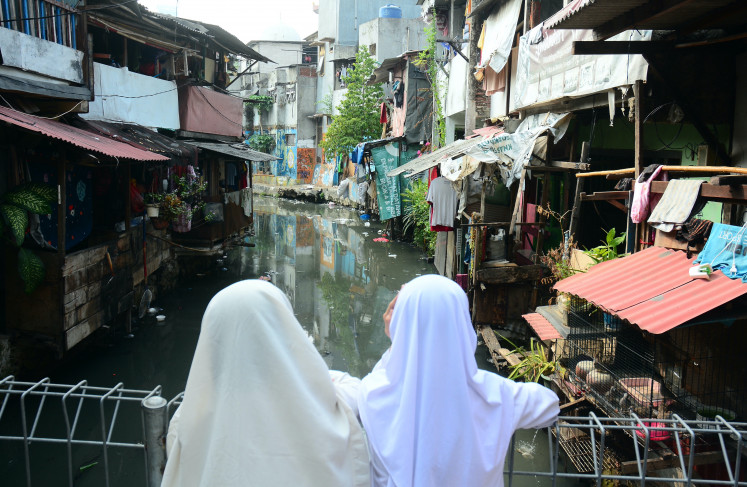
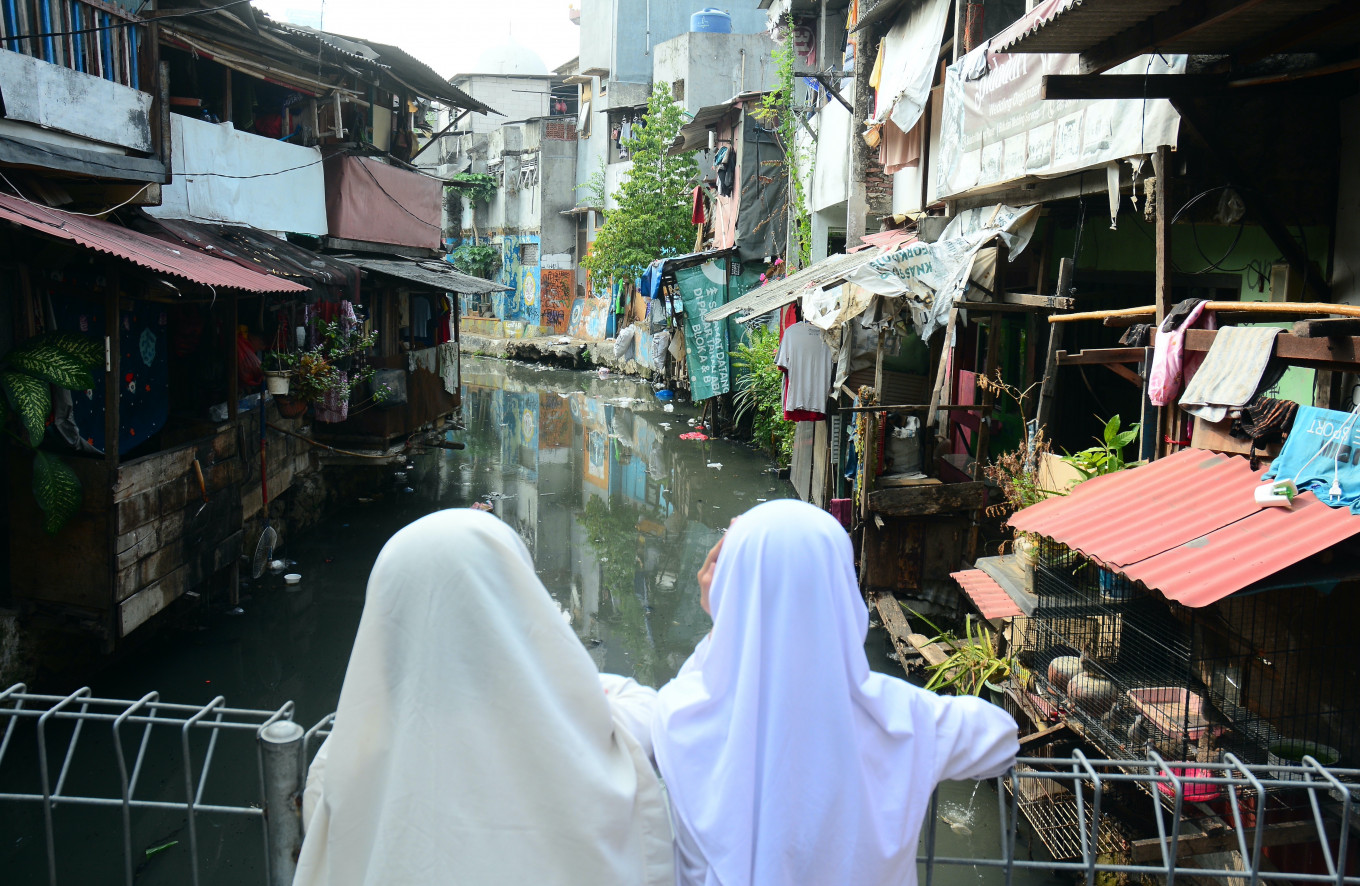 Two schoolchildren look over a densely populated informal settlement in the Kebon Melati neighborhood of Jakarta, on Aug. 7, 2026. Statistics Indonesia reported that the country's poverty rate stood at 8.07 percent in March 2026, with 22.93 million people living below the poverty line, down by 430,000 from September 2025. (JP/Iqro Rinaldi)
I
n his first encyclical, Magnifica Humanitas, Pope Leo XIV presents two possible futures for humanity: top-down, technocratic rule, symbolized by the Tower of Babel, and bottom-up reconstruction, much like Nehemiah organized exiles to rebuild Jerusalem in the face of fierce opposition. In a world increasingly dominated by billionaires, the second vision of collective action seems as commendable as it is futile.
But it has been done before. The challenge today is that most ordinary people lack avenues through which to achieve the Nehemiah vision. According to the V-Dem Institute, 74 percent of the global population now live in autocracies, while those fortunate to reside in democracies are increasingly critical of how their governments work. People overwhelmingly value democracy, but large majorities do not believe that their elected officials care about their views. Rapid technological and cultural change, along with rising economic insecurity, have eroded support for liberal institutions and fomented anti-elite sentiment across the political spectrum.
At the heart of this discontent is a deeper problem: a crisis of agency. People lack the ability to influence the decisions that shape their lives. As Leo writes in his encyclical, “most people are watching and waiting, observing from afar and merely hoping for the best.”
That is certainly the case in global development, where projects are often designed by aid agencies and managed by foreign contractors and NGOs. In 2023, the People’s Ecumenical Organization for the Development of Haiti, Communities of Faith Organizing for Action in El Salvador and Faith in Action International asked the United States Agency for International Development (USAID) to pause its non-emergency work for six weeks and send its staff to listen to people about the kind of aid they wanted. The Haitian organization was in the midst of a fruitless effort to change USAID’s agricultural programming in their communities. While then-USAID Administrator Samantha Power had embraced the mission of reforming the agency, she and her staff could not fathom shifting decision-making to beneficiaries. The best they could muster was a presentation on USAID’s work in the country, delivered at the organization’s office in Terrier-Rouge. Haitians were left to hope for the best.
Democratic governments and international institutions must create meaningful channels for the people affected by their decisions to influence the outcome. To be sure, many have undertaken well-meaning reforms. There have been participatory budgeting schemes that give people a say in how some government money is spent, civil-society complaint mechanisms at international financial institutions and initiatives to shift development funding from global to local organizations.
But, as the example of USAID in Haiti shows, even the best-intentioned reforms often fail to deliver. Large bureaucratic institutions are unlikely to hold themselves fully accountable without outside pressure. This is the demand side of the democracy deficit: millions of people need organizations through which they can collectively negotiate their interests.

Faith-based institutions committed to human dignity and pluralism can play an essential role here, not only in inspiring people to act, but also in building the infrastructure required for organizing at scale.