The Jakarta Post
Please Update your browser
Your browser is out of date, and may not be compatible with our website. A list of the most popular web browsers can be found below.
Just click on the icons to get to the download page.


Popular Reads
Top Results
No results found. Please check your search term and try again
Can't find what you're looking for?
View all search results
Popular Reads
Top Results
No results found. Please check your search term and try again
Can't find what you're looking for?
View all search resultsChinese SMEs in Malaysia and ASEAN: Coming in fast and furious
As agile Chinese SMEs rapidly plant roots across Southeast Asia, Malaysia faces a high-stakes choice: harness their momentum to build a regional powerhouse, or watch its own businesses get crowded out.
Change text size
Gift Premium Articles
to Anyone
Share the best of The Jakarta Post with friends, family, or colleagues. As a subscriber, you can gift 3 to 5 articles each month that anyone can read—no subscription needed!
 Set as preferred source
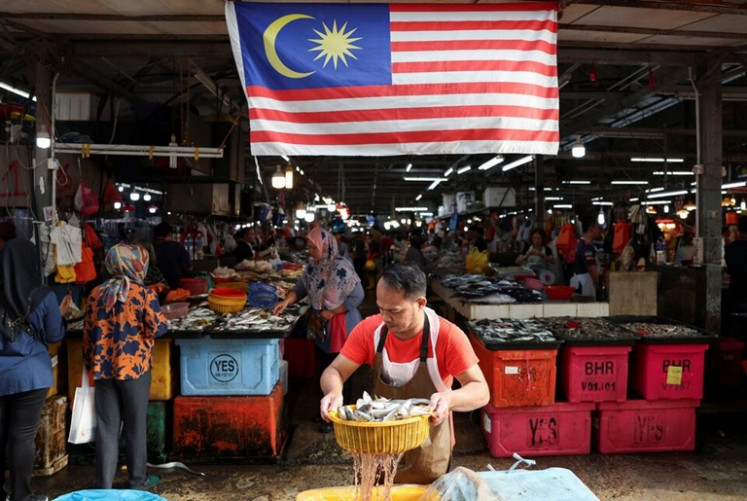
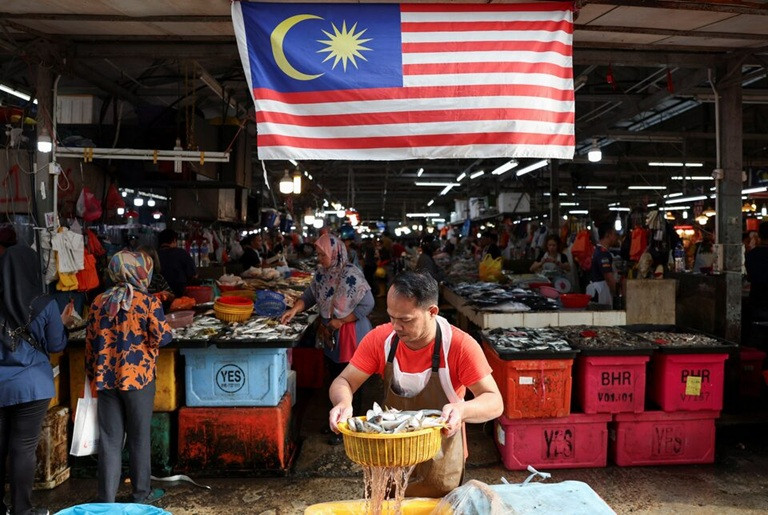 A fishmonger holds a basket of fish on Oct. 18, 2024, at a wet market in Kuala Lumpur. (Reuters/Hasnoor Hussain)
F
or decades, discussions surrounding Chinese investment in Southeast Asia were dominated by the giants: state-owned enterprises, infrastructure conglomerates, property developers and multinational manufacturers.
That picture is changing rapidly. Increasingly, the Chinese economic footprint in Malaysia and across ASEAN is being driven not merely by state-backed heavyweights, but by an expanding universe of small and medium-sized enterprises (SMEs). Recent reporting on their digital-first expansion highlights consumer goods, enterprise solutions, cross-border logistics and e-commerce as primary conduits.
These agile operators manufacture components, manage fulfillment hubs, establish distribution networks, supply specialized machinery and weave themselves directly into increasingly intricate regional supply chains.
This shift warrants far closer scrutiny. A July survey by the Hong Kong Trade Development Council revealed that 91 percent of mainland enterprises surveyed intended to expand further into ASEAN. Malaysia emerged as a favored hub, selected by 43 percent of manufacturers and 39 percent of service providers—an indispensable, if not universally first-ranked, destination. The drivers are straightforward: seeking resilient supply chains, uncovering new consumer markets and capturing growth in emerging industries away from an intensely saturated home market.
Malaysia’s macroeconomic data confirms this momentum. According to the Malaysian Investment Development Authority (MIDA), China accounted for 58.0 billion ringgits (US$14.33 billion) in approved foreign investment in 2025, running neck and neck with Singapore’s 58.3 billion ringgits.
In the first half of 2026, China remained the fourth-largest source, contributing another 16.5 billion ringgits in approvals. While approved figures represent project commitments rather than realized operational capital, aggregate numbers alone obscure the real structural transition underway underneath.

China’s internationalization is visibly cascading down the corporate hierarchy. Large anchor corporations arrive first; hot on their heels come component vendors, logistics operators, specialized equipment makers, traders, tech startups and entrepreneurial SMEs seeking air beyond cutthroat domestic margins.