The Jakarta Post
Please Update your browser
Your browser is out of date, and may not be compatible with our website. A list of the most popular web browsers can be found below.
Just click on the icons to get to the download page.


Popular Reads
Top Results
No results found. Please check your search term and try again
Can't find what you're looking for?
View all search results
Popular Reads
Top Results
No results found. Please check your search term and try again
Can't find what you're looking for?
View all search resultsDemocratic dilemma: Communist Vietnam outpaces Indonesia, Philippines
As Communist-led Vietnam laps Southeast Asia's sluggish democracies in growth and foreign capital, ordinary citizens in Jakarta and Manila are left asking an uncomfortable question: Does democracy actually hinder prosperity?
Change text size
Gift Premium Articles
to Anyone
Share the best of The Jakarta Post with friends, family, or colleagues. As a subscriber, you can gift 3 to 5 articles each month that anyone can read—no subscription needed!
 Set as preferred source
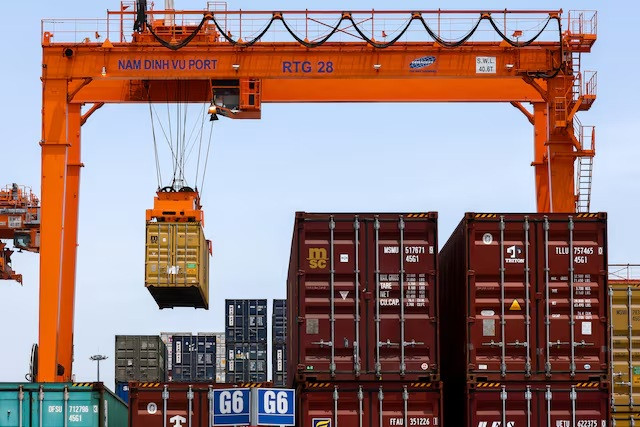 A container is loaded onto a cargo ship on April 16, 2025, at the Port Hai Phong in Northern Vietnam. (Reuters/Athit Perawongmetha)
I
ndonesians may feel a sharp pang of envy watching one-party, Communist-led Vietnam post steadier economic growth and draw more foreign investment than their own country, the world’s third-largest democracy. It invites an unsettling question: Does democracy hinder prosperity while authoritarianism delivers it?
A growing number of ordinary Indonesians now openly romanticize the era of president Soeharto, convinced that the nation was more prosperous under the strongman’s rule. Back then, they argue, corruption was at least centralized, neatly confined to the dictator, his family and cronies. The democracy resulting from the 1998 reform movement, by contrast, has democratized corruption itself, dispersing it from the national elite down to local heads and neighborhood administrators.
Should Indonesia adopt Vietnam’s governance model? An increasing number of citizens would now simply respond, why not?
Our regional peer the Philippines, under President Ferdinand Marcos Jr, faces the exact same paradox. Why has Vietnam, under the presidency of General Secretary To Lam, consistently outpaced a vibrant, open democracy?
The Philippines has effectively specialized as a global supplier of migrant workers, another development Indonesians watch with quiet envy. Remittances alone brought Manila US$17.15 billion in the first half of this year after netting between $35.6 billion and $41.2 billion annually, or roughly 7.3 to 8.5 percent of its GDP.
Indonesians must also wonder why their country, under President Prabowo Subianto, continues to lag in foreign investment and industrial momentum. Both Marcos and Prabowo hold clear, direct mandates from their electorates. Yet while Indonesia’s economy expanded 5.1 percent last year, growth is projected to cool to between 4.7 and 5 percent this year.

Across the South China Sea, To Lam’s consolidation of power as both head of state and the Communist Party mirrors the sweeping authority of China’s Xi Jinping. Critics will point to dictatorship. Yet a popular win at the ballot box is no insurance against autocratic governance in practice.