The Jakarta Post
Please Update your browser
Your browser is out of date, and may not be compatible with our website. A list of the most popular web browsers can be found below.
Just click on the icons to get to the download page.


Popular Reads
Top Results
No results found. Please check your search term and try again
Can't find what you're looking for?
View all search results
Popular Reads
Top Results
No results found. Please check your search term and try again
Can't find what you're looking for?
View all search resultsSuahasil can restore budget credibility, but challenges remain
The new finance minister brings steady hands and deep institutional memory, but restoring fiscal credibility will mean making the hard choices his predecessor avoided.
Change text size
Gift Premium Articles
to Anyone
Share the best of The Jakarta Post with friends, family, or colleagues. As a subscriber, you can gift 3 to 5 articles each month that anyone can read—no subscription needed!
 Set as preferred source
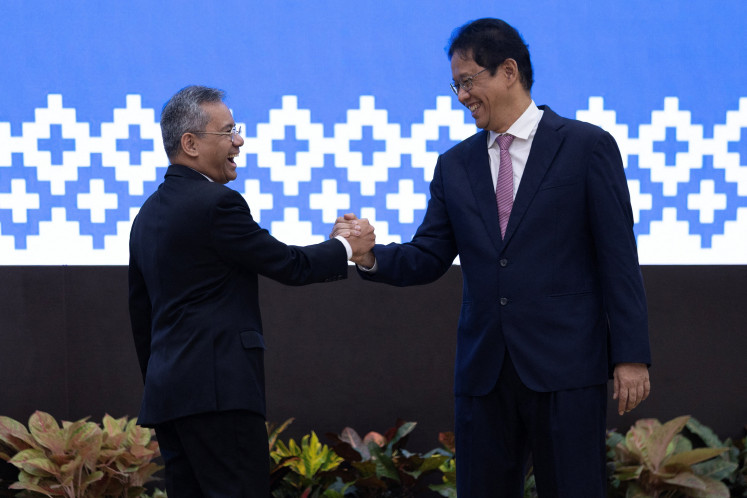
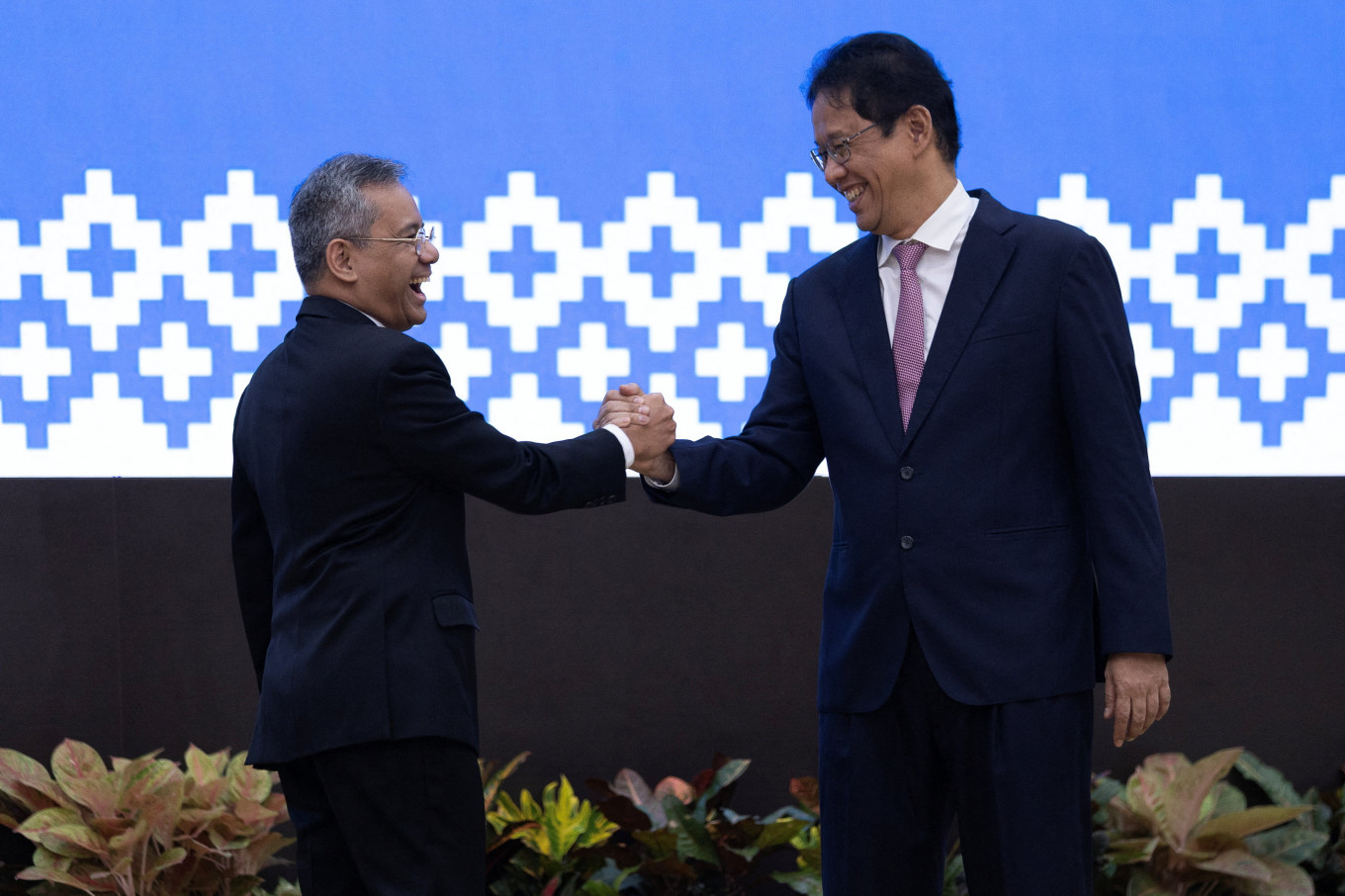 Newly appointed Finance Minister Suahasil Nazara (left) shakes hands with outgoing finance minister Purbaya Yudhi Sadewa during a handover ceremony on Sept. 15 at the Finance Ministry in Jakarta. (Reuters/Garry Lotulung)
T
he appointment of Suahasil Nazara as Finance Minister on Monday signals President Prabowo Subianto’s desire for a steady hand at the fiscal helm. Serving as deputy finance minister since 2019, Suahasil combines deep institutional memory with an ability to communicate complex fiscal policy calmly and methodically—vital assets as budgetary decisions face mounting political scrutiny.
Crucially, Suahasil used his inaugural press conference to identify his core priority: restoring credibility to state finances. In practical terms, this requires swiftly resolving several vulnerabilities exposed under his predecessor, Purbaya Yudhi Sadewa.
First, Suahasil must restore internal cohesion within the Finance Ministry, notably between the tax and customs directorates, two critical pillars of government revenue that came under constant criticism under his predecessor. Rather than allowing public attention to stall on institutional infighting, integrity issues and staff misconduct, he needs to align both agencies behind a coherent revenue drive—starting with reversing the slump in Indonesia’s tax-to-GDP ratio, which slipped below 10 percent in 2025.
Second, he must repair coordination with other key economic authorities, particularly Bank Indonesia on the broader macroeconomic policy mix and the investment agency Danantara on key fiscal matters.
Inter-agency friction flared under Purbaya when the ministry pulled Rp 200 trillion (US$11 billion) in state balances from the central bank into state-owned commercial lenders. The intervention yielded little boost to growth amid sluggish credit demand.
Similar clarity is needed with Danantara to eliminate public disputes over jurisdictional boundaries, such as the mechanism for channeling Rp 120 trillion in state-enterprise dividends into the state budget.

Third, Suahasil is well positioned to rebuild confidence among regional governments. His academic background in regional economics and demography will serve him well here. Although regional transfers rise from roughly Rp 650 trillion in 2026 to Rp 735 trillion in the 2027 draft budget, distribution formulas remain contentious, especially for revenue-sharing transfers (DBH).