The Jakarta Post
Please Update your browser
Your browser is out of date, and may not be compatible with our website. A list of the most popular web browsers can be found below.
Just click on the icons to get to the download page.


Popular Reads
Top Results
No results found. Please check your search term and try again
Can't find what you're looking for?
View all search results
Popular Reads
Top Results
No results found. Please check your search term and try again
Can't find what you're looking for?
View all search resultsAnalysis: Indonesia’s disaster budget faces a cost-benefit test
Change text size
Gift Premium Articles
to Anyone
Share the best of The Jakarta Post with friends, family, or colleagues. As a subscriber, you can gift 3 to 5 articles each month that anyone can read—no subscription needed!
 Set as preferred source
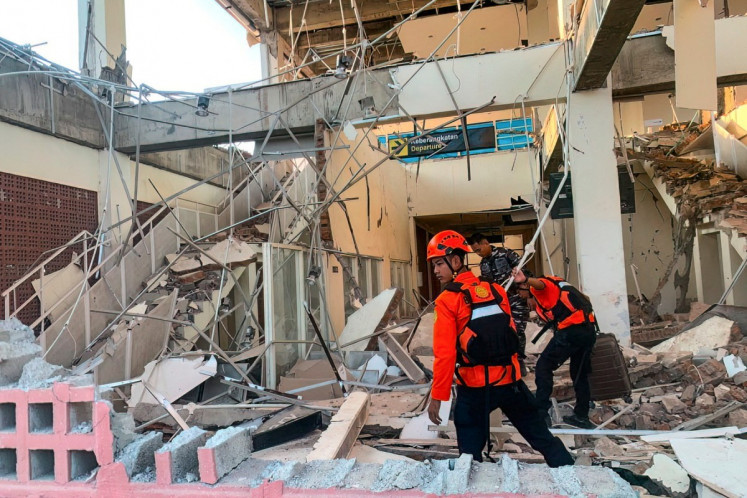
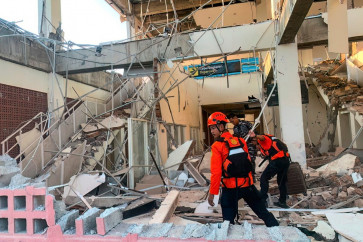
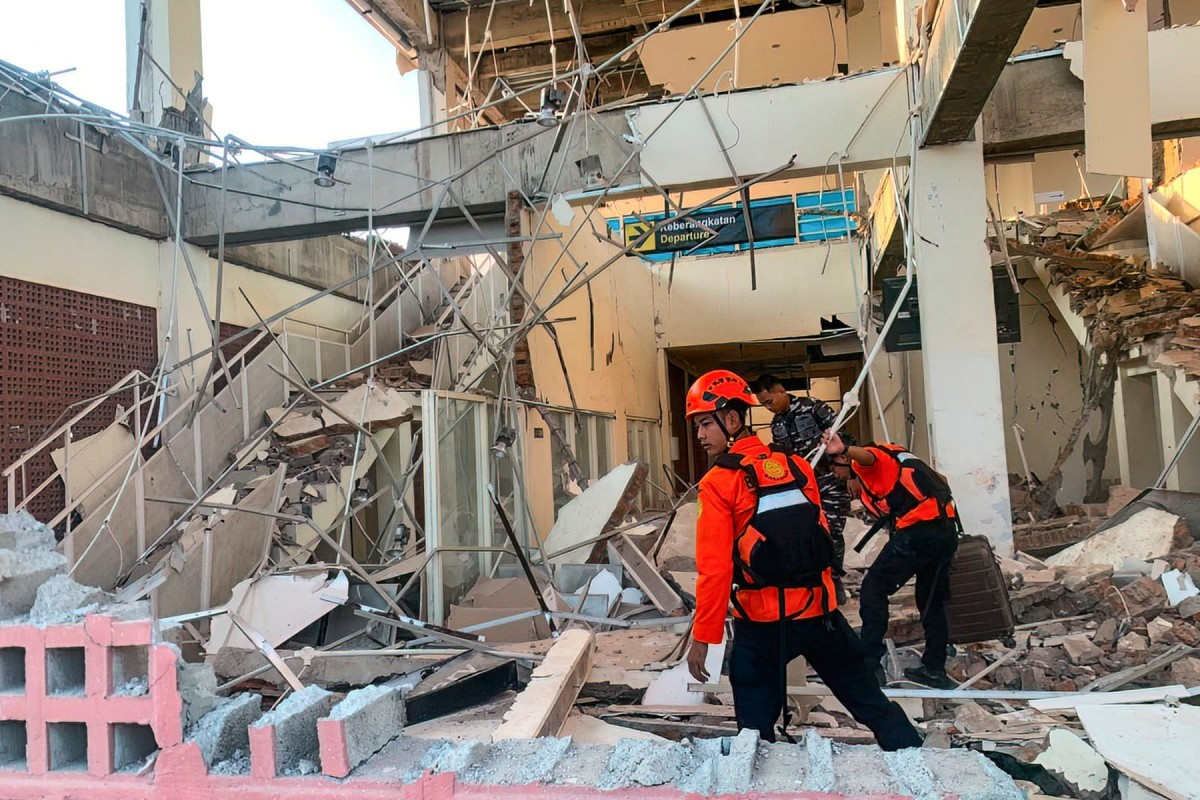 This handout picture taken and released on Aug. 15, 2026 by Indonesia's National Search and Rescue Agency (BASARNAS) shows rescuers working amid the rubble of a damaged building after an earthquake in Maumere, East Nusa Tenggara. (AFP/Basarnas/handout)
I
ndonesia faces an unfortunate fiscal paradox: Just as the government has cut disaster-mitigation funding to the bone, disasters have struck with unforgiving regularity. President Prabowo Subianto himself has acknowledged that disasters are part and parcel of life in the archipelago. Yet his administration has slashed the National Disaster Mitigation Agency’s (BNPB) budget to just Rp 491 billion (US$28 million) this year, raising a fundamental question: How much can Indonesia afford to save on preparing for disasters?
The question is no longer theoretical. A magnitude-7.7 earthquake struck off Flores Island near Nagekeo in August, followed by thousands of aftershocks. By Aug. 25, BNPB reported 105 deaths, 1,678 injuries and 179,037 displaced residents. Nearly 78,000 homes were damaged, along with 118 health facilities, 1,378 educational buildings, 483 government offices, 402 houses of worship and 156 sections of road.
The economic bill will extend well beyond emergency relief. Roads and public facilities must be rebuilt, essential services restored and affected households and businesses helped to recover. What the government saves before a disaster can therefore pale in comparison with what it must spend afterward.
This makes the trajectory of BNPB’s budget worth examining. Its allocation reached Rp 11.78 trillion in 2020, when the government substantially increased disaster-related spending during the COVID-19 pandemic. It subsequently fell to Rp 7.14 trillion in 2021 and Rp 5.05 trillion in 2022, before edging up to Rp 5.43 trillion in 2023. It then dropped to Rp 4.92 trillion in 2024, Rp 2.01 trillion in 2025 and only Rp 491 billion this year.
Certainly, the Rp 11.78 trillion allocation in 2020 was exceptional and should not be treated as a normal baseline. As pandemic-era spending subsided, some fiscal adjustment was inevitable, particularly as the government redirected resources toward other priorities. But there are limits to how far such adjustments can go before fiscal savings begin to weaken the state’s capacity to prepare for disasters. Cutting preventive spending does not eliminate disaster risk. It merely shifts the potential fiscal burden into the future, when the government may have little choice but to spend far more on emergency response and reconstruction.
The consequences can also extend to the investment climate. This was illustrated by complaints from the China Chamber of Commerce in Indonesia over the government’s response to devastating floods and landslides in Sumatra. Among the cases was Chinese-backed PT North Sumatra Hydro Energy (NSHE), operator of the Batangtoru hydropower project, whose permit was revoked after the government linked environmental violations at the project to the severity of the floods.

The case illustrates another dimension of disaster preparedness. When environmental and disaster risks are inadequately assessed before projects are approved, determining responsibility after disaster strikes can create uncertainty for both investors and the government. Prevention therefore involves not only physical infrastructure but also better risk assessment, regulation and planning.