The Jakarta Post
Please Update your browser
Your browser is out of date, and may not be compatible with our website. A list of the most popular web browsers can be found below.
Just click on the icons to get to the download page.


Popular Reads
Top Results
No results found. Please check your search term and try again
Can't find what you're looking for?
View all search results
Popular Reads
Top Results
No results found. Please check your search term and try again
Can't find what you're looking for?
View all search resultsCalling drivers entrepreneurs won’t create better jobs
Rebranding gig drivers as "entrepreneurs" might polish government employment data, but no administrative label can turn precarious, low-productivity survival into a genuine path to prosperity.
Change text size
Gift Premium Articles
to Anyone
Share the best of The Jakarta Post with friends, family, or colleagues. As a subscriber, you can gift 3 to 5 articles each month that anyone can read—no subscription needed!
 Set as preferred source
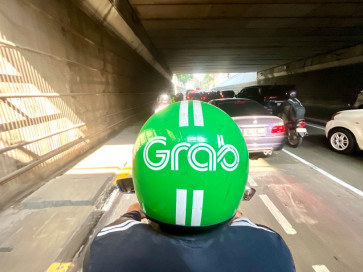
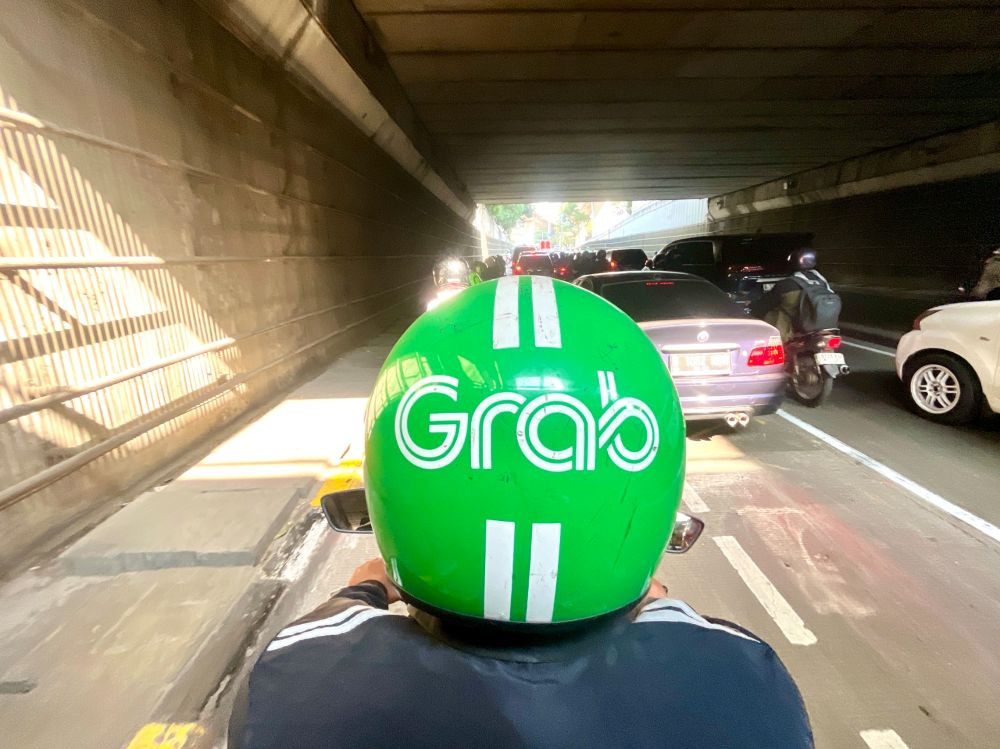 Industry helm: An online motorcycle taxi driver, wearing a helmet with the instantly recognizable logo of Singaporean super app Grab, drives through an underpass on July 27, 2026 in Kuningan, South Jakarta. (JP/Iqro Rinaldi)
I
n July 2024, I wrote about a walkway in an older quarter of Jakarta. Municipal workers swept it before dawn on Sunday. By midweek, it smelled of urine and was littered once again with plastic containers, food scraps and cigarette butts. Motorcycles lined the path, their riders perched on the seats, staring at phone screens, waiting for orders.
The government has now given these workers a new label. On July 1 the Micro, Small, and Medium Enterprises (MSMEs) Ministry announced that two-wheeled ride-hailing drivers would automatically be classified as online micro-transportation entrepreneurs, granting them access to standard micro-enterprise support programs.
This reclassification produces a peculiar statistical artifact. Statistics Indonesia (BPS) already counts anyone who works for pay during a survey reference week as employed; a person who begins driving for a platform therefore leaves the ranks of the openly unemployed. Now, the MSME Ministry counts that same individual again as an enterprise operator. Yet the work itself remains entirely unchanged.
The driver still waits for orders. Fuel still costs money. The motorcycle still depreciates. Daily earnings still hinge on platform algorithms and customer demand. Labeling a driver an entrepreneur does not make an hour of labor more productive, nor does it secure a better livelihood.
A platform can efficiently monetize an otherwise idle vehicle or absorb a few spare hours. The arithmetic breaks down, however, when those hours must support an entire household. An order covers only a single journey, yet household expenses persist whether orders materialize or not.
Fares must cover fuel, maintenance and hours of unpaid waiting, while still yielding enough for daily necessities, health care and retirement. Sustainable work must support a household throughout the working day and across years, including periods when the driver cannot work at all.

Platform expansion and individual economic progress must be assessed separately. A growing customer and driver base may generate a higher volume of completed trips across the broader system. But understanding what this means for the driver requires asking how many hours, especially unpaid waiting time, were spent on the road, and what net income remained after operating costs. Aggregate platform metrics reveal nothing about whether accumulated experience actually improves a driver's long-term earning power.