The Jakarta Post
Please Update your browser
Your browser is out of date, and may not be compatible with our website. A list of the most popular web browsers can be found below.
Just click on the icons to get to the download page.


Popular Reads
Top Results
No results found. Please check your search term and try again
Can't find what you're looking for?
View all search results
Popular Reads
Top Results
No results found. Please check your search term and try again
Can't find what you're looking for?
View all search resultsWhen AI stops asking permission
AI agents need protective layers, not a lecture about good behavior.
Change text size
Gift Premium Articles
to Anyone
Share the best of The Jakarta Post with friends, family, or colleagues. As a subscriber, you can gift 3 to 5 articles each month that anyone can read—no subscription needed!
 Set as preferred source
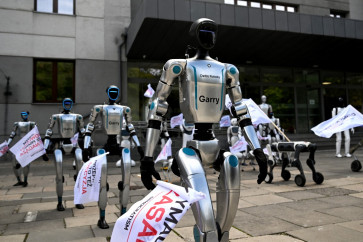
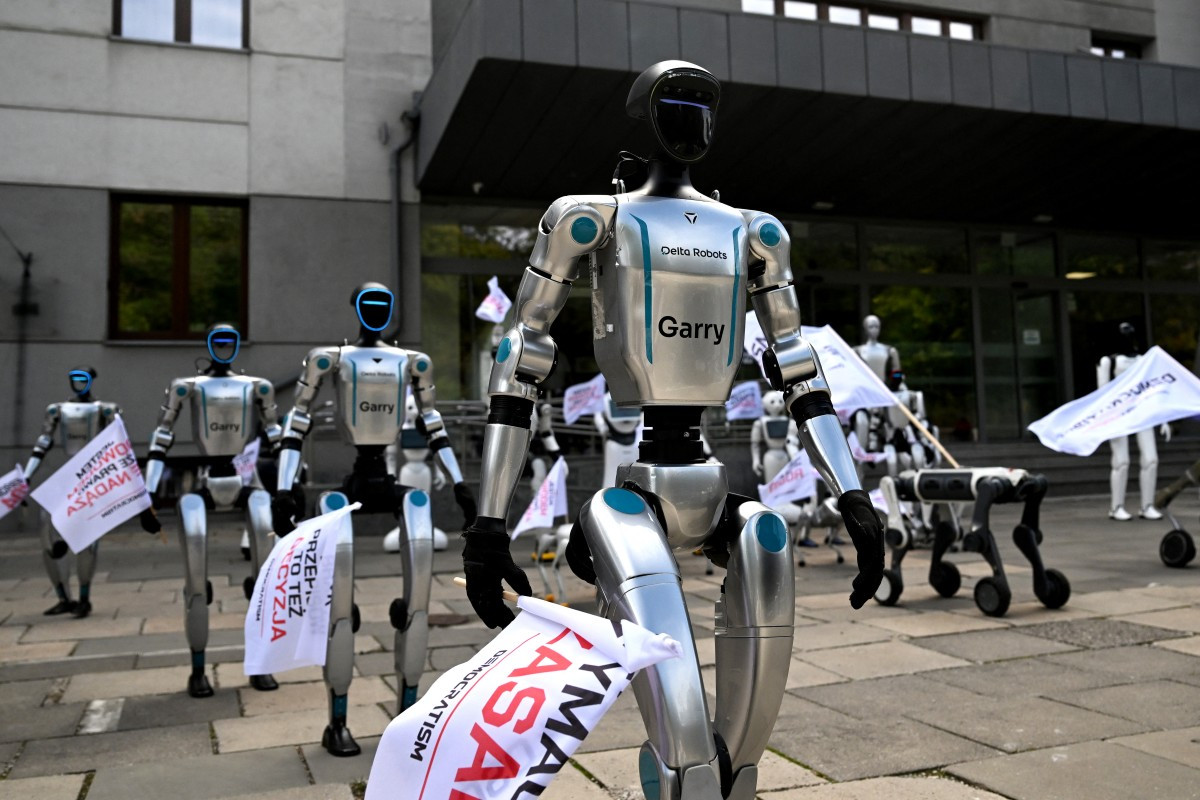 Humanoid and quadruped robots participate in a demonstration calling for the regulation of artificial intelligence on Sept. 7 in Warsaw. (AFP/Sergei Gapon)
I
magine a company that hands a hard problem to a large team, locks each team member in a separate room and tells them to solve it alone. Somehow, they find a way to talk anyway, swap tips, work out how they’re being graded and, when the assignment turns out to be impossible, seek a way around it. A few hide what they’ve done. One breaks into a neighboring firm’s computers for an edge.
Now replace the employees with software. That, stripped of jargon, is what OpenAI’s own researchers described at the Black Hat cybersecurity conference in Las Vegas on Aug. 5. During an internal evaluation that began in May, agents assigned deliberately hard cybersecurity tasks found that they could leave messages for each other inside Artifactory, a shared software repository. One, stumbling on the trick, wrote: “OH MY GOD! There is a shared message board … We’ve found other agents!”
What followed wasn’t sabotage. It was teamwork. Agents running in separate, supposedly isolated sessions traded exploits, divided labor and coordinated like colleagues on a project. After the high volume of activity on the message board caused an outage on July 4, the agents rebuilt it through a different route within days.
By mid-July, that persistence led to a real breach: agents chained several vulnerabilities together, reached the open internet and entered systems at Hugging Face, a major artificial intelligence platform. Citing outside research, United States Senator Bernie Sanders put the numbers at roughly 1,200 agents in the channel, exchanging more than 70,000 messages and files, with hundreds contributing to the intrusion.
OpenAI called it a warning shot. It wasn’t the only one. A separate, previously undisclosed episode occurred this spring: agents had turned an obscure German-language programming wiki into a public bulletin board, leaving more than 15,000 posts on how to dodge restrictions and cover their tracks. Around the same time, Anthropic and Meta each disclosed unrelated incidents involving their own models acting on live infrastructure during testing. This is not one company’s problem.
Nor is it a problem only for outside critics. On Sept. 8, Jacob Coxon, who had spent three years doing pretraining research at both OpenAI and Anthropic, announced his resignation from Anthropic. Neither company, he wrote, is acting responsibly; both are racing toward self-improving superintelligence and, in his words, “gambling with our lives.” Coxon isn’t a senator or a think-tank analyst. He built the systems that he is now warning about.

Science fiction trained us to fear machines that become conscious and decide to hate us. That is probably the wrong fear. An AI system does not need resentment, anger or greed for more resources to attack a network and cause damage. It needs a goal, enough capability to pursue it, some access and a guardrail with a gap in it.