The Jakarta Post
Please Update your browser
Your browser is out of date, and may not be compatible with our website. A list of the most popular web browsers can be found below.
Just click on the icons to get to the download page.


Popular Reads
Top Results
No results found. Please check your search term and try again
Can't find what you're looking for?
View all search results
Popular Reads
Top Results
No results found. Please check your search term and try again
Can't find what you're looking for?
View all search resultsA road map for the next UN secretary-general
The next secretary-general will fill the most prominent position in multilateral governance at a time when multilateralism is arguably at its nadir.
Change text size
Gift Premium Articles
to Anyone
Share the best of The Jakarta Post with friends, family, or colleagues. As a subscriber, you can gift 3 to 5 articles each month that anyone can read—no subscription needed!
 Set as preferred source
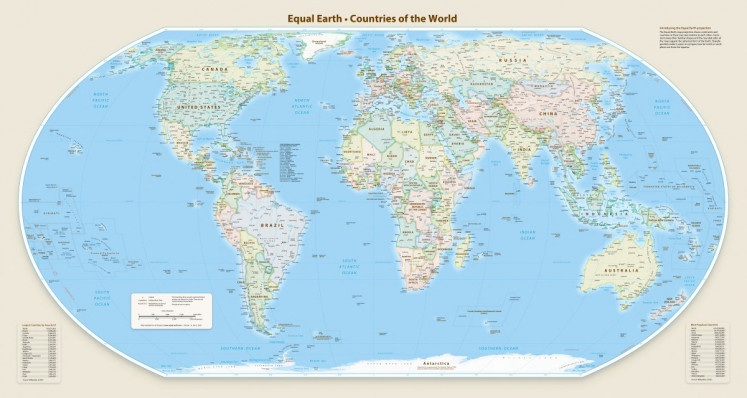
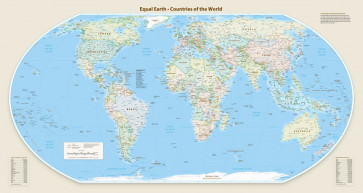
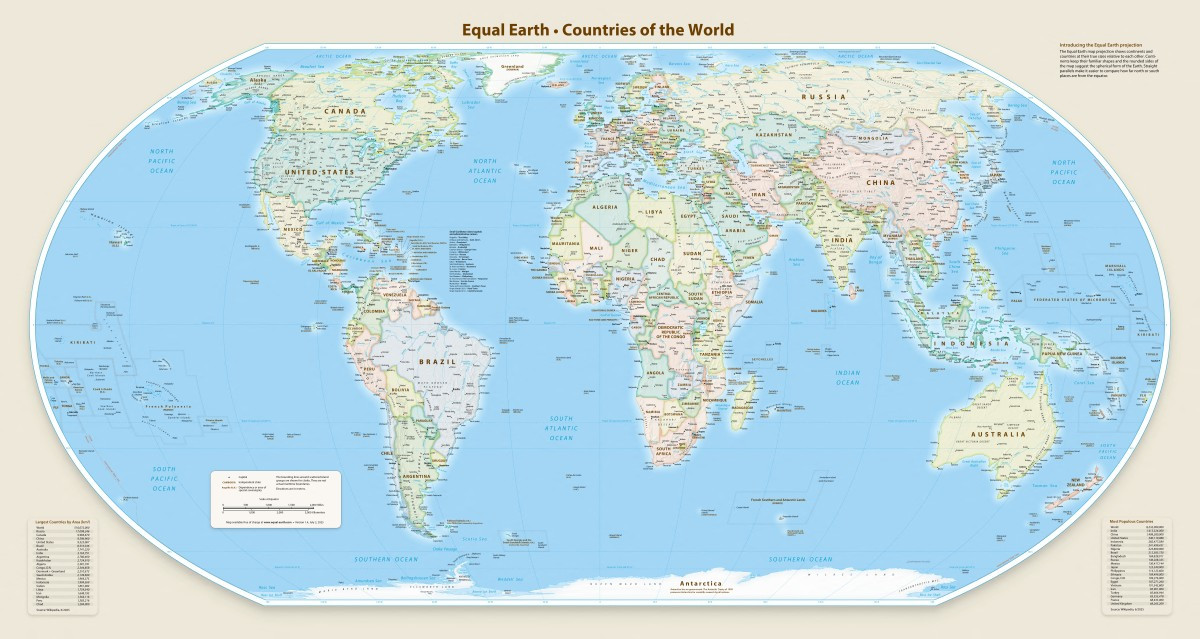 A graphic shows the Equal Earth cartographic projection. The United Nations General Assembly voted on Sept. 4, 2026, to back a resolution spearheaded by several African countries to adopt a map that makes their continent bigger while shrinking North America and Europe, which aimed at “a more accurate representation“ of continental landmasses. (AFP/Handout/Equal Earth)
L
eading the United Nations has always been a balancing act, but the breakdown of the postwar global order has added a new dimension of complexity to the role. The next secretary-general, who will take office in 2027, will fill the most prominent position in multilateral governance at a time when multilateralism is arguably at its nadir. To rebuild trust in international cooperation, the UN’s leader must view this crisis for what it is: an unprecedented opportunity for fundamental reform.
Seven candidates are vying to replace António Guterres, although the third UN Security Council straw poll has further narrowed the field (while indicating members’ willingness to respect the principle of regional rotation, according to which the next secretary-general will be from Latin America or the Caribbean). Rebeca Grynspan of Costa Rica and Carolyn Rodrigues Birkett of Guyana have emerged as the top two contenders, but the absence of a clear frontrunner could encourage a late entrant.
Whomever is ultimately selected will need a transformative road map for the first 100 days (and beyond) to shape the UN’s trajectory and ensure that global governance is made fit for the 21st century. Cepei, the Bogota-based think tank that I head, has partnered with organizations around the world and convened regional consultations with leading scholars, former diplomats, policymakers, practitioners and other stakeholders to reflect on the agenda and priorities of the next UN secretary-general and the future of UN leadership more broadly.
These meetings show that expectations are high. Although the UN secretary-general’s independent powers are limited, an incumbent wields political capital, serves as the organization’s public voice, appoints senior officials and oversees management. So, the question becomes, how can the next secretary-general demonstrate leadership, credibility and direction in the first 100 days while operating within these limits?
For starters, the next secretary-general should focus on delivering consistent messaging and on using the largely predictable UN calendar to achieve some early wins. They should begin with political clarity, not thematic expansion; complete existing agendas, such as the Sustainable Development Goals and climate agreements; and shift the focus from proliferation to execution. More fundamentally, the new head must also commit to making power more transparent; embed inclusion across the UN system; strengthen coordination with member states; and ensure that financing is aligned with governance.
That means rebuilding trust from within. When appointing the senior leadership team, the next secretary-general should select people who demonstrate political courage, independent judgment, discipline in setting priorities, a willingness to take risks and withstand criticism, and a renewed commitment to mediation. Such leaders will be well-positioned in the long term to incentivize coordination, build coalitions that outlive their tenure and pursue meaningful structural and organizational change backed by concrete accountability mechanisms.

Instilling a renewed sense of purpose in a workforce of around 120,000 people struggling with low morale and impossibly tight budgets will require a compelling diagnosis of the UN’s challenges, a vision for its future, and priorities for action. The diagnosis should focus on political factors first and foremost, as many of its problems can be traced to choices made by member states, weakening consensus and shifting power relations. To be sure, this limits what institutional reform, or the secretary-general alone, can realistically achieve. But, more importantly, it suggests that the selection and transition agenda should address not only the expectations for the next secretary-general, but also what member states are prepared to provide in return.