The Jakarta Post
Please Update your browser
Your browser is out of date, and may not be compatible with our website. A list of the most popular web browsers can be found below.
Just click on the icons to get to the download page.


Popular Reads
Top Results
No results found. Please check your search term and try again
Can't find what you're looking for?
View all search results
Popular Reads
Top Results
No results found. Please check your search term and try again
Can't find what you're looking for?
View all search resultsWhen citizens demand accountability for forest fires
As toxic smoke returns to West Kalimantan, a landmark class action is putting Indonesia's environmental governance on trial, testing whether citizens can legally force the state to protect them from preventable disaster.
Change text size
Gift Premium Articles
to Anyone
Share the best of The Jakarta Post with friends, family, or colleagues. As a subscriber, you can gift 3 to 5 articles each month that anyone can read—no subscription needed!
 Set as preferred source
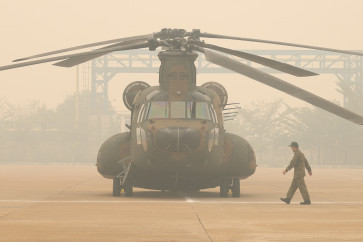
 A Japan Self-Defense Force (JSDF) crew walks towards a CH-47 Chinook helicopter ahead of Defense Minister Sjafrie Sjamsoeddin's visit to the Japan Maritime Self-Defense Force's (JMSDF) ship JS Kunisaki on Sept. 15, 2026, at Kijing port in Mempawah, West Kalimantan. In his visit, Sjafrie held a limited meeting with the Japanese officers on the joint waterbombing missions to extinguish forest and land fire in the province. (Antara/Jessica Wuysang)
A
civil society coalition in West Kalimantan is taking its demands for protection from forest and land fires to court. Its class action against central and provincial authorities faces its first hearing at the Pontianak District Court on Oct. 7.
Among the plaintiffs' core demands are a national disaster declaration and a more comprehensive state response. While the allegations remain to be tested, the lawsuit raises a fundamental question that extends well beyond the province: How can citizens enforce the state’s legal duty to protect them from environmental harm?
Indonesia must make greater use of collective environmental litigation when governance failures expose communities to foreseeable, preventable harm. Realizing this potential requires affordable access to justice, well-substantiated legal claims and enforceable court orders that yield measurable remedies for affected populations and ecosystems alike.
The landmark Jakarta air pollution case provides an instructive precedent. In September 2021, the Central Jakarta District Court ruled that the President, three cabinet ministers and the Jakarta governor had committed unlawful acts by failing to control air pollution. The court issued orders addressing statutory duties, air quality standards, environmental monitoring and emissions management.
That victory survived appeal in 2022 and in November 2023, the Supreme Court rejected the state’s cassation petitions, leaving the judgment intact. Citizens demonstrated that systemic failures in environmental governance could withstand judicial scrutiny, even when the defendants occupied the highest offices in the country.
A procedural distinction matters here. Jakarta’s lawsuit was a citizen lawsuit (actio popularis), whereas the West Kalimantan action is a class action. Class actions permit representatives to pursue claims on behalf of a defined group sharing common grievances, while citizen lawsuits seek to compel the enforcement of public duties in the broader public interest. Indonesia’s environmental legal framework, specifically Articles 65 and 91 of Environment Law No. 32/2009, recognizes both avenues, each subject to distinct procedural thresholds.

Following the 2021 Jakarta ruling, observers noted that the precedent would catalyze further environmental claims. Amid a global rise in climate litigation, the West Kalimantan lawsuit tests that trajectory. Collective proceedings allow communities to pool resources and challenge institutional failures that individual claimants could rarely confront alone.