The Jakarta Post
Please Update your browser
Your browser is out of date, and may not be compatible with our website. A list of the most popular web browsers can be found below.
Just click on the icons to get to the download page.


Popular Reads
Top Results
No results found. Please check your search term and try again
Can't find what you're looking for?
View all search results
Popular Reads
Top Results
No results found. Please check your search term and try again
Can't find what you're looking for?
View all search resultsA truly just transition demands direct indigenous power
A decarbonized future cannot be measured in megawatts alone: without the non-negotiable right to consent, the global rush for clean energy risks replicating the very exploitation it claims to leave behind.
Change text size
Gift Premium Articles
to Anyone
Share the best of The Jakarta Post with friends, family, or colleagues. As a subscriber, you can gift 3 to 5 articles each month that anyone can read—no subscription needed!
 Set as preferred source
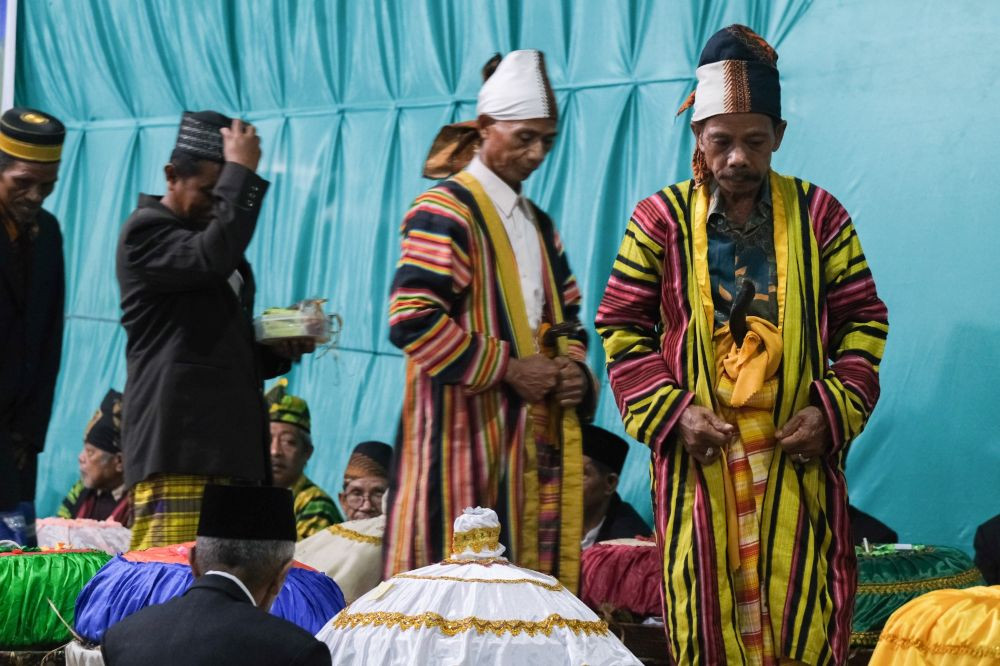 Treasured tradition: Customary leaders walk through a throng of revelers as they prepare to perform a ritual on Sept. 23, 2026, during the Cia-Cia community’s annual Maataano Santa festival in Laburunci village, Buton regency, Southeast Sulawesi.
(Antara/Andry Denisah)
Treasured tradition: Customary leaders walk through a throng of revelers as they prepare to perform a ritual on Sept. 23, 2026, during the Cia-Cia community’s annual Maataano Santa festival in Laburunci village, Buton regency, Southeast Sulawesi.
(Antara/Andry Denisah)
T
he Just Transition, the principle that the shift toward a net-zero society must be equitable and safeguard the rights and livelihoods of workers and local communities, is set to dominate the agenda at the upcoming COP31 climate summit in Antalya, Turkey.
Yet reaching a consensus remains elusive because the concept means vastly different things depending on geography and circumstance. A German auto worker displaced as manufacturing shifts from internal combustion engines to electric vehicles faces an entirely different reality than frontline communities in the Global South.
Among these stakeholders, indigenous peoples are consistently marginalized in mainstream transition debates. This oversight is predictable. Media coverage of major clean-energy infrastructure, particularly across the Asia-Pacific, typically fixates on scale and capital: billions mobilized by private finance, Multilateral Development Banks (MDBs) and bilateral development agencies from the Global North.
While utility-scale hydro, solar installations and wind farms represent essential climate progress, the public discourse routinely sidesteps their tangible costs to local ecosystems and the indigenous communities who inhabit them.
Southeast Asia is frequently hailed as a critical frontier for decarbonization, offering immense investment potential. Crucially, this buildout extends beyond generation assets to the critical minerals that power clean technologies.
In response, coalitions such as the Right Energy Partnership with Indigenous Peoples and the Asia Indigenous Peoples Network on Extractive Industries and Energy (AIPNEE) have mounted sustained advocacy to place indigenous rights at the center of this transformation.

Their core argument is straightforward: Indigenous communities cannot be treated merely as passive stakeholders or consultable bystanders. They must be recognized as self-determining decision-makers and leaders.