The Jakarta Post
Please Update your browser
Your browser is out of date, and may not be compatible with our website. A list of the most popular web browsers can be found below.
Just click on the icons to get to the download page.


Popular Reads
Top Results
No results found. Please check your search term and try again
Can't find what you're looking for?
View all search results
Popular Reads
Top Results
No results found. Please check your search term and try again
Can't find what you're looking for?
View all search resultsMandatory budget refocusing amid nationwide disasters
When populist national programs hollow out regional budgets, local governments are left fiscally paralyzed just as nationwide disasters strike—turning centralized ambition into a fatal governance failure.
Change text size
Gift Premium Articles
to Anyone
Share the best of The Jakarta Post with friends, family, or colleagues. As a subscriber, you can gift 3 to 5 articles each month that anyone can read—no subscription needed!
 Set as preferred source
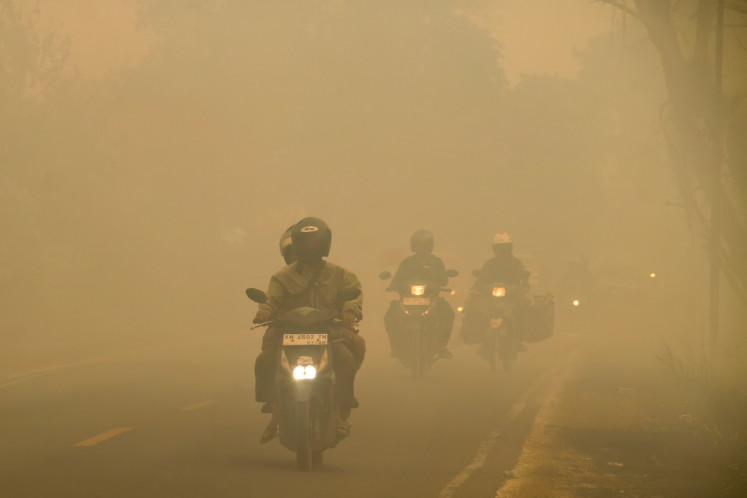
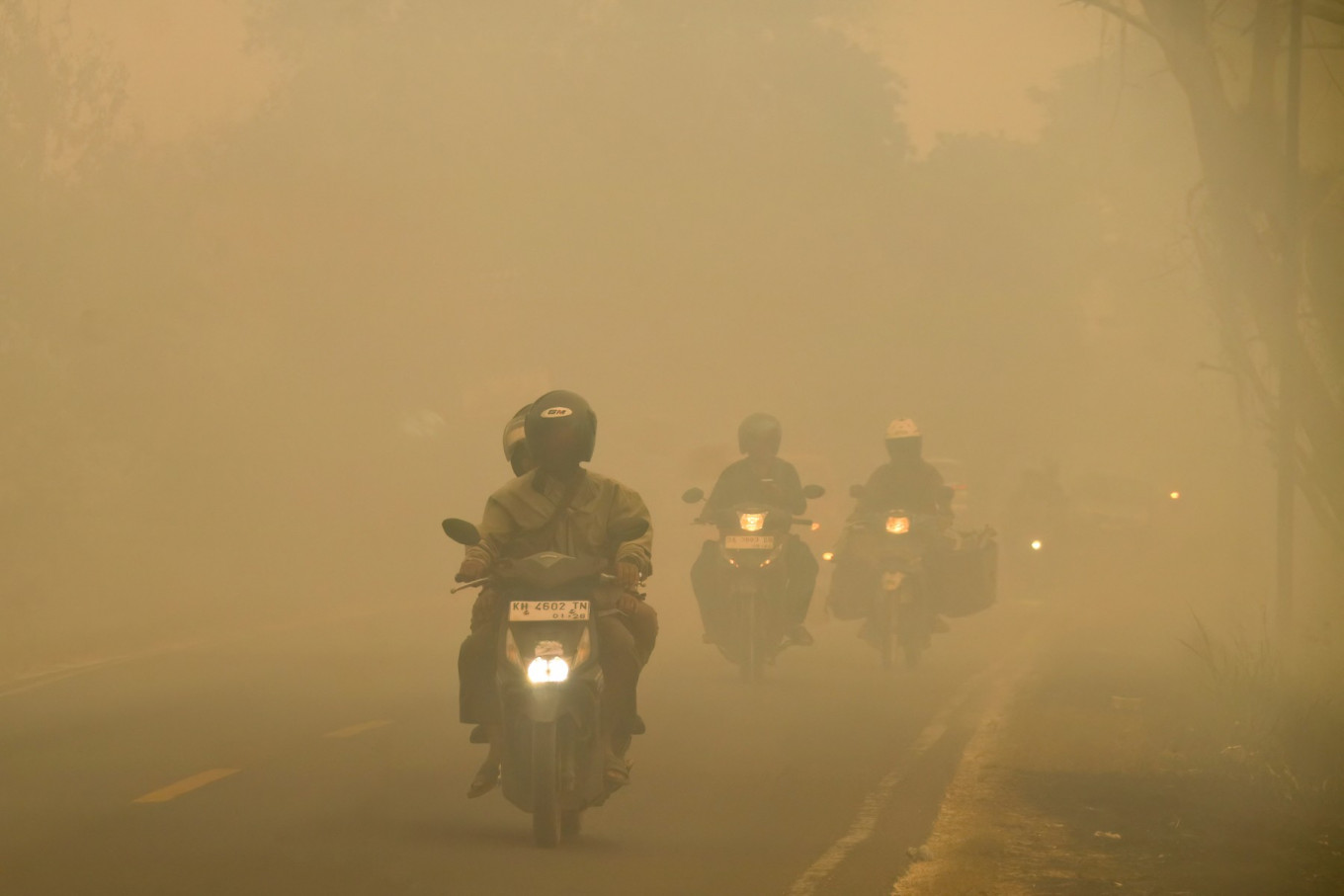 Motorcyclists ride on a haze-shrouded road caused by forest and land fires in Palangkaraya city, Central Kalimantan, on Aug. 28, 2026. (AFP/Reina)
A
persistent series of hydrometeorological crises compounded by El Niño, alongside simultaneous geological disasters over the past two months, has underscored Indonesia’s acute ecological vulnerability and exposed deep fragilities in regional emergency response capacities.
With more than 1,700 disaster events recorded over the last nine months, primarily catastrophic forest and land fires alongside flash floods, these crises can no longer be characterized as isolated or seasonal anomalies. They constitute a systemic national emergency requiring unified institutional resolve and flexible public financing mechanisms.
The geographic footprint of these concurrent disasters is unprecedented. Widespread land and forest fires continue to ravage Kalimantan, Sumatra and critical ecological corridors across Sulawesi and Java. Meanwhile, six active volcanoes have erupted almost simultaneously, most notably Mount Anak Krakatau, prompting high-level alerts across coastal Banten and Lampung while dispersing dense volcanic ash into West Java and Jakarta.
These crises are further aggravated by moderate-to-severe earthquakes in East Nusa Tenggara (NTT), destructive floods and landslides across Central Tapanuli, Southwest Aceh, North Sumatra and Sulawesi, as well as prolonged drought conditions that have triggered severe potable water deficits across Java, Nusa Tenggara and Sulawesi.
At the apex of these mounting emergencies, local administrations face severely constrained fiscal autonomy. Comprehensive expenditure containment mandates introduced under President Prabowo Subianto have substantially curbed regional transfer funds (TKD), the vital fiscal spine providing 70 to 80 percent of municipal and regency revenue nationwide. Compounding this contraction, central directives mandate local prioritizations for flagship national initiatives, chiefly the free nutritious meal program and the Red and White Cooperatives.
This convergence of diminished central transfers and curtailed discretionary fiscal space has hollowed out local disaster mitigation allocations and exhausted unforeseen expenditure reserves. Consequently, disaster-affected regional governments have been reduced to relying almost exclusively on ready-to-use funds administered centrally by the National Disaster Management Authority (BNPB) and the Finance Ministry.

This financial dependency creates an institutional bottleneck, as local authorities must clear multi-tiered administrative hurdles, including formal emergency status declarations and centralized field verifications, before relief tranches are released. These procedural delays inject a catastrophic response lag into ground-level emergency operations.