The Jakarta Post
Please Update your browser
Your browser is out of date, and may not be compatible with our website. A list of the most popular web browsers can be found below.
Just click on the icons to get to the download page.


Popular Reads
Top Results
No results found. Please check your search term and try again
Can't find what you're looking for?
View all search results
Popular Reads
Top Results
No results found. Please check your search term and try again
Can't find what you're looking for?
View all search resultsAnalysis: Everything but the rate: BI balances growth, rupiah stability
Change text size
Gift Premium Articles
to Anyone
Share the best of The Jakarta Post with friends, family, or colleagues. As a subscriber, you can gift 3 to 5 articles each month that anyone can read—no subscription needed!
 Set as preferred source
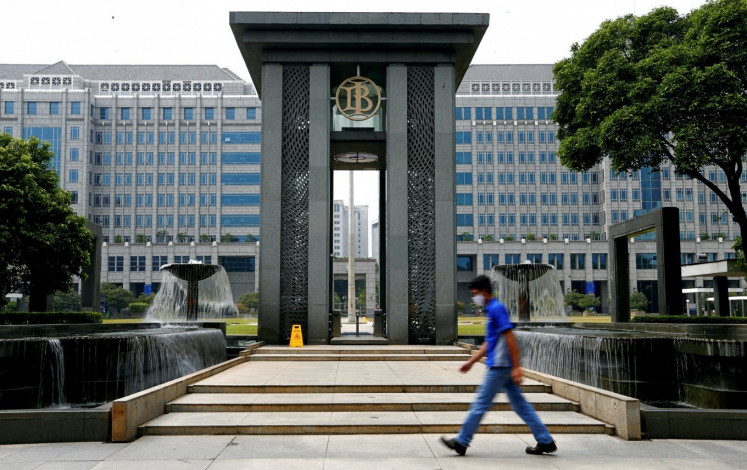
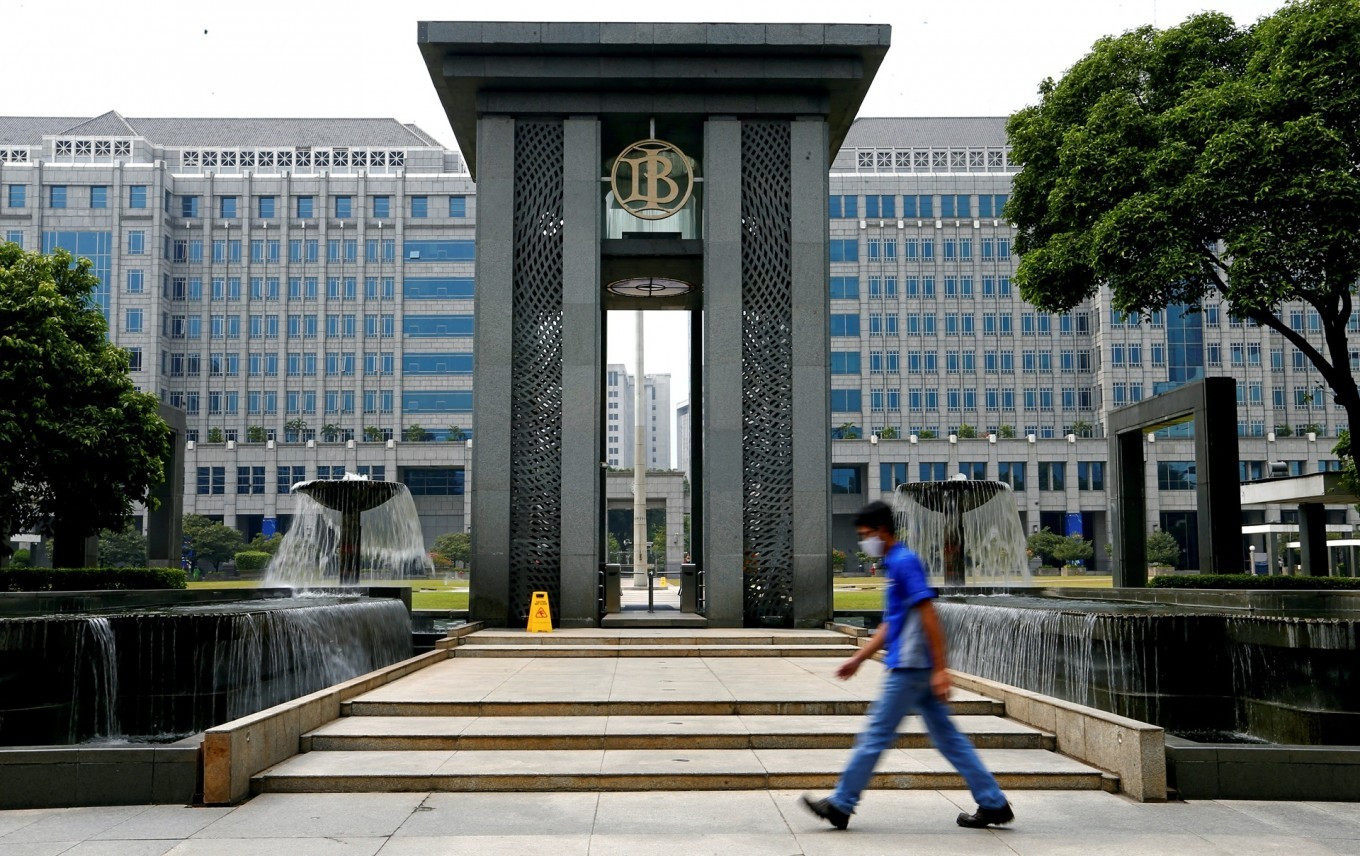 A man walks past the Bank Indonesia (BI) headquarters on Sept. 2, 2024, in Jakarta. ) (Reuters/Ajeng Dinar Ulfiana)
B
ank Indonesia (BI) opted to keep monetary policy supportive of growth on Sept. 23, holding its benchmark rate at 5.75 percent despite the United States Federal Reserve’s rate hike a week earlier. The decision, Governor Destry Damayanti’s second consecutive hold, reflects BI’s expanded mandate to support economic growth and job creation. Rather than raising rates to defend the rupiah, BI strengthened incentives for investors to hedge their currency exposure, seeking to balance growth with exchange-rate stability.
The Fed raised its target range for the first time since 2023, to 3.75-4.00 percent on Sept. 16, in a unanimous decision, as inflation remained elevated amid geopolitical uncertainty. Fed officials’ projections also indicated that monetary policy could remain relatively tight, while BI noted that global investor appetite for emerging-market portfolio assets remained constrained as the dollar stayed strong.
Ahead of BI’s decision, the rupiah weakened to Rp 17,855 per US dollar on Sept. 22, from around Rp 17,600 in mid-September. Foreign portfolio money has also been leaving: BI reported cumulative third-quarter net inflows of US$1.8 billion as of Aug. 14, falling to US$0.4 billion as of Sept. 21, implying roughly US$1.4 billion in net outflows over the five weeks between. Inflation, meanwhile, provided little pressure for a rate move. Headline inflation stood at 3.19 percent in August, driven by volatile food prices and up from July, but remained within BI’s target range of 2.5 percent plus/minus 1 percent.
In responding to the Fed’s decision, BI once again relied on instruments other than its policy rate. Its September response rested on three measures.
First, BI strengthened its monetary operations to stabilize the rupiah, control inflation and manage liquidity by optimizing foreign exchange intervention in offshore non-deliverable forwards (NDF), the domestic spot market and domestic NDF (DNDF), while managing money-market rates in line with the BI Rate. Second, it increased incentives through lower premiums on hedging swaps and DNDF transactions with BI, with reductions roughly doubled and tiered by tenor, alongside continued incentives for local-currency transactions. Third, it maintained accommodative macroprudential policy to encourage lending to the real sector.
Since June, when the rupiah breached Rp 18,000 per dollar and BI raised its benchmark rate by 25 basis points, completing three increases totalling 100 basis points, the central bank has kept rates unchanged. Its other policy instruments have since been used to defend the rupiah without further raising the cost of credit.

Raising the BI Rate would increase bank funding costs, feed through into lending rates and potentially slow investment and economic growth. That trade-off now has greater statutory significance following the enactment of Law No. 4/2026 on the Amendment to the Financial Sector Development and Strengthening (P2SK) Law.