The Jakarta Post
Please Update your browser
Your browser is out of date, and may not be compatible with our website. A list of the most popular web browsers can be found below.
Just click on the icons to get to the download page.


Popular Reads
Top Results
No results found. Please check your search term and try again
Can't find what you're looking for?
View all search results
Popular Reads
Top Results
No results found. Please check your search term and try again
Can't find what you're looking for?
View all search resultsGlimpses of hope from the UN General Assembly
While users should make informed decisions on when and how to use generative AI, its environmental cost vis-à-vis climate change should be an integral part of the ongoing debate on the rapidly advancing technology's regulation and sovereignty.
Change text size
Gift Premium Articles
to Anyone
Share the best of The Jakarta Post with friends, family, or colleagues. As a subscriber, you can gift 3 to 5 articles each month that anyone can read—no subscription needed!
 Set as preferred source
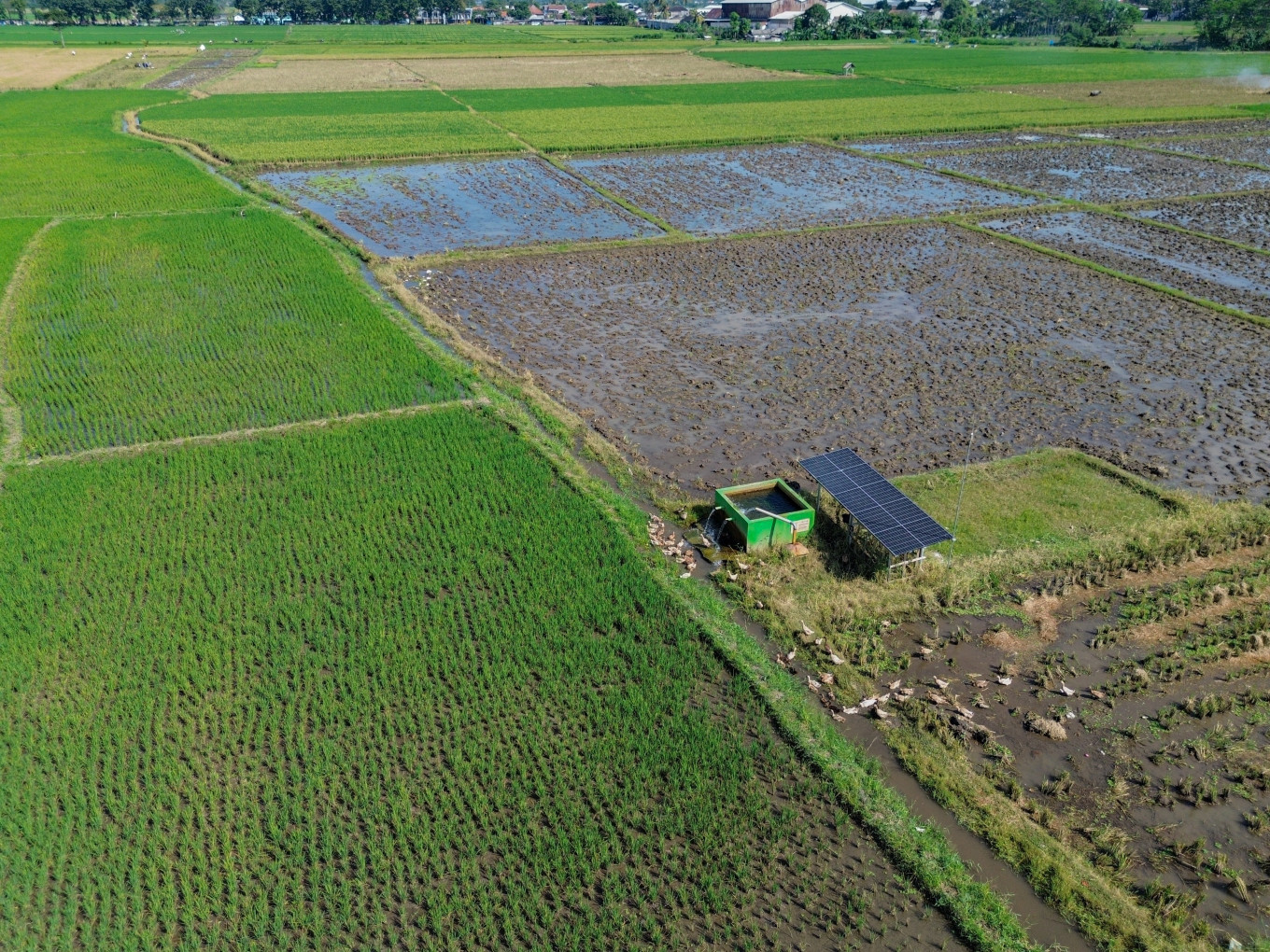 A solar water pump irrigates a rice farm on April 6, 2026, in Lumajang, East Java. (Antara/Irfan Sumanjaya)
A
t last week’s United Nations General Assembly (UNGA), the UN secretary-general focused on three existential threats to humanity: climate change, unchecked artificial intelligence and spiraling income inequality. It is clear that these threats are complex, intersecting and perceived with varying levels of concern by geopolitical heavyweights. But these threats are not intractable.
The dizzying speed at which narratives shift in this social media era means we have moved quickly from catastrophizing about the climate apocalypse to predicting the myriad ways AI will ravage society and the planet. But such widespread despair has never produced a good outcome.
It was thus helpful to see more nuanced positions emerging from New York City’s Climate Week, which unfolded at the same time as the UNGA. Here too, climate and AI were at the top of the agenda, but with less zero-sum messaging.
Undoubtedly, AI’s environmental impact is significant and arguably unconscionable given the scale of the climate crisis and the failure to reduce greenhouse gas emissions. Data centers that power AI use land, already scarce water supplies and immense amounts of energy, still largely derived from fossil fuels.
By 2030, 40 percent of electricity used by data centers will be for AI workloads: That equates to the residential electricity needs of all of sub-Saharan Africa (1.3 billion people), according to a 2025 study by technology insight company Gartner.
Bloomberg New Energy Finance estimates the AI load on data centers will increase global power sector emissions by 10 percent over the coming decade. This is on top of emissions associated with other computing linked to cloud storage, video streaming and the growing use of cryptocurrencies.

The AI debate is heating up just as scientists are confirming that this year marks the tipping point beyond which restricting global warming to 1.5 degrees Celsius above preindustrial levels is unachievable. The more evident the scale of the climate crisis becomes, the more perverse it seems to double down on a technological advance that has an insatiable appetite for electricity (fossil fuels) and water.
But AI is here to stay, and plans to colonize Mars are still nascent. And so at Climate Week NYC, more attention was paid to mounting claims that AI can help tackle the climate crisis. Examples of this include using AI for more intelligent load management for renewable energy, to track pollution more effectively by pulling together disparate data sources from weather stations, satellites and private monitors and for better modeling of climate change impacts for adaptation and mitigation.
There was also recognition that in a US that was rolling back on climate commitments at the federal level, Big Tech companies were playing an important role in funding renewable energy projects through multimillion-dollar contracts.
The climate aspect should be a core focus of AI regulation.
But this more balanced “AI fights climate change” narrative should not enable greenwashing by Big Tech.
While there are hopes that data centers will increasingly be powered by renewable sources, the overall effect of bringing coal- or gas-fueled power plants online now to sate immediate energy needs is hugely damaging. It stymies efforts that have been underway to retire fossil fuel power generation.
Ketan Joshi, a clean energy and corporate accountability researcher, highlighted in a recent paper that many claims of AI’s climate impact link back to case studies published by Big Tech and other corporations that are deeply conflicted rather than independent academic research.
Joshi also points out that the AI that can be used to benefit the climate is “traditional” machine learning, which has a much lower environmental impact than generative AI tools for consumers, such as Copilot, Gemini or ChatGPT, which are more resource-intensive.
With this awareness comes the pressure on consumers to make more ethical choices about when and how they use AI. Since generative AI has a greater environmental cost, users should be more informed about when they genuinely need the extra computational power (stick to Google for recipes; images and video are more wasteful than text; don’t automatically opt in for the AI search option).
But it’s unfair to put the onus on end users. The climate aspect should be a core focus of current AI regulation and sovereignty debates.
As with political discourse in recent years, it’s important that these issues not be hijacked by zero-sum thinking, knee-jerk polarization and absolutism.
The dire warnings punctuated by glimpses of hope in New York last week are a reminder that the only way forward, on the climate, AI and much else, is on the basis of empirical evidence, nuance, transparency and accountability.
---
The writer is a political and integrity risk analyst.