The Jakarta Post
Please Update your browser
Your browser is out of date, and may not be compatible with our website. A list of the most popular web browsers can be found below.
Just click on the icons to get to the download page.


Popular Reads
Top Results
No results found. Please check your search term and try again
Can't find what you're looking for?
View all search results
Popular Reads
Top Results
No results found. Please check your search term and try again
Can't find what you're looking for?
View all search resultsThe 45 percent Indonesia keeps missing
The government pours billions into shaping adult conduct and schooling, but human character and critical reasoning are overwhelmingly forged between the womb and age seven, where state policy rarely looks.
Change text size
Gift Premium Articles
to Anyone
Share the best of The Jakarta Post with friends, family, or colleagues. As a subscriber, you can gift 3 to 5 articles each month that anyone can read—no subscription needed!
 Set as preferred source
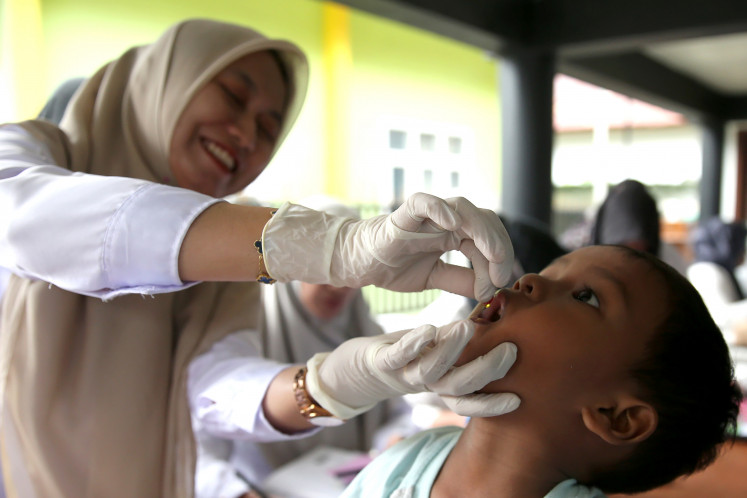
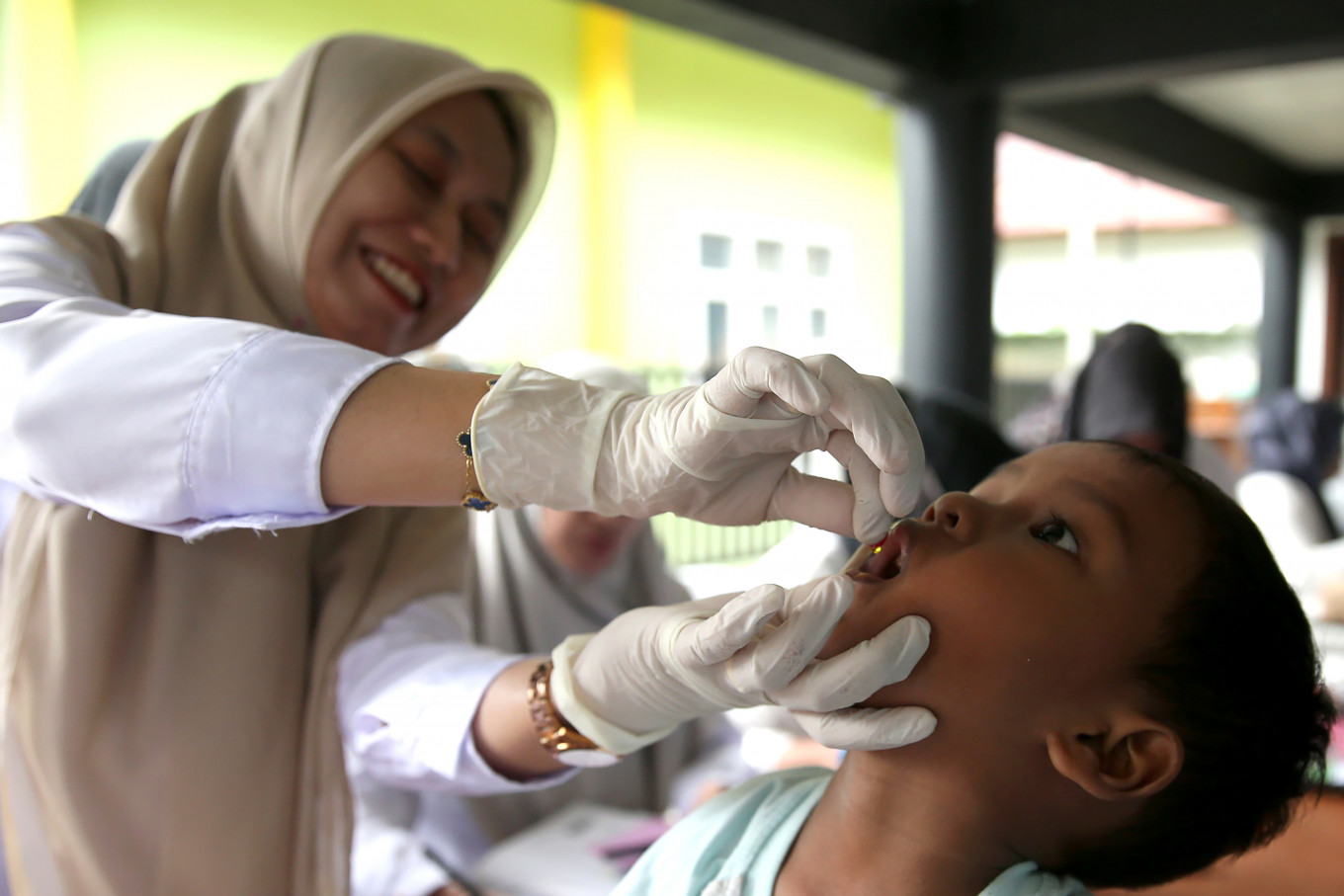 Bright futures: A health worker from the Ulee Kareng community health center (Puskesmas) gives vitamin A supplements to a toddler on Feb. 4, 2026, at an integrated health services post (Posyandu) in Lambhuk village, Banda Aceh. (Antara/Irwansyah Putra)
I
ndonesia expends enormous effort attempting to shape human conduct only after citizens have entered formal institutions. Twelve years of primary and secondary schooling are designed to cultivate discipline, reasoning, critical thinking and habits of learning. Universities are meant to deepen and apply those foundations, not construct them from scratch.
Yet higher education routinely falters when it assumes students possess the capacity for independent judgment, while some are still struggling with capacities that should have been formed much earlier. As the state is now spending heavily on human capital development, the timing of these interventions has become as critical as their scale.
The same delayed logic plagues working life. Corporations roll out compliance seminars, and public institutions require integrity pledges long after employees have spent their formative years observing how authority, rules, and rewards operate. When favoritism, dishonesty or abuse of power are repeatedly tolerated, they become accepted as institutional behavior.
A 2025 peer-reviewed article on ethical decision-making points further back in that sequence. It outlines five weighted influences on ethical decisions: 45 percent early neural pathways, 22 percent cognitive biases, 18 percent external pressures, 10 percent context and 5 percent character.
These figures are analytical weights derived from a literature-based model rather than census-level population estimates. Yet the policy lesson lies less in the exact arithmetic than in the underlying sequence.
Early neural development comes first. Biases later affect what people notice and trust. Pressure introduces fear, reward and hierarchy, while institutions reinforce what conduct is tolerated or punished. Character operates after years of exposure to all of them.

The article pays particular attention to ages three to seven, when synaptic pruning and myelination help refine neural circuits involved in cognition and behavior. Children experience language, care, authority and conflict while systems involved in emotional regulation, impulse control and social cognition continue developing.