The Jakarta Post
Please Update your browser
Your browser is out of date, and may not be compatible with our website. A list of the most popular web browsers can be found below.
Just click on the icons to get to the download page.


Popular Reads
Top Results
No results found. Please check your search term and try again
Can't find what you're looking for?
View all search results
Popular Reads
Top Results
No results found. Please check your search term and try again
Can't find what you're looking for?
View all search resultsBeyond disaster response: Building a state architecture of resilience
Natural hazards are inevitable, but disaster risk is manufactured, and Indonesia cannot engineer true resilience until it stops spending like a firefighter and starts budgeting like an architect.
Change text size
Gift Premium Articles
to Anyone
Share the best of The Jakarta Post with friends, family, or colleagues. As a subscriber, you can gift 3 to 5 articles each month that anyone can read—no subscription needed!
 Set as preferred source
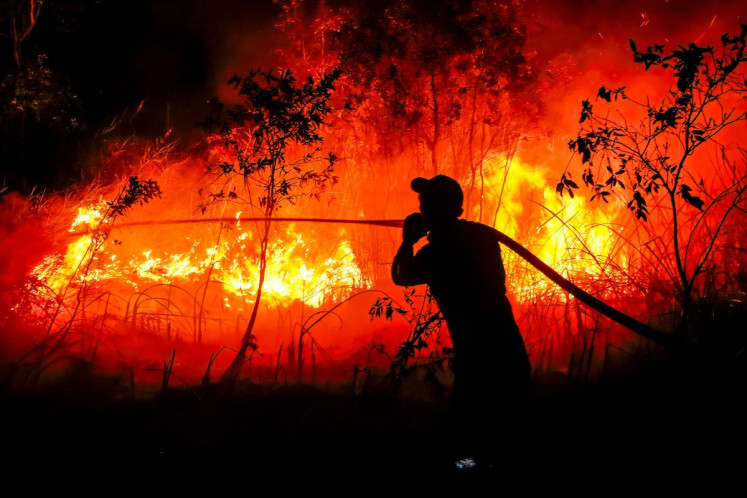
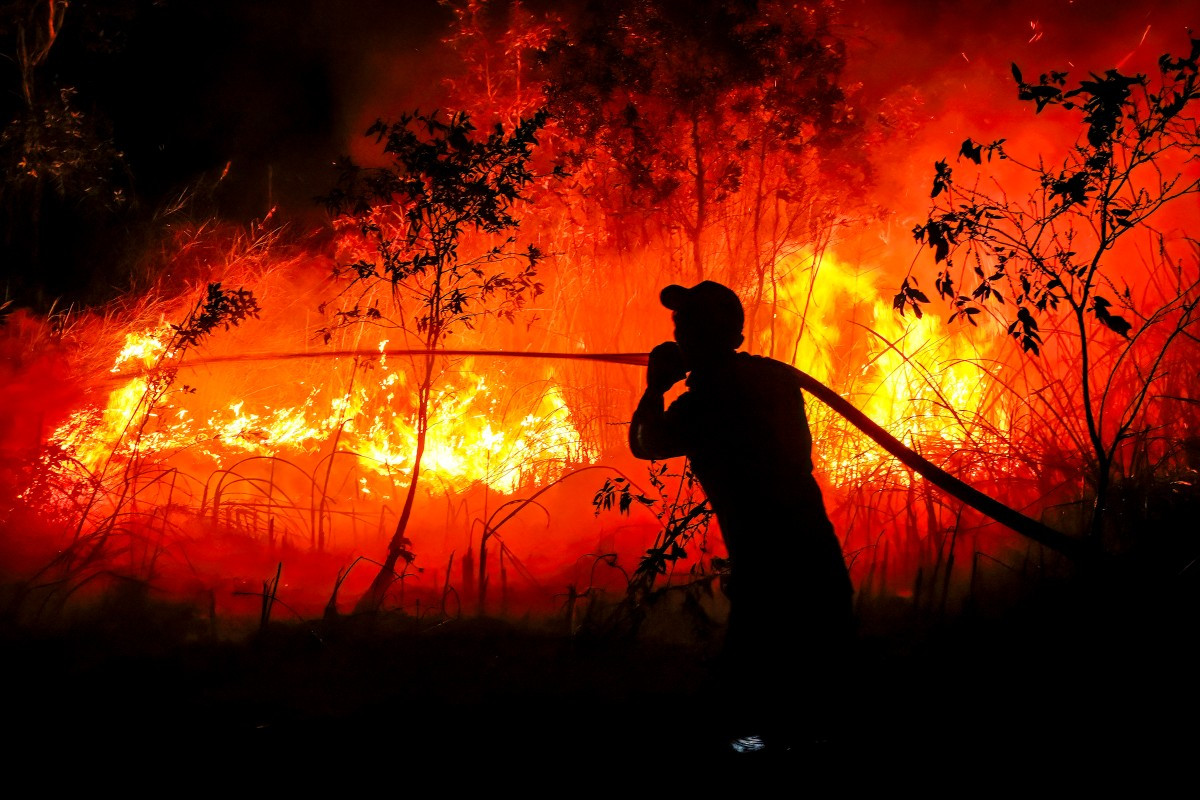 A firefighter from the Regional Disaster Management Agency douses a forest fire at Sungai Rambutan village in Ogan Ilir, South Sumatra on Sept. 11, 2026. Toxic haze has shrouded parts of Indonesia and Malaysia for weeks as Jakarta struggles to contain fires that have scorched large tracts of Borneo and Sumatra, with the smoke drifting into neighboring Malaysia, Singapore and Brunei. (AFP/SIGIT PRASETYA)
D
isasters are routinely described as acts of nature visited upon an unsuspecting society. Earthquakes strike, rivers breach their banks and forests burn. Yet this familiar framing obscures an uncomfortable reality: while natural hazards are inevitable, disaster risk is manufactured.
Risk is the byproduct of deliberate human choices, where settlements and plantations are zoned, which wetlands are paved over, how building codes are enforced and whose vulnerabilities are deemed politically tolerable. The state does not merely manage disasters; through its planning choices, fiscal allocations and regulatory omissions, it helps produce them.
This distinction is no longer academic. Indonesia ranks third among 193 nations in the 2025 World Risk Index, trailing only the Philippines and India. As climate pressures mount, hazards are increasingly cascading, compounding and systemic. An extreme meteorological event is no longer an isolated shock; it is a catalyst that collides with degraded watersheds, fragile slopes and unplanned urbanization to trigger flash floods, landslides and mass displacement.
Yet Indonesia’s governance architecture remains tethered to a reactive posture.
The clearest proof lies in the national ledger. In 2025, the National Disaster Mitigation Agency (BNPB) operated with an effective budget of approximately Rp 4.47 trillion. Over 80 percent was allocated to the on-call emergency reserve (Dana Siap Pakai, or DSP), deployed during declared emergencies and select high-risk contingencies. While emergency liquidity is indispensable during a crisis, this fiscal skew exposes an entrenched institutional bias: the state invests overwhelmingly in the aftermath of tragedy while leaving negligible fiscal space for the sustained, pre-disaster interventions that preserve lives in the first place.
This budgetary imbalance creates a deep structural mismatch. Disaster risk is generated across sectoral portfolios, public works, environment, forestry, agrarian affairs and transportation, as well as regional administrations. Yet accountability for the fallout lands squarely on BNPB.

When catastrophe strikes, BNPB is expected to command and coordinate, despite holding virtually no statutory authority over the upstream land concessions, infrastructure permits, or spatial plans that engineered the vulnerability. The agency held responsible for the disaster has no leverage over the decisions that caused it.