The Jakarta Post
Please Update your browser
Your browser is out of date, and may not be compatible with our website. A list of the most popular web browsers can be found below.
Just click on the icons to get to the download page.


Popular Reads
Top Results
No results found. Please check your search term and try again
Can't find what you're looking for?
View all search results
Popular Reads
Top Results
No results found. Please check your search term and try again
Can't find what you're looking for?
View all search resultsPrabowonomics: From diagnosis to delivery
Nations escape the middle-income trap by building factories, not funding handouts - and Prabowonomics risks mistaking consumption for a cure.
Change text size
Gift Premium Articles
to Anyone
Share the best of The Jakarta Post with friends, family, or colleagues. As a subscriber, you can gift 3 to 5 articles each month that anyone can read—no subscription needed!
 Set as preferred source
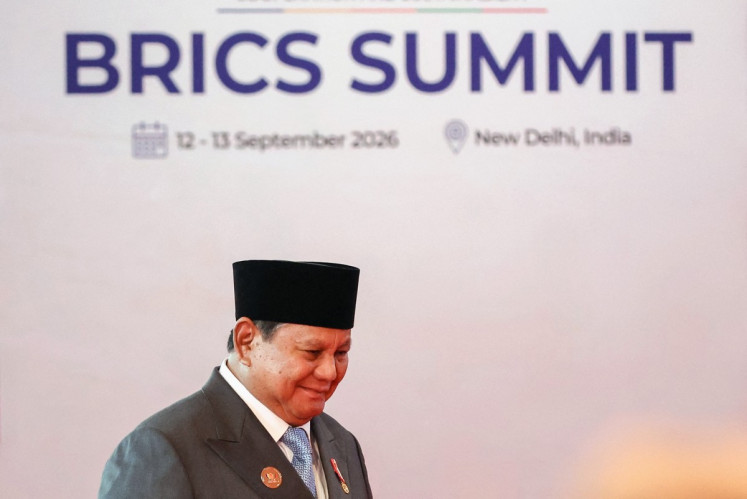
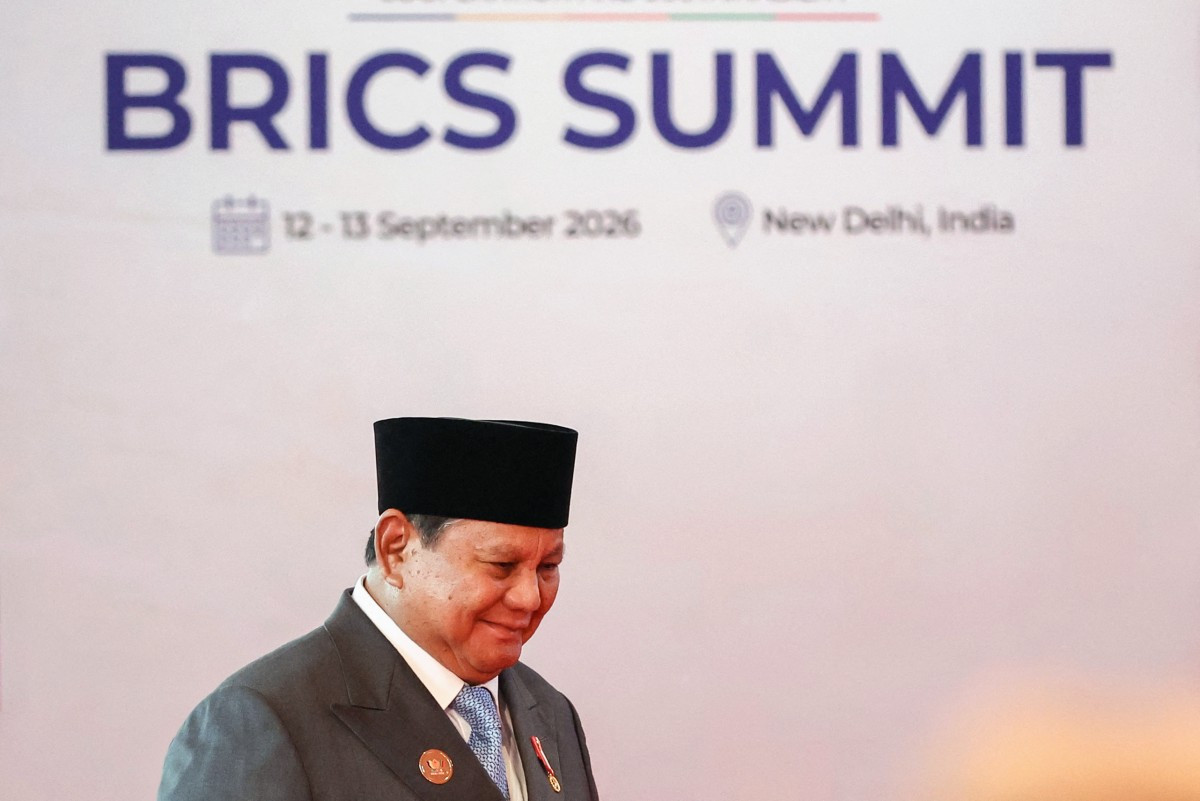 President Prabowo Subianto arrives on Sept. 12 before the start of the 18th BRICS Summit in New Delhi. (AFP/Pool/Alexander Kazakov)
P
resident Prabowo Subianto, entering his third year in office, has correctly diagnosed Indonesia’s chronic condition: After three decades of adherence to neoliberal orthodoxy, the country remains ensnared in middle-income trap - resource-rich, yet paradoxically paralyzed by that abundance. “Prabowonomics” was conceived to break this paralysis, framing economic democracy and self-reliance as national imperatives.
At the BRICS summit in New Delhi last month, Prabowonomics secured an international stage, articulating an ambitious agenda of joint industrialization, de-dollarization, financial architecture reform and food sovereignty. Yet diagnosis is not treatment, and a summit communiqué is not an execution mechanism.
Good intentions do not construct industrial capacity or generate durable employment. The defining test is whether rhetoric can translate into policy.
Left uncorrected, current policies risk substituting market cronyism with state capture, and private rent-seeking with raw resource nationalism. Neither builds productive capability. The foundational lesson of developmental economics remains unyielding: consumption alone does not generate enduring prosperity.
South Korea and Taiwan broke out of poverty not by subsidizing consumption, but by wielding state capacity to force structural transformation - scaling shipyards, steel mills, electronics and semiconductor fabrication. Nations escape the middle-income trap by building, not by spending.
The most acute fiscal tension in Prabowonomics lies in the free nutritious meal program. By September 2026, the program had consumed Rp 139.77 trillion (US$7.8 billion) against an annual ceiling of Rp 218.77 trillion - eclipsing the Public Works Ministry’s entire Rp 118.5 trillion capital budget.

Feeding children carries undeniable moral urgency. But when recurrent consumption of this magnitude sacrifices roads, irrigation networks and technical education - even as manufacturing’s share of gross domestic product has slipped to 19.07 percent amid premature deindustrialization - the calculation shifts.