The Jakarta Post
Please Update your browser
Your browser is out of date, and may not be compatible with our website. A list of the most popular web browsers can be found below.
Just click on the icons to get to the download page.


Popular Reads
Top Results
No results found. Please check your search term and try again
Can't find what you're looking for?
View all search results
Popular Reads
Top Results
No results found. Please check your search term and try again
Can't find what you're looking for?
View all search resultsSmoke in the air, noise online: Public response to forest fires
While thick haze chokes the skies, an online disconnect between citizens and the state reveals that Indonesia’s greatest firefighting challenge may be digital, not just environmental.
Change text size
Gift Premium Articles
to Anyone
Share the best of The Jakarta Post with friends, family, or colleagues. As a subscriber, you can gift 3 to 5 articles each month that anyone can read—no subscription needed!
 Set as preferred source
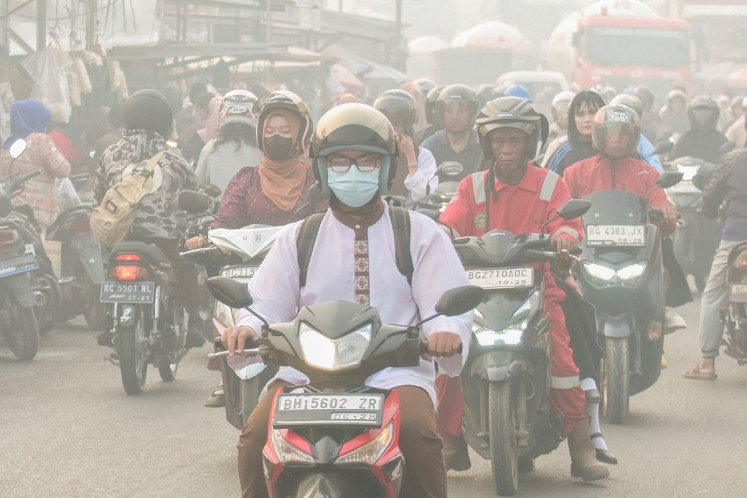
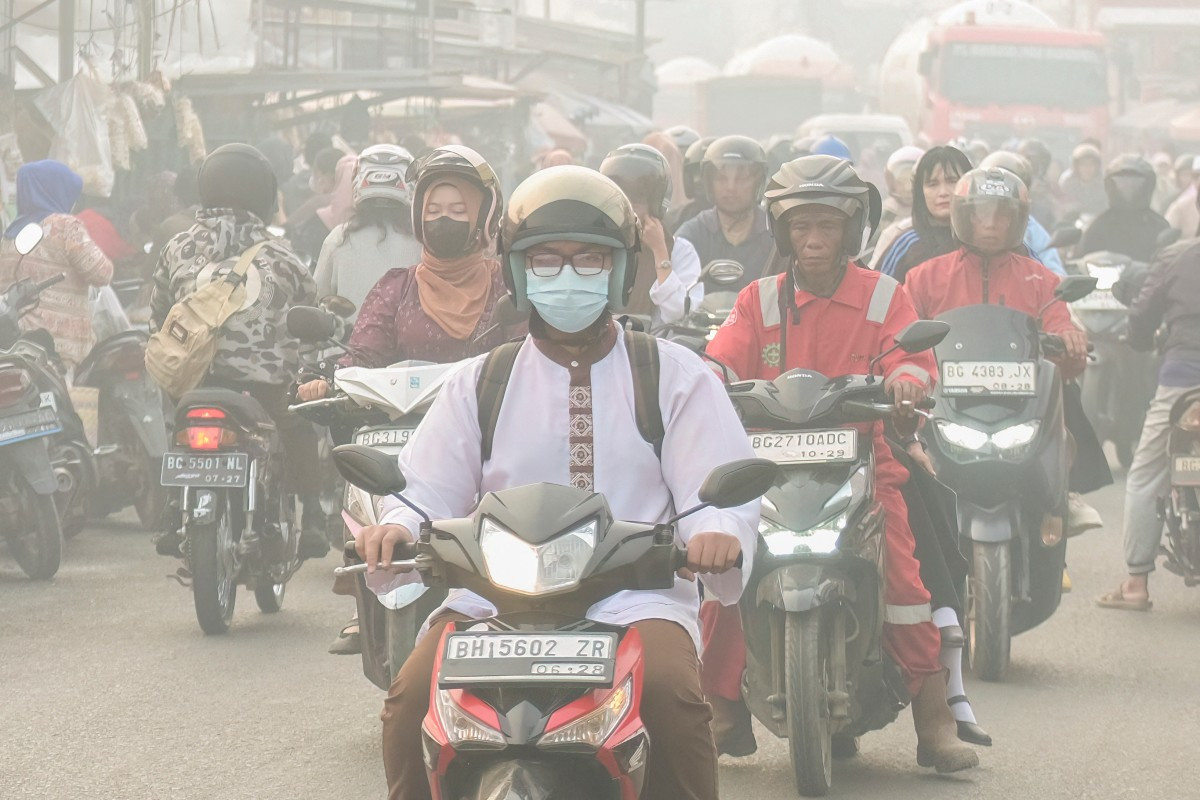 Motorcyclists commute on Oct. 2, 2026, as haze from forest and land fires shroud the road, in Palembang, South Sumatra. Wildfires in Indonesia have been blamed in large part on slash-and-burn land-clearing practices that result in the destruction of fire-resistant forest cover and the draining of peatlands. (AFP/Al Zulkifli)
I
ndonesia’s recurring forest fires have thrust the nation back into the international spotlight. The fallout extends well beyond ecological devastation: Transboundary haze routinely crosses borders, disrupting daily life and public health across Southeast Asia.
Yet the crisis is no longer solely an environmental or logistical challenge; it has become an acute stress test of state crisis communication in a networked digital public sphere. In an environment where social media can solidify public sentiment within seconds, coherent digital communication is as vital as on-the-ground firefighting.
The digital landscape urges authorities to adopt calm, clear and timely digital communication to address public anxiety and counter misinformation.
Studies show that effective crisis communication requires the capability to establish dialogue and to deliver the right message at the right time from credible sources. Dialogue refers to an organization’s willingness and concrete actions to listen to the affected and critical citizens, followed by appropriate responses. Such dialogue is essential for identifying solutions and reducing public anger during crises.
Our structural analysis of more than 11,000 posts on X (formerly Twitter) regarding karhutla (land and forest fires) reveals a profound disconnect. The 10 most active contributors are ordinary citizens and nano- to micro-influencers. Conversely, the 10 most frequently tagged accounts consist of high-level state actors, notably President Prabowo Subianto and Forestry Minister Raja Juli Antoni, alongside mainstream media outlets and prominent public figures.
Strikingly, there is zero overlap between the most active voices and the most visible institutional targets. Coupled with a negligible reciprocity index, these metrics indicate that digital communication during the crisis remains largely unidirectional, failing to achieve meaningful civic engagement.

Understanding how the public reacts on social media platforms is critically important for authorities. It enables them to build public trust and counter disinformation during environmental crises.