The Jakarta Post
Please Update your browser
Your browser is out of date, and may not be compatible with our website. A list of the most popular web browsers can be found below.
Just click on the icons to get to the download page.


Popular Reads
Top Results
No results found. Please check your search term and try again
Can't find what you're looking for?
View all search results
Popular Reads
Top Results
No results found. Please check your search term and try again
Can't find what you're looking for?
View all search resultsThe Trump-Xi thaw offers breathing room for the world
The high-stakes summit between US President Donald Trump and Chinese President Xi Jinping served as a vital de-escalation momentum desperately needed for the stability of our world.
Change text size
Gift Premium Articles
to Anyone
Share the best of The Jakarta Post with friends, family, or colleagues. As a subscriber, you can gift 3 to 5 articles each month that anyone can read—no subscription needed!
 Set as preferred source
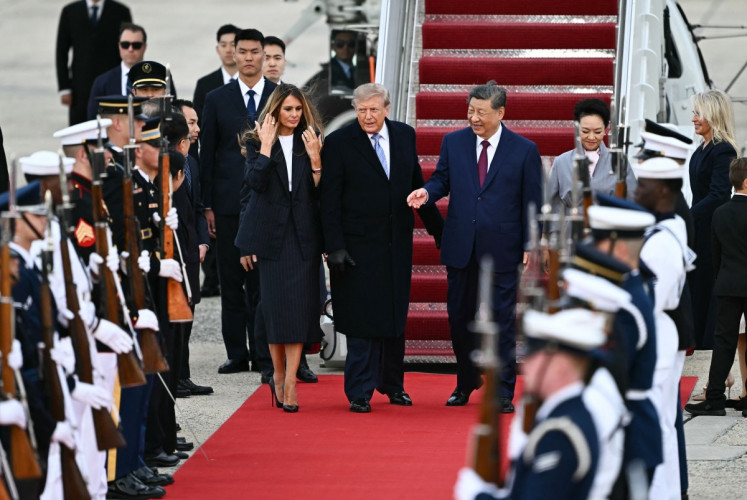
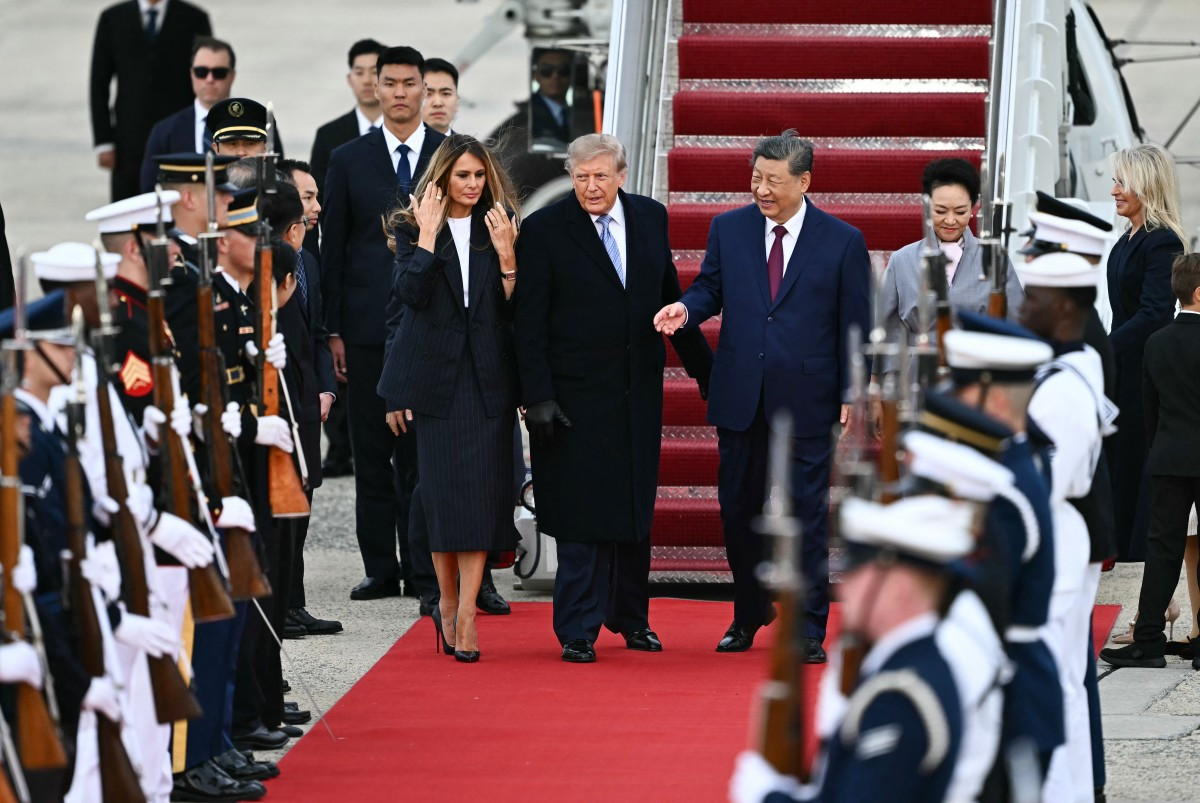 United States President Donald Trump (center left) and US First Lady Melania Trump (left) greet on Sept. 23, 2026, Chinese President Xi Jinping (center right) and China’s First Lady Peng Liyuan (right) upon their arrival at Joint Base Andrews in Maryland, the US. (AFP/Kent Nishimura)
F
or years, the geopolitical friction between the world’s two reigning superpowers, the United States and China, has been painted as a grim historical inevitability.
Yet the high-stakes summit between US President Donald Trump and Chinese President Xi Jinping in Washington, DC, in late September was no ordinary diplomatic photo-op. It served as a vital de-escalation momentum desperately needed for the stability of our world.
Over the past decade, the dominant narrative shaping Washington–Beijing ties has been mired in structural pessimism. Many observers have leaned heavily on Graham Allison’s famous thesis of the Thucydides Trap, a historical dynamic dictating that when a rising power threatens to displace an existing hegemon, war is nearly always the inescapable outcome.
From competition in the South China Sea and trade wars to semiconductor restrictions and the sovereignty of Taiwan, the world has hovered on the edge of collective dread, fearing a second Cold War or an outright military confrontation.
The recent summit, marking the eighth meeting between Trump and Xi, injected a profound and much-needed sense of realistic relief. Both leaders displayed a brand of political pragmatism that transcended structural determinism. They recognized that the boundless costs of unrestrained conflict far outweigh any short-term political gains from power-play theatrics.
Examining this event through the lens of John Mearsheimer’s offensive realism reveals a fascinating yet promising paradox. Mearsheimer has argued that within an anarchic international system, great powers are driven by an intrinsic fear to maximize power for their own survival. In his view, a clash between two global giants is a structural certainty because each will continually strive to dominate and prevent the rise of a rival hegemon.

Nevertheless, Mearsheimer also concedes that rational leaders can calculate the limits of strategic moves when the costs of offensive conflict become prohibitively high.

Your Opinion Matters
Share your experiences, suggestions, and any issues you've encountered on The Jakarta Post. We're here to listen.
Enter at least 30 characters
0
/ 30
Thank you
Thank you for sharing your thoughts. We appreciate your feedback.