The Jakarta Post
Please Update your browser
Your browser is out of date, and may not be compatible with our website. A list of the most popular web browsers can be found below.
Just click on the icons to get to the download page.


Popular Reads
Top Results
No results found. Please check your search term and try again
Can't find what you're looking for?
View all search results
Popular Reads
Top Results
No results found. Please check your search term and try again
Can't find what you're looking for?
View all search resultsAnalysis: Indonesia's textile rescue: Revival or another failed SOE?
Change text size
Gift Premium Articles
to Anyone
Share the best of The Jakarta Post with friends, family, or colleagues. As a subscriber, you can gift 3 to 5 articles each month that anyone can read—no subscription needed!
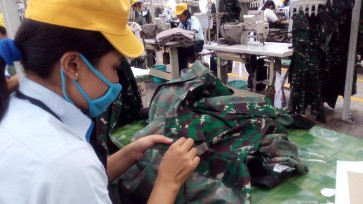
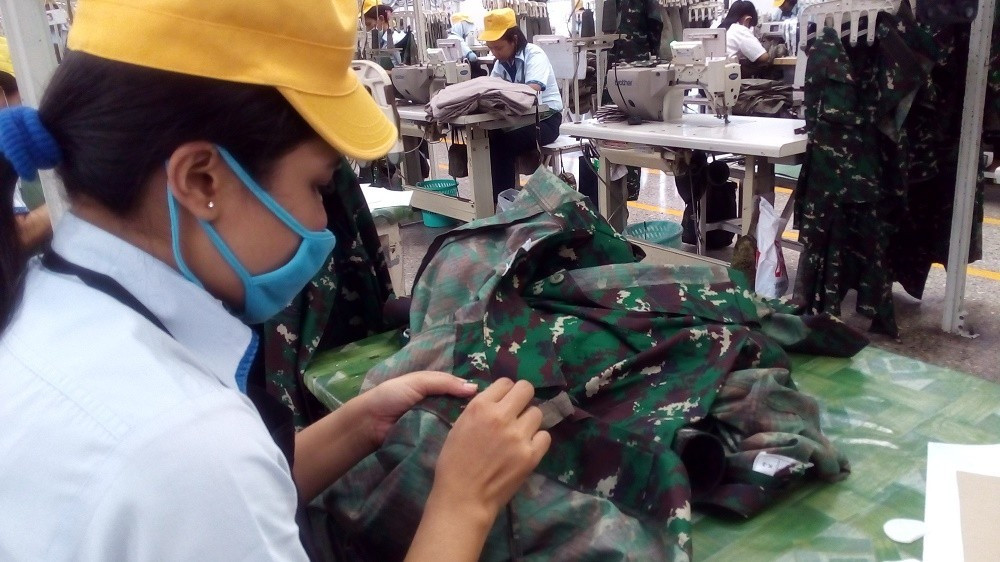 Workers produce military uniforms at a factory of PT Sri Rezeki Isman (Sritex) in Sukoharjo, Central Java, in October 2016. ( JP/Nani Afrida)
P
resident Prabowo Subianto wants to revive Indonesia's struggling textile industry by establishing a new state-owned enterprise (SOE), potentially drawing on assets left behind by bankrupt textile giant Sritex. The plan comes amid factory closures, mass layoffs and mounting competition from cheaper imports. But with much of the industry's production capacity already underutilized, the government faces a difficult question: Will another state-owned company restore the industry's competitiveness or merely add to its problems?
The proposed SOE is part of Prabowo's efforts to preserve employment and revive an industry that has long been an important source of manufacturing jobs. State asset fund Danantara has been tasked with supporting the initiative, with CEO Rosan Roeslani indicating that the government intends to establish a new, vertically integrated textile company rather than simply inject capital into an existing enterprise.
The plan has drawn both support and concern from industry players. While some welcome government intervention to strengthen the domestic textile supply chain, others worry that another state-owned producer could intensify competition in an industry already struggling with weak demand, excess capacity and pressure from cheaper imports, especially from China.
Yet the industry's difficulties go beyond competition from imported products. Production capacity remains heavily underutilized across much of the textile value chain. Capacity utilization ranges from around 45 percent in the fiber segment to 58 percent in garments, suggesting that many manufacturers are already operating well below their potential output.
These figures raise an important question about the government's proposed intervention. If existing manufacturers cannot fully utilize their production capacity, would establishing another producer help revive the industry or merely add to its excess capacity?
The answer depends largely on where the new SOE operates within the textile value chain.

According to the Indonesian Textile Association (API), Indonesia's textile industry encompasses several interconnected segments, from upstream production of synthetic fibers and other raw materials to spinning, weaving, fabric processing and downstream garment manufacturing. While the country has established manufacturing capacity in many downstream activities, it remains dependent on imported inputs for certain upstream processes.