The Jakarta Post
Please Update your browser
Your browser is out of date, and may not be compatible with our website. A list of the most popular web browsers can be found below.
Just click on the icons to get to the download page.


Popular Reads
Top Results
No results found. Please check your search term and try again
Can't find what you're looking for?
View all search results
Popular Reads
Top Results
No results found. Please check your search term and try again
Can't find what you're looking for?
View all search resultsA two-year roller coaster with the free meals program
Two years in, the President's flagship free meals program is cannibalizing regional budgets, stoking food inflation and risking systemic economic fallout for the sake of political ambition.
Change text size
Gift Premium Articles
to Anyone
Share the best of The Jakarta Post with friends, family, or colleagues. As a subscriber, you can gift 3 to 5 articles each month that anyone can read—no subscription needed!
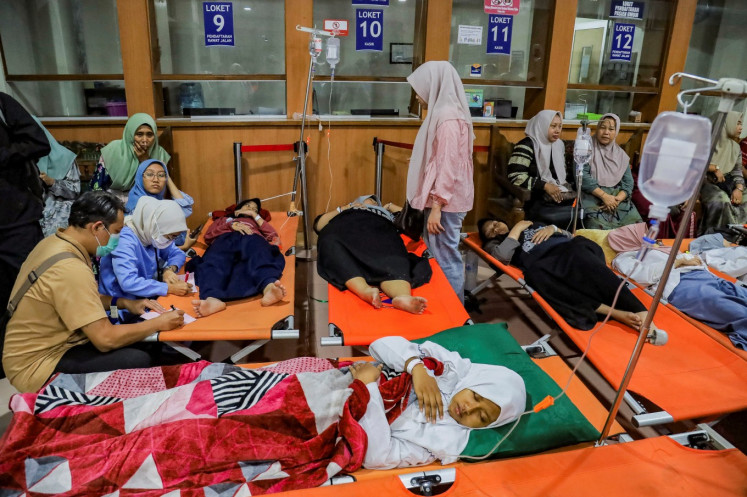
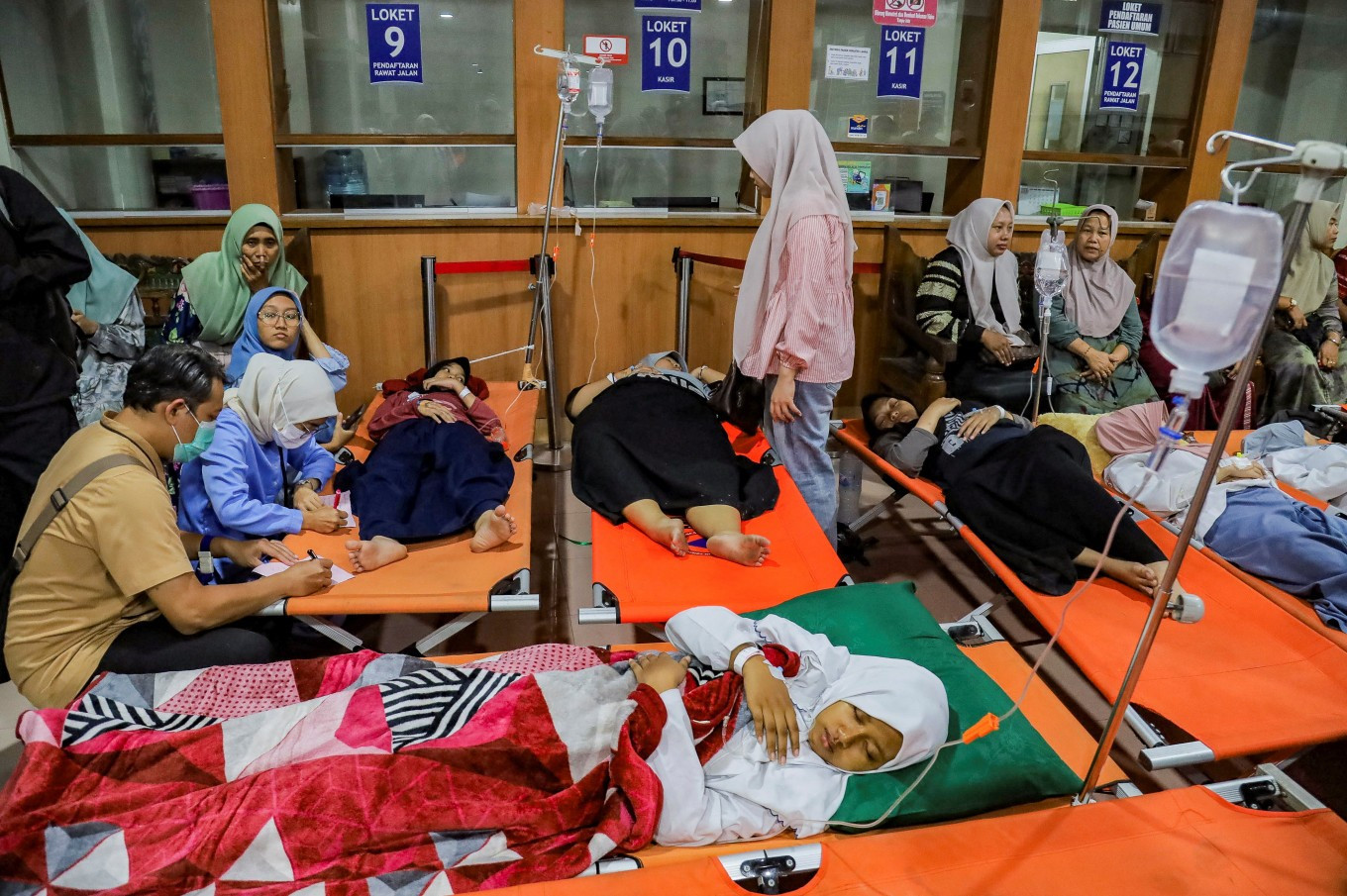 Students lay on cots as they are treated for food poisoning linked to the free nutritious meal program on Sept. 2, 2026, at Sidoarjo Regional General Hospital in the East Java regency. (Reuters/Suryanto)
D
uring a recent discussion in Abu Dhabi, a head of private equity posed a fundamental question to me: Must Indonesia’s economy be jeopardized for the sake of the free nutritious meal (MBG) program?
Shrinking fiscal space, weakening debt repayment capacity and repeated warnings from rating agencies serve as economic alarm bells. Two years into the program, the credibility of both fiscal and monetary policies is now being called into question.
Fiscal space is currently managed through drastic efficiency measures and quasi-fiscal mechanisms, specifically by leveraging the financial sector to supply credit.
While the official state budget deficit appears to remain below 3 percent, tapping fiscal buffers (SAL) to fund priority credit programs constitutes a real fiscal risk. This creates a "pseudo-fiscal deficit" that formally stays within legal limits, yet the heavy involvement of commercial banks introduces systemic vulnerability.
If the kitchens serving the free meals program begin to shut down, lenders will face a surge in nonperforming loans; a risk magnified by the sheer volume of capital deployed.
It is not just foreign investors who are alarmed. A CELIOS survey evaluating the administration’s two-year performance has found that 76 percent of public respondents want the free meals program discontinued. Among economic and policy experts surveyed, 50 percent recommend a complete halt while 37 percent propose a formal moratorium.

In the same survey, which polled 1,142 members of the public and 129 independent experts, 82 percent of respondents reported that government levies and taxes had become excessively burdensome. Meanwhile, 53 percent indicated that their household finances had deteriorated over the past two years.