The Jakarta Post
Please Update your browser
Your browser is out of date, and may not be compatible with our website. A list of the most popular web browsers can be found below.
Just click on the icons to get to the download page.


Popular Reads
Top Results
No results found. Please check your search term and try again
Can't find what you're looking for?
View all search results
Popular Reads
Top Results
No results found. Please check your search term and try again
Can't find what you're looking for?
View all search resultsAnalysis: Gibran won’t be impeached, but that’s not the point
Change text size
Gift Premium Articles
to Anyone
Share the best of The Jakarta Post with friends, family, or colleagues. As a subscriber, you can gift 3 to 5 articles each month that anyone can read—no subscription needed!
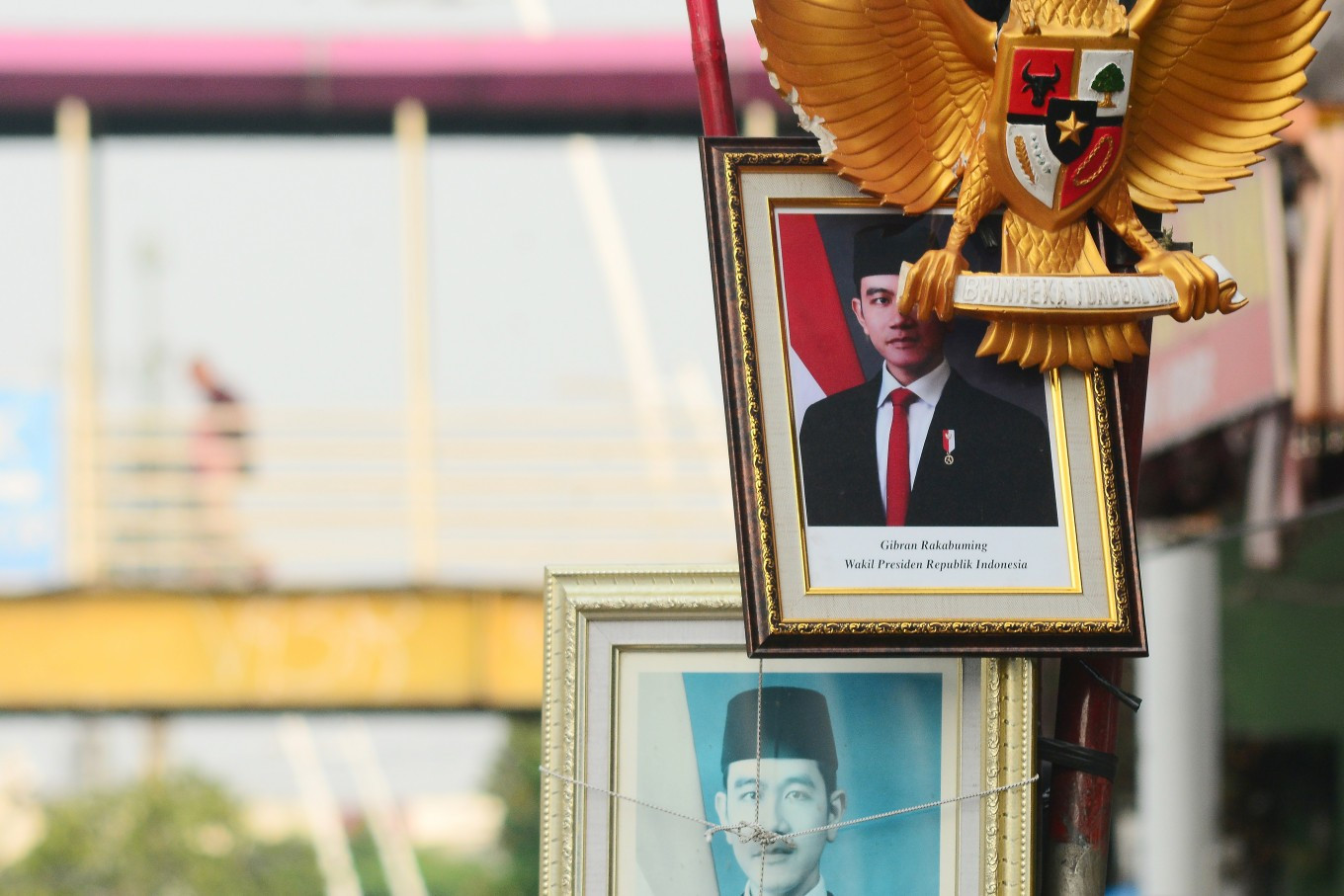 An image of Indonesian Vice President Gibran Rakabuming Raka is displayed in a frame outside a photo framing shop on Thursday in the Jatinegara area of East Jakarta (.JP/Iqro Rinaldi)
T
he controversy surrounding Vice President Gibran Rakabuming Raka has entered a new phase. Criticism of how he reached office is increasingly channeled into talk of impeachment. Paradoxically, the more it is discussed, the less likely it seems to happen. The mechanism exists, but the politics suggest its impact will be symbolic rather than institutional.
Once inaugurated, a president or vice president can be removed only through impeachment. Articles 7A and 7B of the Constitution set out a multi-stage process involving the House of Representative, the Constitutional Court, and the People Consultative Assembly. Recent legal challenges to Gibran's qualifications underline the point: after inauguration, eligibility disputes can no longer be resolved through ordinary election litigation, only through constitutional removal.
The process is deliberately hard. The DPR must first approve an opinion that grounds for removal exist. The Constitutional Court must then uphold it, and only then can the MPR vote. Each stage demands broad consensus. Designed after Reformasi to prevent the instability of earlier eras, impeachment is less a legal procedure than a political process requiring elite agreement. That leaves the DPR in a peculiar position. Nothing can begin without its initiative, yet it has shown little appetite either to embrace or to reject impeachment calls.
The ambiguity is rational. Rejecting impeachment outright would hand Gibran a form of parliamentary validation. Pursuing it would endanger parties in the governing coalition by destabilizing the administration, alienating Prabowo-Gibran voters, and fracturing alliances. So political actors entertain hearings, petitions, and public debate while stressing that parliamentary consensus would be required before anything substantial could happen. Impeachment remains useful as a topic but inconvenient as a project.
For critics, then, removal may not be the objective. Given the procedural hurdles and the coalition's parliamentary strength, success is improbable. The real battlefield is legitimacy. Much of the criticism holds that Gibran's rise stemmed from judicial intervention, family influence, and dynastic politics rather than a conventional political career. Each round of debate over candidacy requirements reinforces that perception. Even if the constitutional process goes nowhere, the narrative survives.
Some critics propose another route: sustained public pressure to shame Gibran into resigning voluntarily. This bypasses the DPR, but it assumes a susceptibility to shame that is rare in politics. A vice president backed by a strong coalition and a powerful patron has little reason to yield, so this too is aimed at legitimacy rather than removal.

Timing matters here. Impeachment talk makes more sense viewed through 2029 than 2026. As vice president, Gibran is first in line should anything happen to President Prabowo Subianto, so weakening his standing carries weight: critics are questioning the legitimacy of a potential future president.