The Jakarta Post
Please Update your browser
Your browser is out of date, and may not be compatible with our website. A list of the most popular web browsers can be found below.
Just click on the icons to get to the download page.


Popular Reads
Top Results
No results found. Please check your search term and try again
Can't find what you're looking for?
View all search results
Popular Reads
Top Results
No results found. Please check your search term and try again
Can't find what you're looking for?
View all search resultsIs Indonesia’s democracy still worth the name?
Behind the facade of regular elections and court battles, the country has quietly traded democratic governance for a militarized cartel, begging the real question: Who can still say no to the President?
Change text size
Gift Premium Articles
to Anyone
Share the best of The Jakarta Post with friends, family, or colleagues. As a subscriber, you can gift 3 to 5 articles each month that anyone can read—no subscription needed!
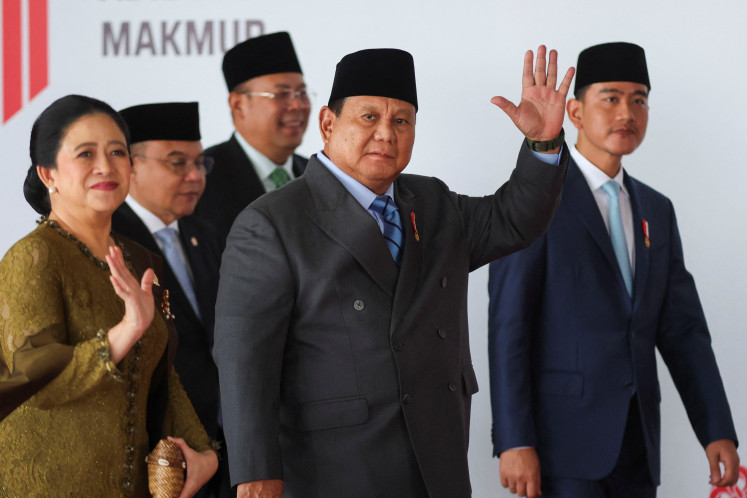
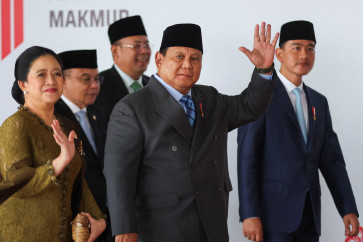
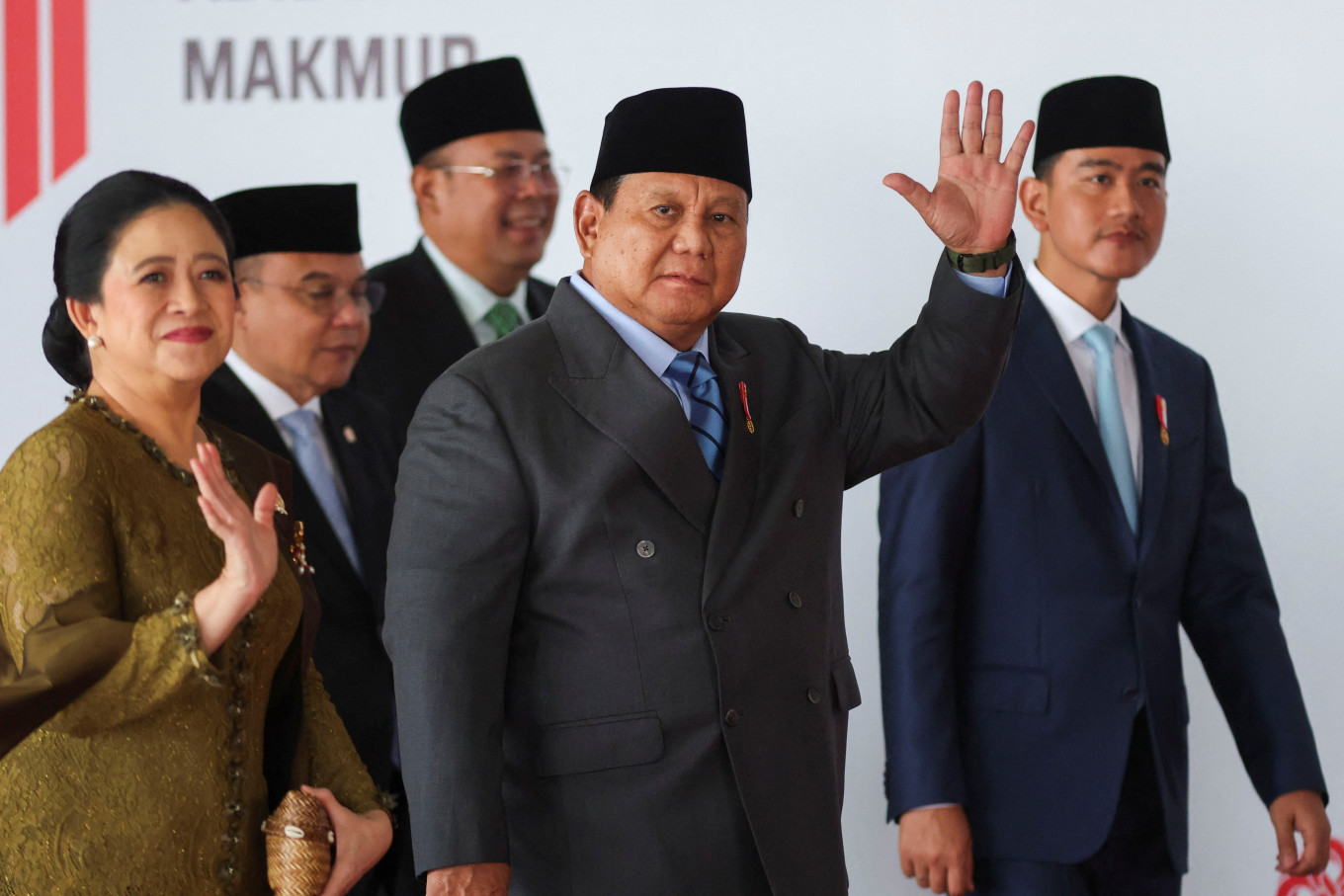 President Prabowo Subianto (center front) and House of Representatives Speaker Puan Maharani (left) wave on Aug. 14, 2026, as Vice President Gibran Rakabuming Raka (right) looks on, as they arrive at the Senayan Legislative Complex in Central Jakarta ahead of the annual State of the Nation Address. (Reuters/Stringer)
T
oday, Prabowo Subianto and Gibran Rakabuming Raka mark two years in office. The milestone arrives alongside scathing institutional verdicts.
The Democracy Report 2026 of the Varieties of Democracy (V-Dem) project classifies Indonesia as an electoral autocracy, charting a 21.5-point decline in its Liberal Democracy Index over the past decade. The Bertelsmann Transformation Index (BTI) similarly warns that the country is sliding into competitive authoritarianism.
Yet on the ground, elections are still held, courts still process petitions, students still march and elites still quarrel in public. After years of gradual regression, is Indonesia a democracy under strain or an autocracy that simply goes through the motions of holding elections? We have posed this question before, merely under different analytical labels.
What have these past two years actually produced? Early Indonesian scholarship framed a debate that haunts contemporary analysis.
Harry J. Benda viewed Indonesia as a "bureaucratic polity", a state that rules society from a core grounded in the military and civil apparatus. Herbert Feith, by contrast, saw a society fractured by distinct aliran (sociopolitical streams) whose elites could not agree on foundational rules, forcing transactional bargaining to replace institutional governance.
One saw power consolidating within the state apparatus; the other saw it diffusing into clientelist networks. Prabowo’s administration fuses the two.

Consider the architecture of power. Backed by over 80 percent of the seats in the House of Representatives, the ruling coalition encompasses seven of the eight legislative parties, leaving only the Indonesian Democratic Party of Struggle (PDI-P) outside the formal tent.