The Jakarta Post
Please Update your browser
Your browser is out of date, and may not be compatible with our website. A list of the most popular web browsers can be found below.
Just click on the icons to get to the download page.


Popular Reads
Top Results
No results found. Please check your search term and try again
Can't find what you're looking for?
View all search results
Popular Reads
Top Results
No results found. Please check your search term and try again
Can't find what you're looking for?
View all search resultsTwo years of Prabowo: Resilience today, bills tomorrow
Indonesia isn't undergoing an economic boom under Prabowo, it is running a state-funded illusion on an off-budget credit card that is about to max out.
Change text size
Gift Premium Articles
to Anyone
Share the best of The Jakarta Post with friends, family, or colleagues. As a subscriber, you can gift 3 to 5 articles each month that anyone can read—no subscription needed!
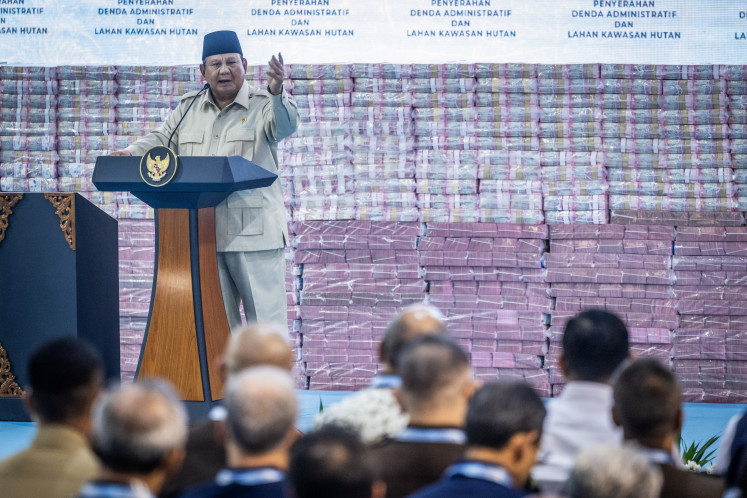
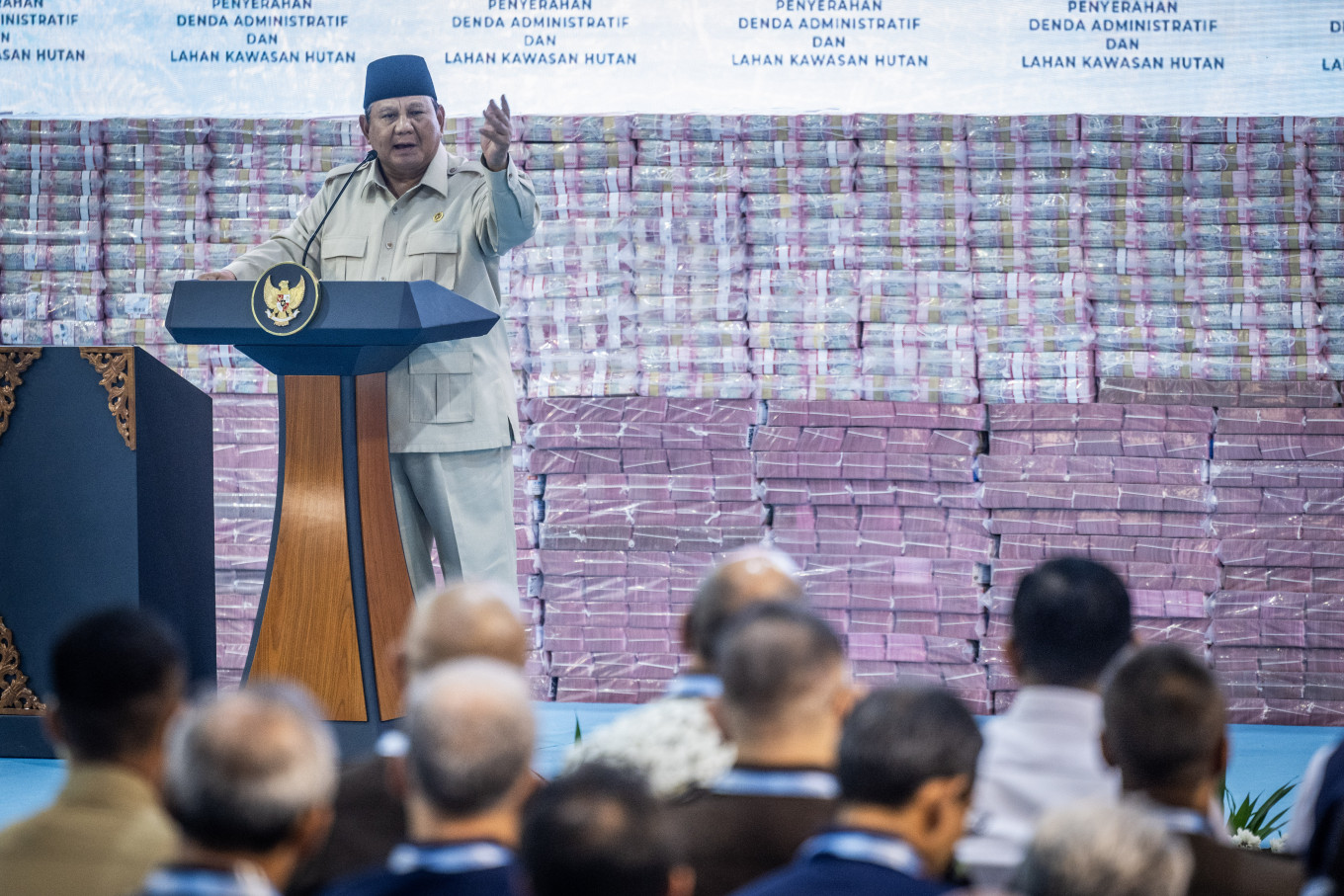 President Prabowo Subianto delivers remarks during the handover of administrative fines and forest land at the Attorney General’s Office in Jakarta on May 13, 2026. (Antara/Bayu Pratama S)
A
s President Prabowo Subianto marks two years in office today, the headline numbers look reassuring. Beneath them, an economy increasingly carried by the state pays for today’s resilience with tomorrow’s credibility.
Much of this headline expansion reflects growth the state itself is buying. Statistics Indonesia (BPS) reports 5.61 percent growth in the first quarter and 5.29 percent in the second. My estimates, based on manufacturing electricity consumption and vetted with colleagues, put first-quarter growth closer to 4.9 percent.
Even at face value, the composition is troubling. Government consumption rose almost 16 percent in the second quarter, adding about one percentage point to headline growth. State banks’ investment credit surged 24.7 percent year-on-year while private banks’ investment lending contracted. Private investment’s contribution to capital formation has dropped from 7.4 percentage points a year ago to roughly 2 percent. This is a state-directed investment cycle, not a market-driven one.

Jobs tell the same story. Formal employment has contracted for six consecutive quarters, and the middle class has shrunk by roughly 10 million people since 2019. Corporate profits and cash holdings sit at record highs, yet firms refuse to invest, a clear verdict on the perceived rules of the game.
Nowhere is this tension clearer than in flagship welfare initiatives, where good intentions run headlong into weak delivery. The administration deserves credit for placing food security and child nutrition at the center of its agenda. But intentions are not outcomes. Research analyzing data from more than 23,000 kitchens in the free nutritious meals program reveals that operations are not concentrated where food insufficiency is most acute, and that procurement is driving up local food prices.
The Red and White Cooperatives program is even more concerning. State banks can lend up to Rp 3 billion (US$170,000) to each cooperative, backed by village funds, representing a potential contingent exposure of Rp 340 trillion to Rp 420 trillion over six years. Top-down cooperatives rarely foster operational discipline. Armed with subsidized credit and official backing, they risk crowding out the very village shops, independent traders and micro-lenders they were designed to uplift.

Inevitably, the bill for this fiscal and quasi-fiscal expansion is arriving. An expanding cabinet and new agencies create structural, recurring costs. Markets increasingly look past the headline budget deficit to the consolidated public balance sheet: state-owned enterprise borrowing, directed bank lending, and state asset fund Danantara’s balance sheet commitments and guarantees. An obligation kept off-budget is still an obligation.