The Jakarta Post
Please Update your browser
Your browser is out of date, and may not be compatible with our website. A list of the most popular web browsers can be found below.
Just click on the icons to get to the download page.


Popular Reads
Top Results
No results found. Please check your search term and try again
Can't find what you're looking for?
View all search results
Popular Reads
Top Results
No results found. Please check your search term and try again
Can't find what you're looking for?
View all search resultsCapital market needs enforcement, not more rules
With MSCI threatening to reclassify Indonesia as a standalone market, Jakarta's credibility will not be saved by issuing more rules, but by proving it has the muscle to enforce them.
Change text size
Gift Premium Articles
to Anyone
Share the best of The Jakarta Post with friends, family, or colleagues. As a subscriber, you can gift 3 to 5 articles each month that anyone can read—no subscription needed!
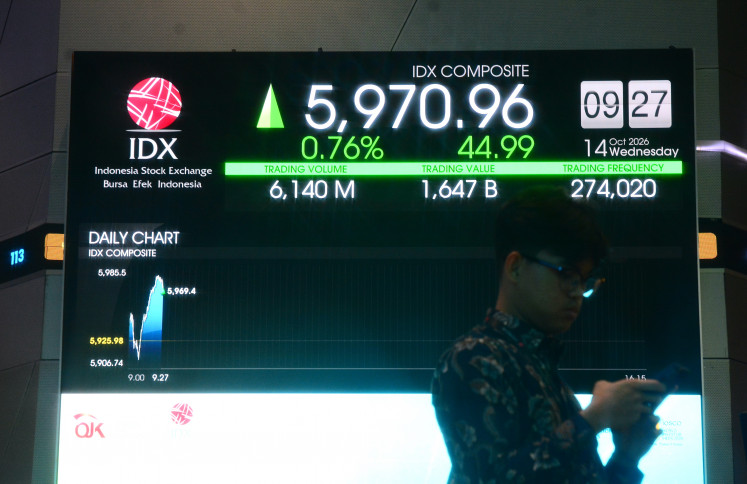
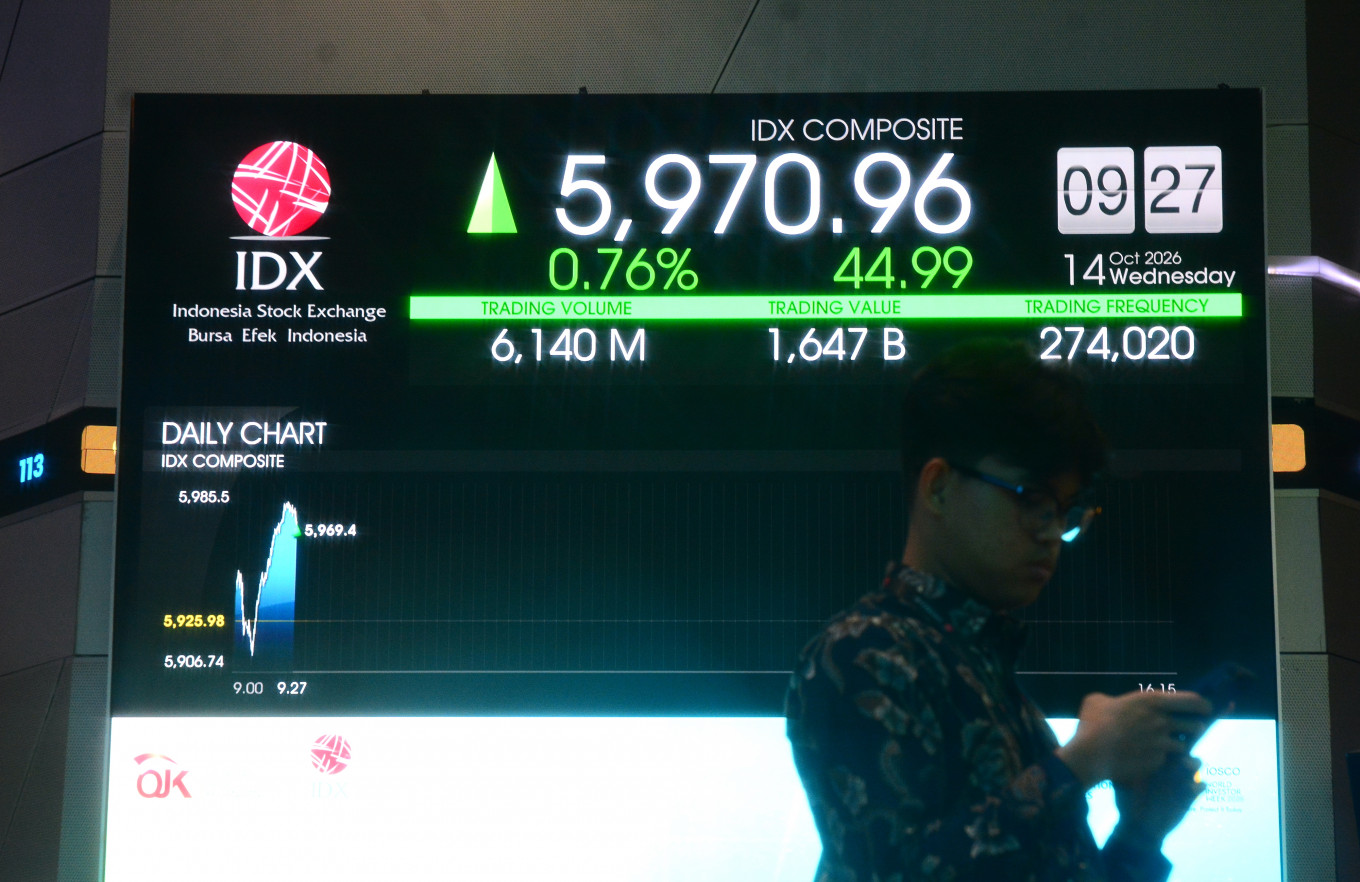 A man uses his mobile phone in front of an electronic board displaying stock prices at the Indonesia Stock Exchange (IDX) building in South Jakarta on Oct. 14, 2026. (JP/Iqro Rinaldi)
O
n Oct. 15, MSCI initiated formal consultations with global investors on whether to reclassify Indonesia from Emerging Market to Standalone Market status. The index provider cited deep-seated concerns regarding opaque ownership structures, suspected coordinated trading and an absence of tangible evidence that recent reforms are functioning as intended.
With the consultation period closing on April 30, 2027, and a final determination expected by June, Indonesia faces an unmistakable signal: international capital still lacks confidence in the integrity of the market's underlying disclosures.
Deflecting these concerns by questioning MSCI’s methodology misses the point. The critical test is whether Indonesia can independently demonstrate that its market is transparent, fairly regulated and structurally sound. Institutional investors must be able to verify who ultimately controls a company, what portion of equity is genuinely accessible for trading and whether price discovery reflects legitimate market forces. The core challenge is not an absence of regulation; it is the systemic inability to demonstrate that existing rules are actively and credibly enforced.
Consider a hypothetical issuer with 1 billion shares, where 250 million are genuinely liquid and held by independent public investors, yielding a true free float of 25 percent. If an additional 150 million shares are held via nominee accounts or related entities under the de facto control of the founders, yet still counted toward the public float, the reported figure artificially inflates to 40 percent.
This distortion has immediate, compounding consequences: MSCI uses free-float market capitalization to determine index weightings. An overstated float inflates a company's weighting, forcing passive index-tracking funds to chase artificial liquidity, bidding up prices against a restricted supply. The central question is therefore foundational: does reported free float represent actual tradable liquidity?
Concentrated or complex shareholdings are not inherently illegal, nor do they automatically prove market manipulation. Rather, regulatory scrutiny must center on three tests: whether ownership structures have been disclosed with complete accuracy, whether related-party interests have been unlawfully obscured and whether trading behavior or initial share allocations have violated market integrity rules.

Indonesia's legal architecture already addresses these practices. The Capital Market Law, as amended by the 2023 Financial Sector Development and Strengthening (P2SK) Law and related implementing regulations, establishes comprehensive mandates governing disclosure, market conduct and enforcement. Financial Services Authority (OJK) Regulation No. 4/2024 sets strict requirements for reporting changes in share ownership and encumbrances, while Presidential Regulation No. 13/2018 establishes a mandatory mechanism for identifying beneficial ownership.