The Jakarta Post
Please Update your browser
Your browser is out of date, and may not be compatible with our website. A list of the most popular web browsers can be found below.
Just click on the icons to get to the download page.


Popular Reads
Top Results
No results found. Please check your search term and try again
Can't find what you're looking for?
View all search results
Popular Reads
Top Results
No results found. Please check your search term and try again
Can't find what you're looking for?
View all search resultsPerception and reality: Prabowo’s two years of presidency
As markets plunge and public trust evaporates, President Prabowo’s grand gamble on state-led capitalism is colliding head-on with harsh fiscal and political realities.
Change text size
Gift Premium Articles
to Anyone
Share the best of The Jakarta Post with friends, family, or colleagues. As a subscriber, you can gift 3 to 5 articles each month that anyone can read—no subscription needed!
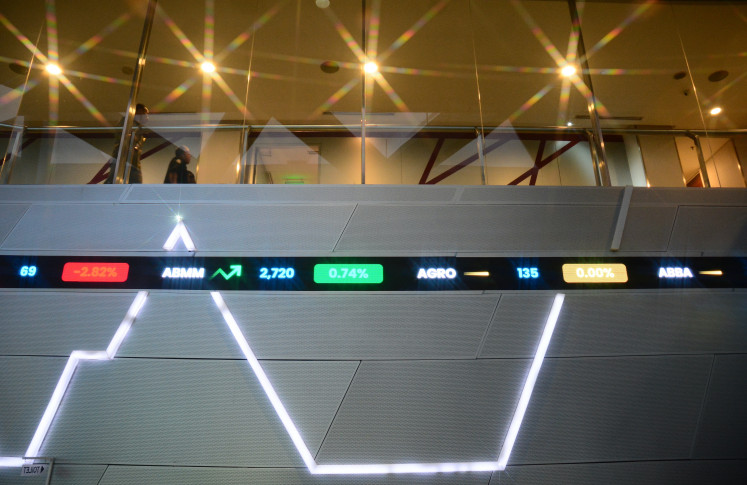
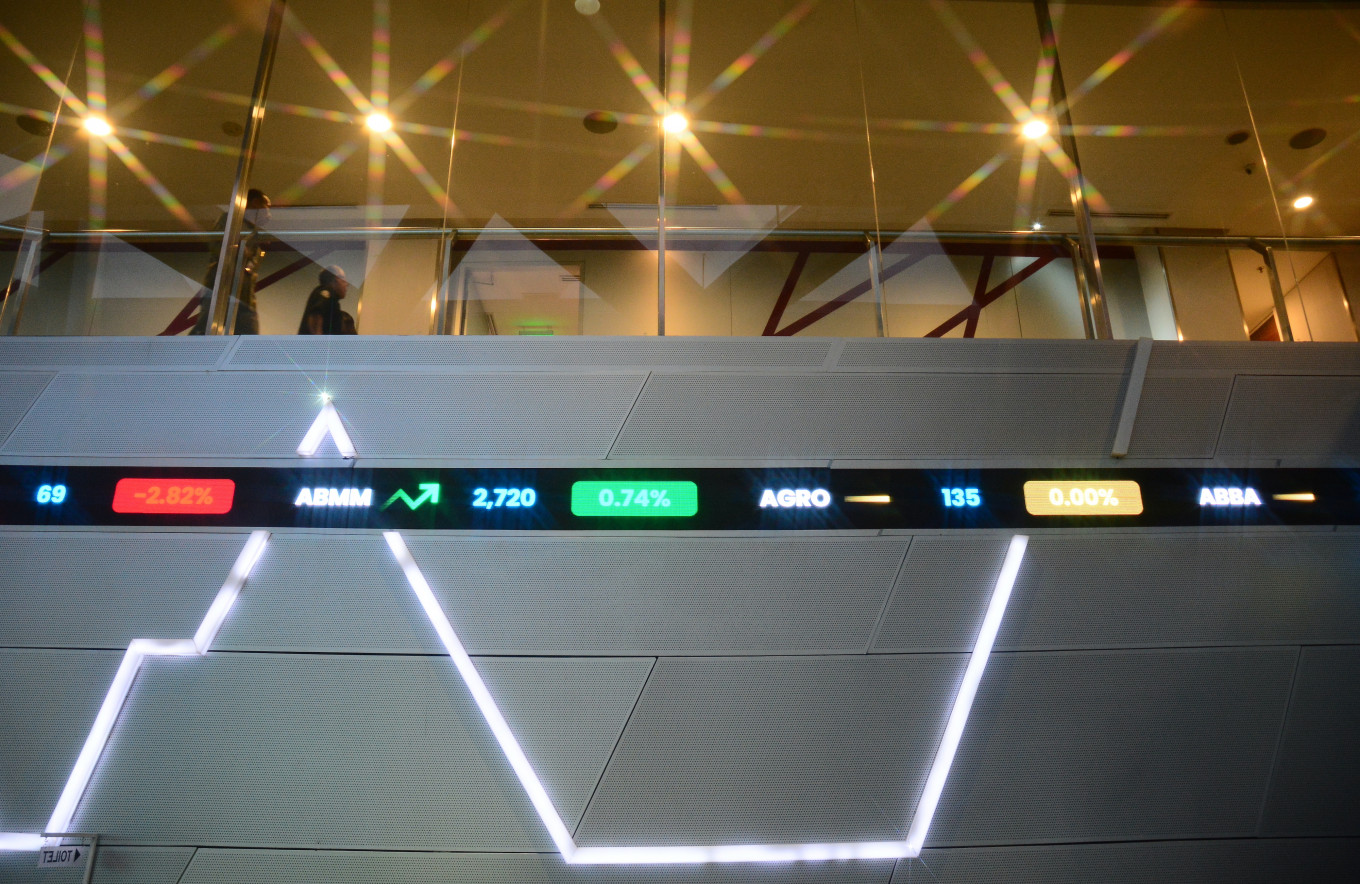 An electronic board displays stock prices at the Indonesia Stock Exchange (IDX) building in South Jakarta on Oct. 14, 2026. (JP/Iqro Rinaldi)
A
s President Prabowo Subianto enters his third year in office, turbulence across the country’s financial markets shows no sign of abating. The steep decline of both the rupiah and the Indonesia Composite Index reflects deep-seated investor anxieties over governance, policy consistency, fiscal sustainability and Indonesia’s broader strategic trajectory.
Despite headline economic expansion, millions of households feel increasingly vulnerable, economically insecure and left behind. For much of the electorate, aggregate growth has failed to translate into tangible improvements in everyday life. According to polling by SMRC, Prabowo’s approval rating has suffered a precipitous collapse, falling from 81.2 percent in November 2025 to 66.4 percent in March 2026, 51.1 percent in July and just 44.5 percent this month.
When elected in 2024, Prabowo carried immense public expectations as a decisive leader promising concrete initiatives to fortify the domestic economy and achieve self-sufficiency in food and energy. Two years on, however, the benefits of these signature programs remain largely imperceptible to ordinary citizens, turning initial optimism into a pointed question: “Is my life actually better?”
Prabowo now faces the end of his political honeymoon and the sharp onset of performance-based accountability. Official macro metrics continuously fall flat against the realities on the ground: stubborn food inflation, stagnant real wages and a constricted job market.
Middle-income households find themselves in a precarious bind, deliberately excluded from targeted social safety nets, yet uniquely exposed to inflation, currency depreciation and the escalating costs of private healthcare and education. Left unaddressed, this widening chasm between official pronouncements and public sentiment risks undermining the administration’s core political legitimacy.
From the outset of his administration, Prabowo embarked on an aggressive institutional expansion to support his ambitious target of 8 percent gross domestic product growth. This expansion reflects his conviction in a classic "developmental state" model, wherein the state abandons the role of passive regulator to become the primary driver of industrialization, strategic investment and resource control.

Executing such an interventionist model requires a competent, disciplined and meritocratic bureaucracy, one capable of steering markets, allocating capital where societal returns are highest and preserving institutional independence and democratic checks.