The Jakarta Post
Please Update your browser
Your browser is out of date, and may not be compatible with our website. A list of the most popular web browsers can be found below.
Just click on the icons to get to the download page.


Popular Reads
Top Results
No results found. Please check your search term and try again
Can't find what you're looking for?
View all search results
Popular Reads
Top Results
No results found. Please check your search term and try again
Can't find what you're looking for?
View all search resultsProductivity, competitiveness and quality employment: Keys to prosperity
To achieve Golden Indonesia 2045, the nation must look beyond headline GDP growth and fundamentally transform its economy through higher productivity, competitive industries and quality jobs for all.
Change text size
Gift Premium Articles
to Anyone
Share the best of The Jakarta Post with friends, family, or colleagues. As a subscriber, you can gift 3 to 5 articles each month that anyone can read—no subscription needed!
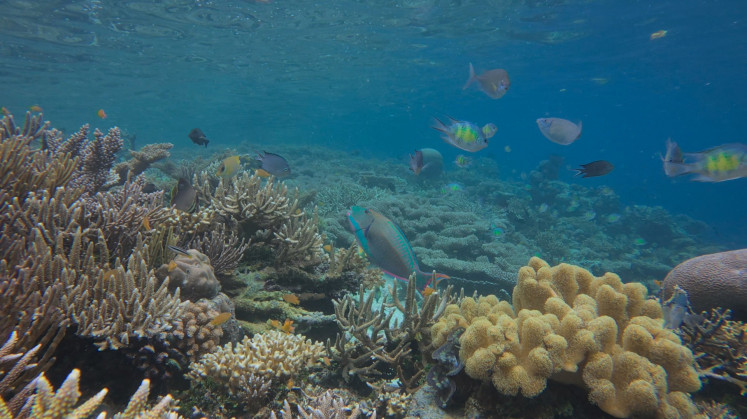
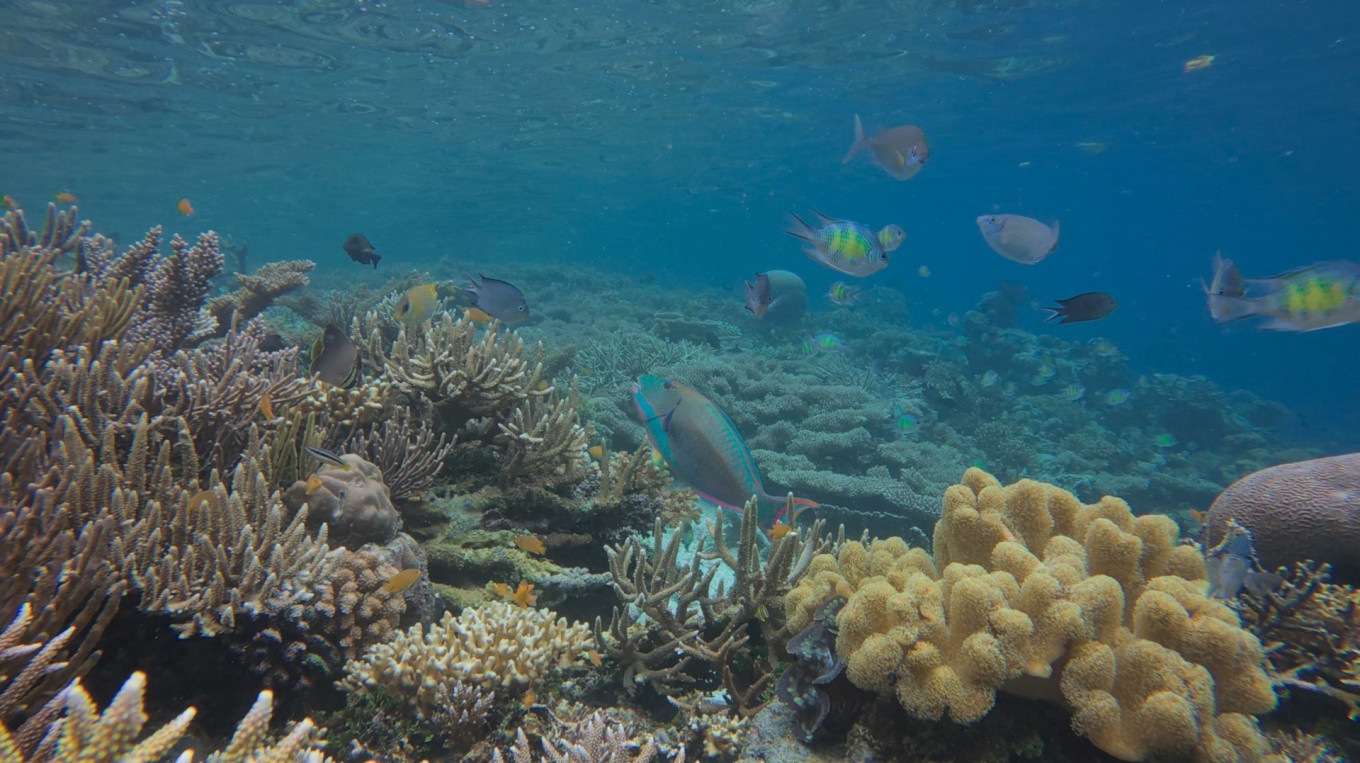 A handout underwater picture taken in September 2025 by environmental NGO Auriga Nusantara shows bleached corals caused by nickel waste pollution near Manuran Island in Raja Ampat, Southwest Papua. Nickel mining continues to threaten one of the world's most important marine biodiversity and coral hotspots in Indonesia, despite the government revoking several permits, a report warned on Sept. 25, 2025. (AFP/Handout/Auriga Nusantara)
I
ndonesia’s aspiration to become an advanced, prosperous, and sovereign nation by its centenary of independence in 2045 presents both a historic opportunity and a formidable challenge. Achieving this vision, popularly known as Golden Indonesia 2045, demands a fundamental economic transformation anchored by three mutually reinforcing pillars: high productivity, strong competitiveness, and quality employment.
Despite abundant natural resources, a strategic geographic position, a massive domestic market, and favorable demographic dynamics, Indonesia continues to face persistent structural headwinds. Economic growth has hovered around 5 percent annually, while productivity gains, industrial upgrading, technological innovation, and the generation of well-paying jobs have yet to achieve their full potential.
According to Statistics Indonesia (BPS), the national unemployment rate stood at 4.65 percent in May 2026, with average monthly employee earnings of approximately Rp3.39 million. Concurrently, poverty figures remain stubbornly high. Using the 2026 BPS poverty line of Rp 669,235 (US$37) per month, 22.93 million Indonesians, or 8.07 percent of the population, live in poverty. By contrast, applying the 2026 World Bank poverty benchmark of $8.30 per day ($249 per month) indicates that roughly 184 million people (64.1 percent of the population) face economic vulnerability. These figures underline a critical reality: national progress cannot be evaluated solely through topline GDP expansion and employment headcount; it must be measured by worker productivity, real purchasing power and broad-based social welfare.
To bridge this gap and realize the promise of Golden Indonesia 2045, the nation must pursue four primary development agendas.
First, substantially increase Total Factor Productivity (TFP).
Productivity serves as the bedrock of sustained economic expansion, wage growth, corporate profitability and national wealth. Achieving systemic gains requires deeper investments in human capital (high-quality education, healthcare, skills development and character building), science and technology, research and development, digital infrastructure and modern physical connectivity.

Primary sectors, agriculture, marine and fisheries, forestry, energy, minerals, manufacturing and tourism, must shift deliberately from low-efficiency activities toward high-value, technology-enabled production models. Downstream industrialization (downstreaming) cannot end at basic raw material processing; it must mature into competitive domestic manufacturing, advanced technological capability and integrated local supply chains.