The Jakarta Post
Please Update your browser
Your browser is out of date, and may not be compatible with our website. A list of the most popular web browsers can be found below.
Just click on the icons to get to the download page.


Popular Reads
Top Results
No results found. Please check your search term and try again
Can't find what you're looking for?
View all search results
Popular Reads
Top Results
No results found. Please check your search term and try again
Can't find what you're looking for?
View all search resultsNo voice of authority
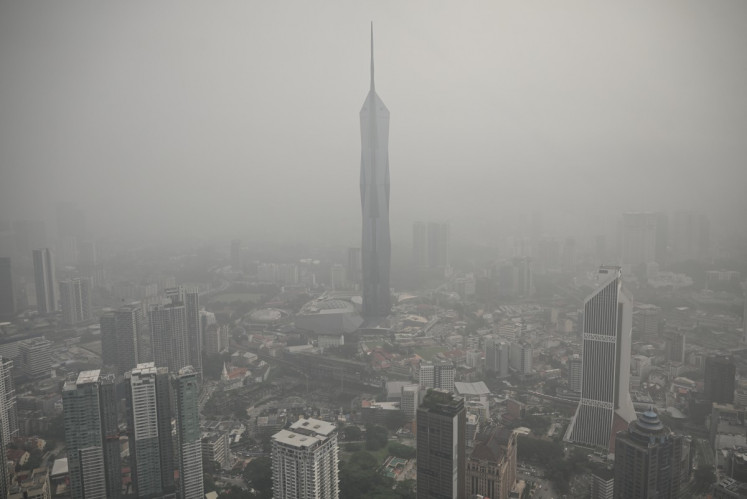
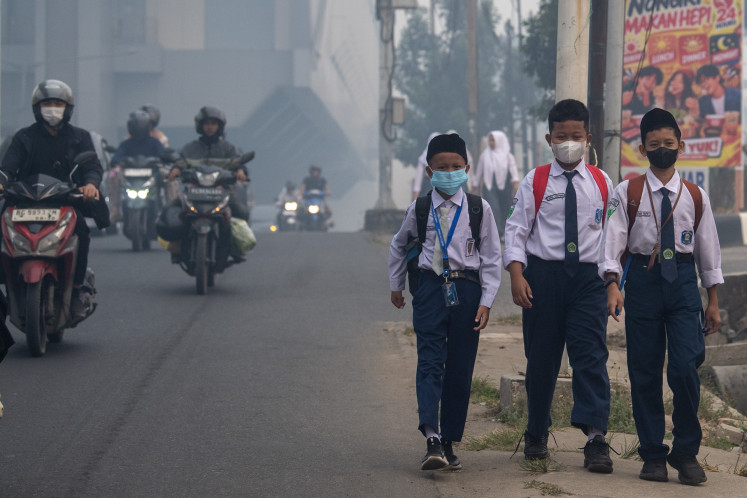
When a government responds to choking toxic haze with bizarre boasts about "exporting oxygen," it reveals a broken communications machine that breeds distrust while lives hang in the balance.
Change text size
Gift Premium Articles
to Anyone
Share the best of The Jakarta Post with friends, family, or colleagues. As a subscriber, you can gift 3 to 5 articles each month that anyone can read—no subscription needed!
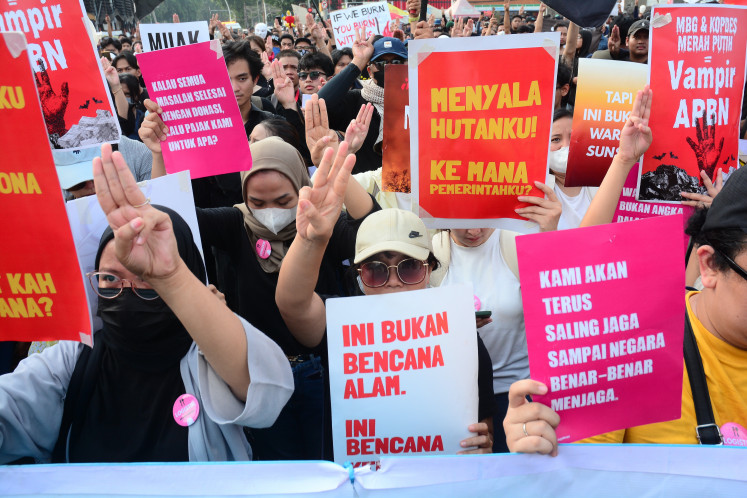
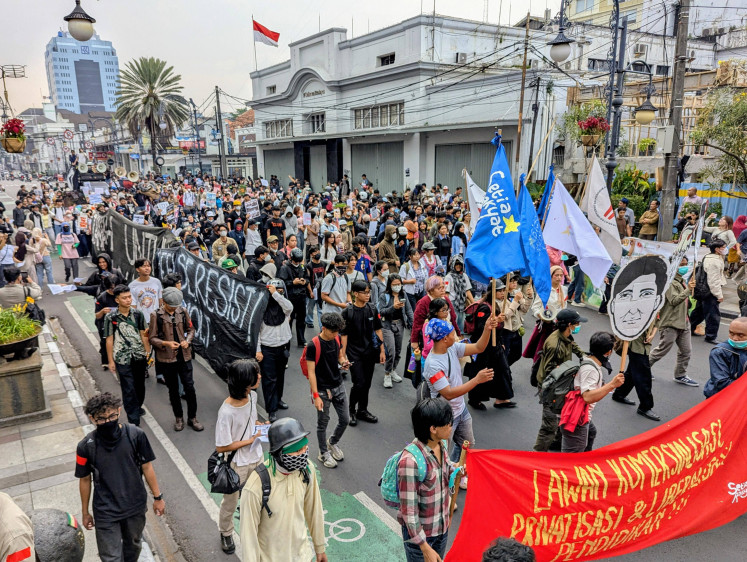
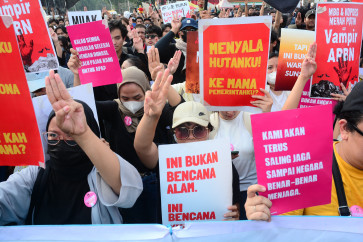
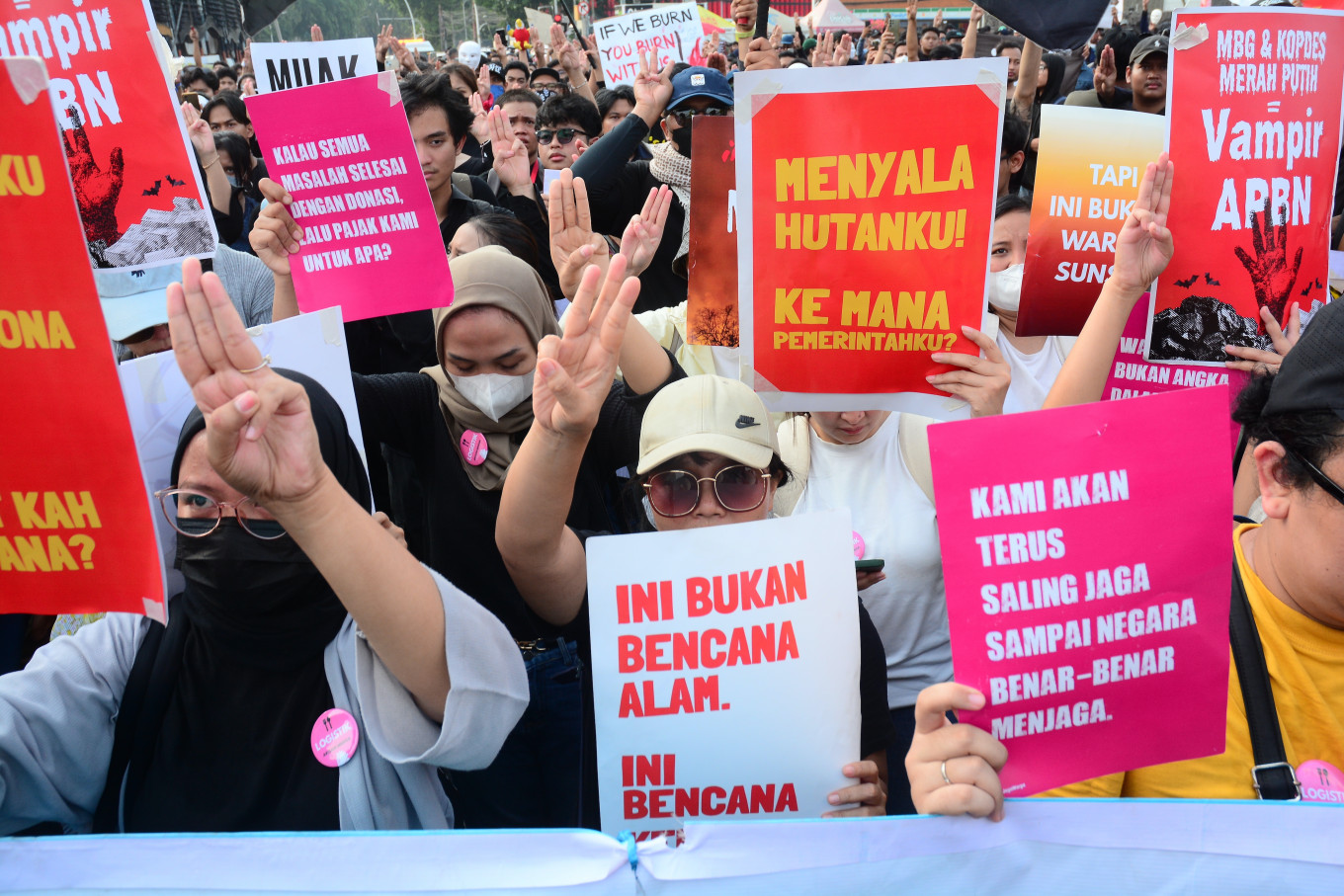 Demonstrators hold placards and raise three fingers in a salute symbolizing freedom, solidarity and equality during a protest in Jakarta on Oct. 20, 2026. The protesters called for an end to forest and land fires and demanded the eradication of corruption, collusion and nepotism as they marked the second anniversary of President Prabowo Subianto and Vice President Gibran Rakabuming Raka’s administration. (JP/Iqro Rinaldi)
W
hen Syahganda Nainggolan, the newly installed head of the Government Communications Agency (Bakom), faced reporters on Oct. 10 to address the haze emergency that had been choking the region for two months, his answer was defiant in its imprecision. "We don't just send smoke," he said. "When there is no smoke, we send oxygen. The oxygen in Singapore and Malaysia also comes from our forests."
The remark drew instant ridicule across the region, and deservedly so. But to treat it as an isolated gaffe is to misread what it reveals about the state’s communications structure.
The problem is clearly institutional. Indonesia's public communications apparatus is distributed across several overlapping bodies, Bakom, the Communications and Digital Ministry, the Office of the Presidential Staff (KSP), the State Secretariat and the Cabinet Secretariat, with no single institution holding the mandate or resources to speak for the government in a crisis.
The result is fragmentation: each body doing its own job, none of it adding up to a coherent message for the public, much less for our neighbors living among the smoke.
The communications ministry's response illustrates the problem from another angle. On Sept. 17, the ministry's director for public information told a press conference about a monitoring and counternarrative operation against online "hoaxes" regarding the fires.
Classifying public concern as a potential disinformation threat does not constitute crisis communications. Rather than addressing the legitimate questions behind it, such as the cause of the fires, the government’s heartless response and the health risks involved, that line of reasoning only serves to harden distrust.

And now with that same cabinet ministry deflecting accusations of shadow bans and online content takedowns, no one knows who is telling the truth.