The Jakarta Post
Please Update your browser
Your browser is out of date, and may not be compatible with our website. A list of the most popular web browsers can be found below.
Just click on the icons to get to the download page.


Popular Reads
Top Results
No results found. Please check your search term and try again
Can't find what you're looking for?
View all search results
Popular Reads
Top Results
No results found. Please check your search term and try again
Can't find what you're looking for?
View all search resultsBreathing new life into organized labor
Fulfilling the ILO’s promise of defending workers’ rights will require more than another declaration or incremental institutional reform: There must be a concerted global effort to create an enabling environment for all workers and their organizations to operate across borders as easily as capital does.
Change text size
Gift Premium Articles
to Anyone
Share the best of The Jakarta Post with friends, family, or colleagues. As a subscriber, you can gift 3 to 5 articles each month that anyone can read—no subscription needed!
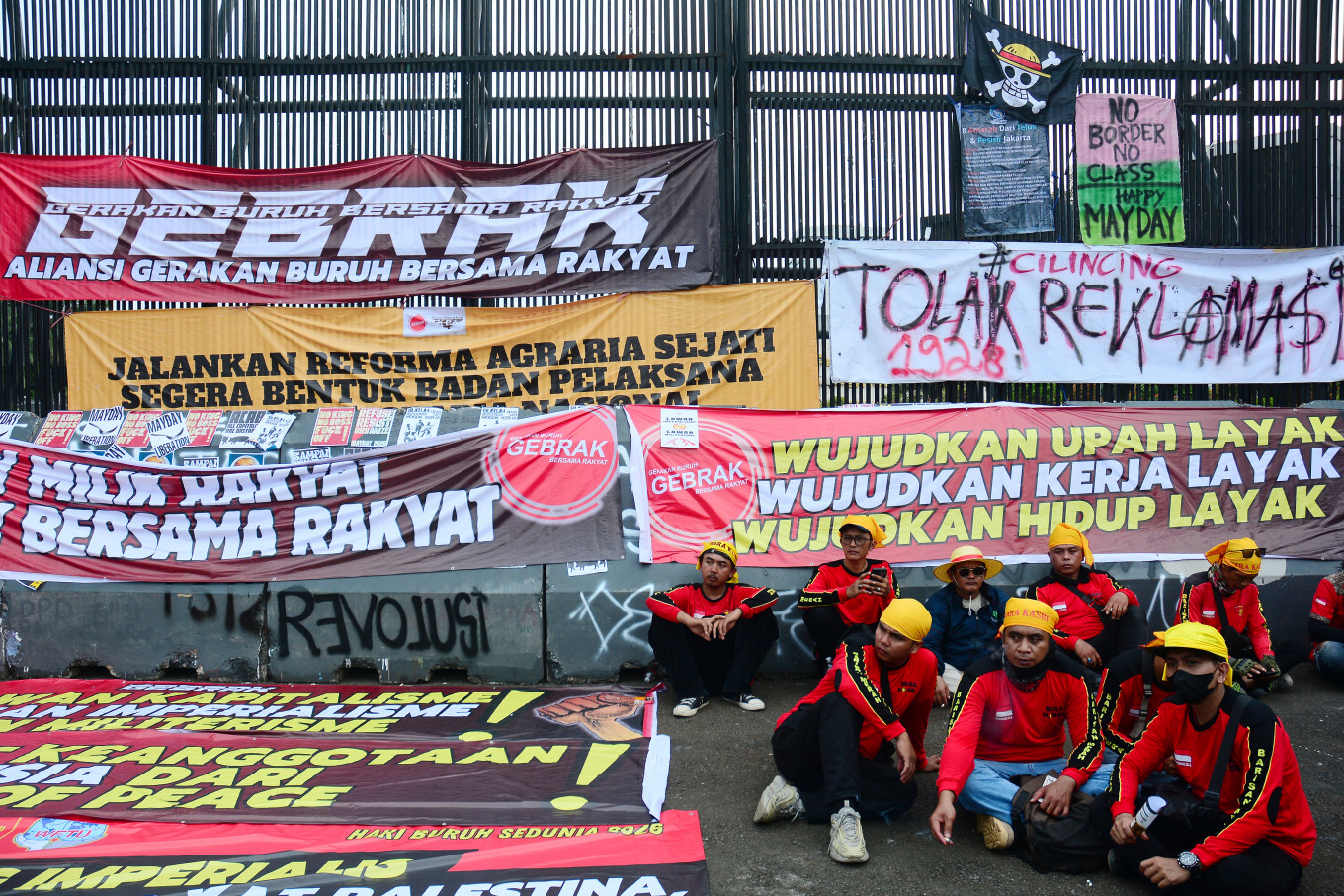 Activists from labor groups hold a sit-in protest on May 1, 2026, during a rally to mark International Workers’ Day at the Senayan Legislative Complex in Central Jakarta. (JP/Iqro Rinaldi)
T
he International Labour Organization was established at a time when, much like today, society was riven by vast inequalities. In the years before World War I, workers’ militant organizing and mass strikes alarmed employers and governments. The premise of the ILO Constitution, adopted in 1919, was that collective bargaining could prevent revolution by turning class conflict into negotiated, shared gains.
This arrangement assumed that an international floor for labor standards would halt a race to the bottom on wages and working conditions as countries competed for trade and investment. For roughly three decades after World War II, that assumption generally held up, benefiting millions of workers, though mostly in formal employment in the industrialized Global North.
It is no longer the case today. The United Nations’ Sustainable Development Goals Report 2026 notes that the weakening of labor rights worldwide is “leaving many increasingly constrained or unable to organize or bargain collectively”. According to the International Trade Union Confederation’s Global Rights Index, 80 percent of the 121 countries surveyed restricted collective bargaining in 2026 and 87 percent restricted the right to strike.
The OECD also reports that union density has been falling in its member economies for decades. In many countries, capital is more concentrated, and governments are more captured by it, than at any time in the last century.
The unraveling of the 1919 compromise was not an accident. The relationship between firm and worker, as well as the corresponding obligations, were intentionally severed through vertical disintegration across global supply chains, subcontracting and labor intermediation.
Digital platform work, the most recent manifestation of this, relies on widespread employment misclassification that denies millions of workers their legal rights.

Although global value chains have been a reality of manufacturing and services for decades, not enough progress has been made on negotiating global rules to protect workers’ rights and hold lead firms accountable.