The Jakarta Post
Please Update your browser
Your browser is out of date, and may not be compatible with our website. A list of the most popular web browsers can be found below.
Just click on the icons to get to the download page.


Popular Reads
Top Results
No results found. Please check your search term and try again
Can't find what you're looking for?
View all search results
Popular Reads
Top Results
No results found. Please check your search term and try again
Can't find what you're looking for?
View all search resultsGoing green is not enough for industrial parks to thrive
The upcoming Industrial Estate Law must decide whether its manufacturing hubs remain mere clusters of concrete and carbon targets, or evolve into fully integrated, people-first eco-industrial ecosystems.
Change text size
Gift Premium Articles
to Anyone
Share the best of The Jakarta Post with friends, family, or colleagues. As a subscriber, you can gift 3 to 5 articles each month that anyone can read—no subscription needed!
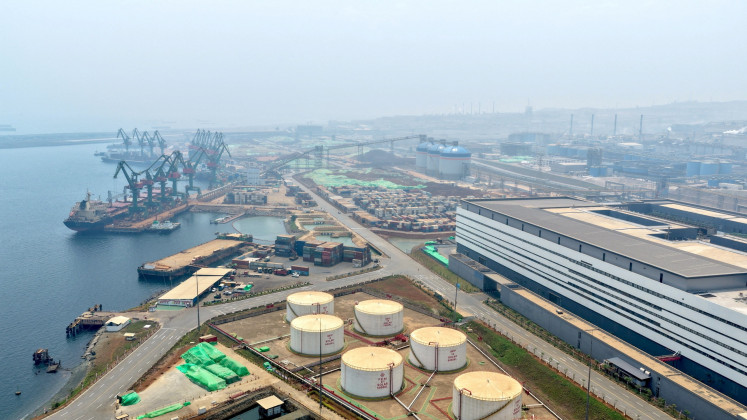
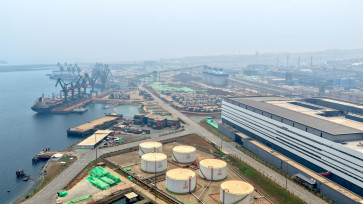
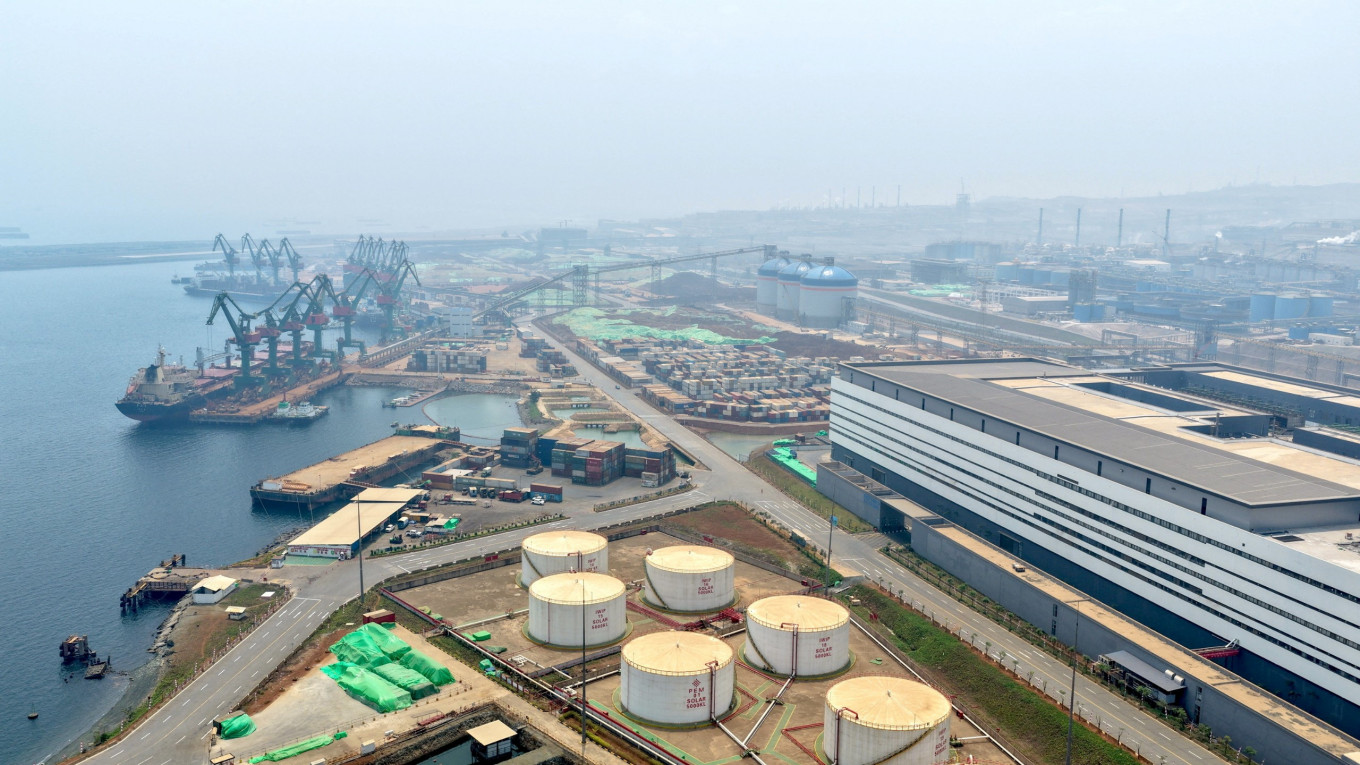 Nickel processing facilities operate on Oct. 8 at the Indonesia Weda Bay Industrial Park in Central Halmahera regency, North Maluku province. (Reuters via Handout/Indonesia’s Presidential Palace)
T
he Industrial Estate Bill is being drafted, and its defining test is clear: should industrial estates be managed as integrated ecosystems for people and business, or merely as technical sites?
Because this discussion reaches well beyond the administrative mechanics of a new legal framework, that question must guide the debate as lawmakers consult businesses, policy experts, local communities, and estate operators.
The sheer economic footprint of industrial estates gives this debate urgency. By mid-2026, Indonesia was home to approximately 180 industrial estates hosting nearly 12,000 tenants, representing roughly Rp 6.74 quadrillion (US$37 billion) in investment and 2.35 million jobs. These hubs have long outgrown their origins as simple factory clusters; today, they serve as foundational platforms for investment, employment, national industrialization, and regional development.
Legislative deliberations underscore just how complex these ecosystems have become. The House of Representatives’ Commission VII working committee is currently reviewing 12 critical issues, ranging from energy reliability and transport connectivity to conflicting central and local regulations, port access, utilities, waste management, and human capital.
At first glance, these concerns appear disparate: gas supply seems an energy matter, port access a logistics challenge, workforce training a labor issue, wastewater an environmental compliance task, and community relations a social affair. Within an industrial estate, however, they converge as an inseparable whole.
No factory can remain competitive without reliable energy. Production and supply chains stall when transport links break down. Environmental metrics deteriorate when water and waste systems lack centralized coordination.

Crucially, an estate’s long-term viability hinges on how well it protects its workforce and engages surrounding neighborhoods. Traditional debates too often treat these priorities in silos, overlooking how physical infrastructure, environmental stewardship, and social conditions collectively determine industrial competitiveness.