The Jakarta Post
Please Update your browser
Your browser is out of date, and may not be compatible with our website. A list of the most popular web browsers can be found below.
Just click on the icons to get to the download page.


Popular Reads
Top Results
No results found. Please check your search term and try again
Can't find what you're looking for?
View all search results
Popular Reads
Top Results
No results found. Please check your search term and try again
Can't find what you're looking for?
View all search resultsResetting Indonesia’s capital market needs verified integrity
Indonesia cannot restore foreign investor confidence with emergency price supports or rhetoric. It must prove the integrity of its markets through independent verification of ownership and true liquidity.
Change text size
Gift Premium Articles
to Anyone
Share the best of The Jakarta Post with friends, family, or colleagues. As a subscriber, you can gift 3 to 5 articles each month that anyone can read—no subscription needed!
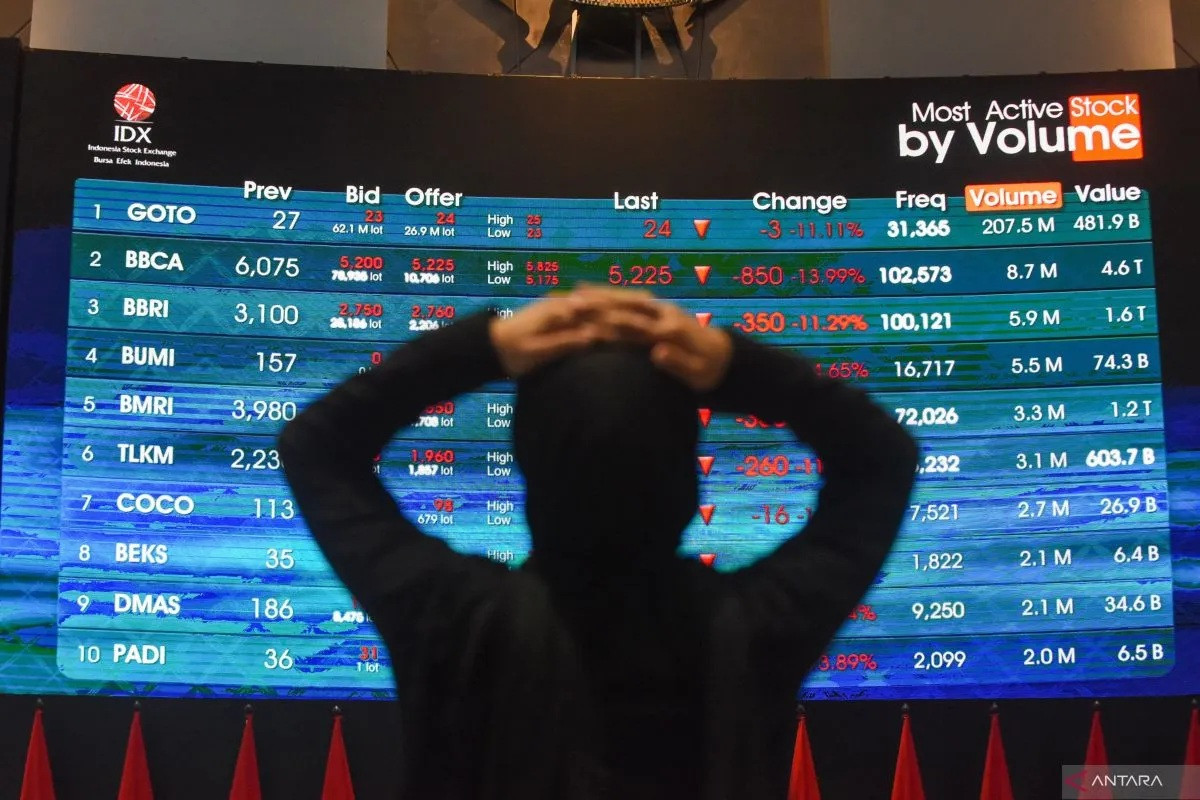 A visitor looks at an electronic display showing movements of the Indonesia Stock Exchange (IDX) Composite index on Oct. 16, 2026, at the bourse in South Jakarta. (Antara/Indrianto Eko Suwarso)
I
ndonesia’s capital market confronts a crisis that cannot be resolved simply by propping up share prices. The sharp decline in the Jakarta Composite Index, mounting foreign selling pressure and MSCI’s October 2026 market classification consultation have exposed vulnerabilities far deeper than ordinary cyclical volatility.
The core issue is no longer whether Indonesian equities appear attractively valued. It is whether international investors can trust the underlying disclosures, ownership structures, price formation and trading mechanisms that generate those valuations.
Responding with political rhetoric, blaming index providers or urging investors to buy the dip fundamentally misreads the challenge. Declining share prices do not make securities attractive when the credibility of reported numbers remains in doubt. Nor can liquidity interventions eliminate persistent uncertainty regarding beneficial ownership, genuine free float, shareholder concentration or coordinated trading.
These structural deficiencies threaten the market’s foundational integrity. The appropriate policy response must therefore look past immediate price stabilization toward a comprehensive institutional reset.
MSCI’s consultation is best viewed not as an isolated threat to Indonesia’s emerging market classification but as an urgent critique of its market infrastructure. Institutional allocators rely on index providers not merely to identify upside potential but to verify that securities can be bought, held, valued and liquidated under transparent, predictable conditions.
A listed enterprise may feature valuable assets, solid earnings and substantial capitalization yet still fail the test of investability. Investors need to verify who exercises ultimate voting control, how many shares circulate freely among independent holders, whether market quotations reflect genuine arms-length price discovery and whether substantial blocks can trade without severe distortions.

Economic scale must not be confused with institutional depth. Indonesia’s macroeconomic size and long-term expansion potential do not exempt its exchanges from international standards.