The Jakarta Post
Please Update your browser
Your browser is out of date, and may not be compatible with our website. A list of the most popular web browsers can be found below.
Just click on the icons to get to the download page.


Popular Reads
Top Results
No results found. Please check your search term and try again
Can't find what you're looking for?
View all search results
Popular Reads
Top Results
No results found. Please check your search term and try again
Can't find what you're looking for?
View all search resultsThe FAO we need for the future of food security
To end global hunger in an era of compounding crises, we must stop reacting to disasters and start turning frontline innovations into rapid, equitable impacts.
Change text size
Gift Premium Articles
to Anyone
Share the best of The Jakarta Post with friends, family, or colleagues. As a subscriber, you can gift 3 to 5 articles each month that anyone can read—no subscription needed!
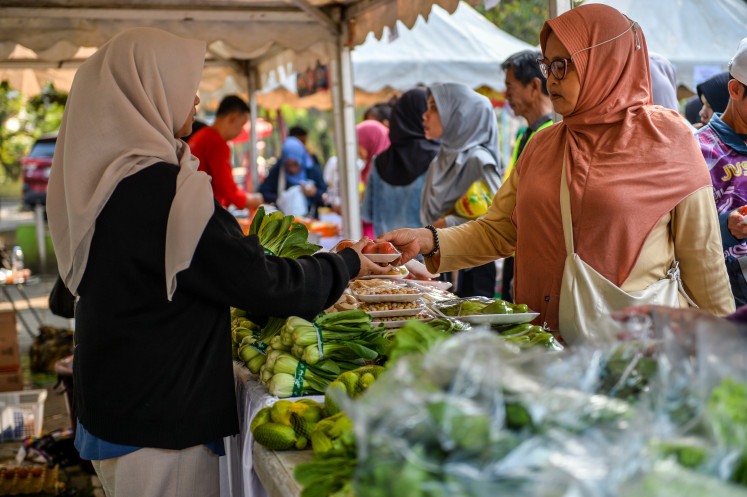
 Customers purchase vegetables during a government-sponsored affordable food market in Panyileukan, Bandung, West Java, on July 16, 2026. Organized by the Bandung Food Security and Agriculture Agency (DKPP), the program offers staple food items at below-market prices to help stabilize supplies and curb inflation in the city. (Antara/Raisan Al Farisi)
F
ood now sits at the center of the world’s most pressing challenges. It lies at the intersection of climate change, water scarcity, biodiversity loss, economic development, public health, migration and peace.
Against this backdrop, the theme of World Food Day 2026 could hardly be more timely: “Innovate today. Nourish tomorrow”. Innovation is essential if we are to ensure that everyone has access to sufficient, safe and nutritious food while safeguarding the natural resources on which future generations depend.
The pressures on agrifood systems are intensifying on several fronts at once. Climate shocks, such as El Nino, are becoming more frequent and severe. Conflicts continue to disrupt production and trade, affecting global food and energy systems as demonstrated by the Hormuz and Black Sea crisis.
Water scarcity is spreading across regions. Economic instability is putting healthy diets out of reach for millions. Hunger remains stubbornly high while malnutrition in all its forms persists.
The challenge is not that humanity lacks knowledge, technologies or resources. It is whether we can turn what we know into action at the speed and scale required.
For more than 80 years, the Food and Agriculture Organization (FAO) has been a cornerstone of international cooperation, helping establish global standards, generate trusted knowledge and support countries in advancing food security, which is a fundamental human right.

If World Food Day 2026 challenges us to innovate today in order to nourish tomorrow, then the FAO’s responsibility is clear: to become the world’s leading impact agency for agrifood systems.